
Barely Moving
Dear RV Doctor:
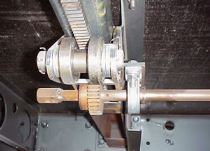
We just purchased a 2005 motorhome with three slideouts that have rack-and-pinion electric mechanisms. The large living room slideout lifted up awkwardly, went out less than halfway, and made loud noises. We retracted it and tried extending it again, but it would only go out halfway and made both clunking and clicking noises. The top of the room was barely out and the bottom was way out of whack. We tried lubricating it, but the situation seemed to get worse. Now it only makes loud clicking noises and barely moves at all. It sounds as though the gears are out of sync. Is there a way of fixing this problem without trying to find a repair shop? We are on the road full-time.
Rick West, Westbank, British Columbia, Canada
I wish I could be more encouraging, but because of the complexity of slideout mechanisms and room adjustments, I’m at a disadvantage without seeing the problem with my own eyes.
Any attempt to adjust the slideout mechanisms and troubleshoot operational errors should occur only after a complete inspection. And quite frankly, oftentimes repairs cannot be performed in the field. Specialty equipment may be needed in order to effectuate a complete repair. I would, however, suggest you contact a certified mobile RV tech if one is available where you are currently located. There is a chance the technician may be able to unbind the mechanism, barring any physical problem with broken gears or an issue with the motor itself.
Also, the proper troubleshooting strategy depends on the manufacturer of the slideout mechanism; some are proprietary. Perhaps it is nothing more serious than a physical binding or a simple alignment issue. Again, I wish I had more encouraging news, but, unfortunately, these types of repairs are not usually for the do-it-yourselfer.
Leaky Shower Enclosure
Dear RV Doctor:
I have a Type C Tioga that has a cracked shower surround. I’ve seen several surrounds listed for sale online but none specifically for RVs. Do I just order one based on size? If so, what else do I need to know before installing it?
Perry Jultak, Aurora, Colorado
Unfortunately, most motorhome shower/tub enclosures are very specific to a particular brand, model, and even year. It is doubtful that any stock surround will fit exactly in the same location as the cracked one. RV makers are known to have a specific mold that applies only to a particular floor plan.
That’s the bad news; the good news is that you do have a couple of viable options. First, you may be able to repair the existing enclosure, depending on the severity of the crack and where it’s located. Before heading in this direction, it’s important to determine what caused the crack in the first place. If the crack is located on the floor section near the drain, it’s likely there was not enough support blocking placed underneath the enclosure or at the floor. If the crack is in one of the vertical walls, perhaps the enclosure was too large for the opening between the walls. The stress of the installation may have cracked the material.
Next, you’ll need to determine the type of material used to fabricate the surround. Typically, Fleetwood used a thermoplastic. In some cases, fiberglass may have been used. In either case, identifying the material is necessary to take the next step in repairing the existing shower enclosure.
If the surround is made of plastic, it’s possible to repair the crack by plastic welding. With plastic welding, it’s best to weld the crack from the back side of the enclosure for aesthetic reasons, but it’s not mandatory. Obviously, if you choose to weld from the back side, you will need to remove at least a portion of the enclosure, if not the complete unit. If the surround is made of fiberglass, a typical fiberglass repair kit, such as Insta-Glas, produced by Bri-Rus Inc. (www.brirus.com), can be employed with success.
Your second option is to modify the bathroom to accommodate one of the ready-made surrounds that are available in the aftermarket. You’ll have to choose one that is closest to the size you now have and simply “make it fit.” This will require some carpentry and plumbing skills, but it can be done.
Warm Refrigerator Mode
Dear RV Doctor:
I have a Dometic refrigerator that does not cool on 120-volt-AC power but works great when operating on LP gas. The unit is model #RM26XX and it’s 4 years old. The last time I had the motorhome serviced, I asked the shop to check the AC cooling function, because I don’t think it has ever worked on AC power. When I got the unit back, I noticed that the cord was not even plugged in. The service adviser told me the refrigerator had been serviced and the reason the refrigerator wouldn’t cool on shore power was because of a blown fuse on the circuit board. He mentioned that this happens quite often and not to worry. The next day I found the refrigerator back at room temperature, so I checked the fuse that was replaced. It was blown again, plus I noticed that the technician installed a 5-amp fuse while the panel shows a maximum 3-amp fuse. I am not here to degrade this service shop, but every time I leave after service/repairs, something always goes wrong. Any idea why this refrigerator won’t operate on 120 volts?
M. Larson, Renton, Washington
On your particular refrigerator, it is permissible to use a 5-amp fuse to protect the AC heater circuit throughout the controls. The 3-amp fuse you see is only for the DC protection of the board. So a 5-amp is the correct size for the AC on the circuit board.
The most likely cause of a blown fuse is the AC heater. Start by disconnecting the motorhome from all sources of alternating current (AC) and then unplug the AC heater from the refrigerator circuit board (terminals J7 and J8). Next, connect the motorhome to a good shoreline source of AC power. If the fuse blows after the heater is disconnected, then you know you have a bad circuit board.
If the fuse does not blow, then it’s time to do an ohms test on the heater to determine whether it’s receiving an over-current load. Again, remove the AC voltage source before continuing. A normal ohms reading for an 8-cubic-foot refrigerator heater is 44 ohms, plus or minus 5 ohms (varies depending on whether the heater is hot or cold). An over-current reading would register something considerably greater than 44 ohms (a smaller number is a greater load). Most shorted heaters will read 0 to 1 ohms. A faulty heater can still produce some heat but with an amp load higher than the fuse. Therefore, a larger fuse should never be used to solve this type of problem.
{loadpositionEndBlurbHouseCalls}