
By Rick & Marcella Pasetto, F169404
July 2011
Contrary to what others might think as they see a rally or FMCA Family Reunion end and hundreds of motorhomes set off in different directions, many FMCA members remain in the area and offer their talents to make a significant contribution to the community. What follows is one such occurrence.
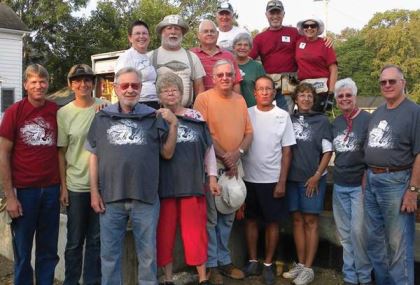
This story began on Sunday afternoon, March 20, 2011, following FMCA’s Family Reunion and Motorhome Showcase in Perry, Georgia. At a small RV park in Plains, Georgia, 23 members of FMCA Chapter: Habitat for Humanity® gathered to organize and plan an event that for many would be a life-changing experience.
A common misconception is that Habitat for Humanity homes are provided free. Nothing could be further from the truth. Potential homeowners must qualify for the home under the same criteria used by commercial lenders for everyone else. Applicants must be creditworthy, demonstrate steady employment, and make a down payment. But unlike other homeowners, those who purchase a home through Habitat for Humanity must contribute 300-plus hours of sweat equity “” their own participation in the construction of the house or some other form of work “” to qualify. The home loan is interest-free for terms of 20 or 30 years, and the amount of the loan is the actual cost of the land, material used in the house, and contract labor for electrical, plumbing, and heating and cooling system work.
At this build we had the pleasant surprise of having two groups of college students working beside us during the first week. These young adults from Elmhurst College, located in Elmhurst, Illinois, and the University of Illinois had not only sacrificed their spring break to help build houses for deserving families, but they also paid their own way to the build site and the return home.
Each year, more than 100,000 college and high school students participate in Habitat for Humanity’s Collegiate Challenge, which encourages participants 16 years and older to spend their break from school (summer, fall, winter, and spring) helping to build.
The build team was tasked with three projects: two new houses that were ready for “slab-up” construction, and a rehab house that needed flooring, painting, outside work, and general finish work. After looking at the tasks to be done and the people available, our build leader consulted with the leadership of the Habitat for Humanity affiliate. Group assignments were revised so that many of us would advise and supervise the college students’ activities while others would work on the rehab house.
During the build, we RVers were awed by the students’ skills. They showed problem-solving and leadership abilities, and a willingness to learn and work diligently. We were impressed by the dedication, sense of purpose, and work ethic of these young women and men, and we decided to treat them to a potluck dinner at the RV park to show our appreciation.
When the four-day stint for the collegiate build ended, what had been accomplished was remarkable. The rehab house was completed and was dedicated during our second build week, with the family moving in that day. By Friday of the second week, framing of the two new houses was complete and the houses wrapped “” windows were installed in the first house. We hope the students’ experience was one they will remember and that they will continue to volunteer their time and talents to help those in need.
The second week of our build also provided an unexpected bonus when we were approached by a resident of the RV park in which we were camped. FMCA member Lois Phillips, F237688; her husband, Mark; and three of their teenage children are full-timers who live in the park. Lois asked whether her children could join our team for a few days. The teens are homeschooled, and their mother felt that exposure to the process of building a home would be an enlightening and worthwhile experience.
The payback for chapter members was the renewed confidence that the future lies in the steady, capable hands of young people who recognize the value of volunteerism and service to others. As grandparents, we rarely have the opportunity to work alongside young adults similar in age to our grandchildren and have so much fun. Saying good-bye was emotionally difficult for everyone.
FMCA Chapter: Habitat for Humanity® always welcomes new members. No prior building experience is required. All that’s needed from volunteers is the desire to learn, a willingness to follow instructions, and an interest in working hard while having a good time. Members come from all walks of life and occupations; few actually come from the building trades.
Aside from the primary objective of building a home for a deserving family, a secondary benefit for participants is the chance to discover more about themselves and to have fun. Most volunteers will tell you that they have met all of those objectives on a build.
The chapter publishes an electronic newsletter in which all chapter builds are announced. That newsletter and more information about FMCA Chapter: Habitat for Humanity® can be found at www fmca-hfh.com. Most builds are scheduled to follow FMCA area rallies or FMCA Family Reunions. Chapter members who wish to become a member of a build team should contact the build team leader at the e-mail address or phone number listed in the announcement at the designated time listed. The commitment is normally for two weeks, beginning the Sunday before work starts and ending on Friday of the second week.
Why do chapter members volunteer? Some might tell of the time they had the pleasure of working beside a homeowner and the pride they felt as they helped that individual build his or her first home. You only have to see a blind 3-year-old feel her way down an unfinished hallway to a bedroom, place her small hands on the wall, and say, “Mommy, this is my room,” to understand why the chapter does what it does so well.
For more information about FMCA Chapter: Habitat for Humanity®, visit www.fmca-hfh.com or contact Kay Piper, third vice president “” membership, at (405) 833-8471; e-mail kaypiper@aol.com.