
Proper Electrical Grounding Redux
Dear RV Doctor:
In the “AC Electrical Query” letter that appeared in the October 2013 “House Calls” column (page 22), you indicated it was imperative that electrical connections to shore current be properly grounded. My question is, how do I do that with a portable generator? I have a Honda 2000 generator, and when I connect it to my Type A motorhome, the built-in surge suppressor/current analyzer will not allow the current from the generator to enter the motorhome unless I bypass the current analyzer. I assume that this is due to the lack of a ground. The generator has a green terminal to connect to ground, but I have never connected this to anything since I don’t have a ground available to me on the road. Does this create a dangerous situation by operating the generator without a proper ground? If so, what is the proper way to ground the generator while dry camping? Would running a ground wire to the motorhome make it safer when no true ground is available?
John Kurz, F424619
Levittown, Pennsylvania
You’re correct regarding your portable generator. It’s not so much a missing ground but rather a missing internal neutral-ground (N-G) connection. Your Honda is configured with what’s called a “floating” neutral conductor. This is not a problem, because your portable generator is rated for less than 5,000 watts, but it simply creates havoc with RV surge protectors since they are designed to monitor the voltage between the neutral and ground conductors, among other things. I believe Yamaha portable generators are set up the same way.
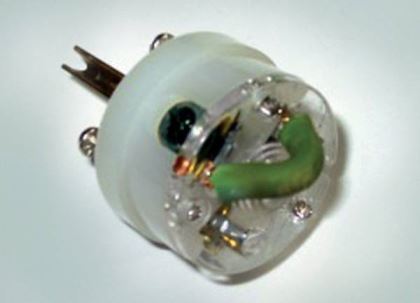
The AC electrical system in your motorhome is wired in a manner that separates and isolates the neutral from the ground. The bonding of the neutral to the ground conductor happens only at the source of the electricity. From the grid, that bonding takes place at the service entrance, such as at your house. At a campground, it takes place at a transformer or service entrance (not at the pedestal at each site). In an RV, the bonding takes place internally in the RV generator and the inverter or within the switching mechanism. The issue is that your portable generator is not optimally configured for RV use. Some portables are, but others are not. Since your generator has a floating neutral, it needs to be bonded to its own ground conductor in order for the surge protector to work properly. The easiest work-around is to simply wire a 15-amp plug cap with a short jumper between the silver (neutral) screw and the ground terminal screw (see the photo, compliments of my friend, Mike Sokol). Simply plug this “dummy” N-G bonding plug into one of the outlets on the portable generator. Now you have the generator’s neutral and ground conductors bonded, and the surge protector should work fine. This pertains only to the grounding of the neutral conductor in a portable generator and is not in any way related to earth grounding.
You should use this dummy plug only in the portable generator. There’s no need to have a grounding rod. If you ever use the generator to power a circuit in your home or to backfeed the generator’s output to a grid-fed system, be sure to remove that dummy plug, since the code allows for only a single N-G bonding connection. Remember, your home system already has one at the service entrance. Perhaps it’s time to install a permanent RV generator in your Type A motorhome.
 Plugging In At Home
Dear RV Doctor:
I own a 2009 Fleetwood Discovery equipped with 50-amp electrical service. I was thinking of having an electrician install a 30-amp or a 50-amp service outlet at my house to plug in to for pre/post travels and when loading the motorhome. But I remember hearing you say something at one of your seminars about a regular electrical service plug in the coach’s system being different and how the electrician needed to be alerted to this variable. Can you shed a little more light on this question?
Roger Kueter
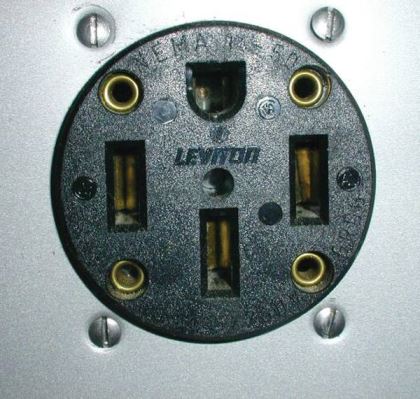
Since your motorhome is wired for 50-amp, 240-volt-AC service, your electrician should have no problem wiring a campground-like receptacle at your house. The potential problem I mentioned during the seminar was for the 30-amp, 120-volt-AC plug, which an inexperienced electrician might think is wired for 240 volts. The three-wire, 30-amp plug looks similar to a 240-volt-AC dryer plug, even though this common RV configuration is used only in the RV industry. There should be no confusion with your 50-amp requirement, since it contains four conductors — two hot legs, a neutral, and a safety ground.
If you’re contemplating installing an RV electrical connection at your house or garage, you might want to order your receptacle box from www.rvpoweroutlet.com. The company’s pedestals and boxes come prewired with everything your motorhome requires. I’d suggest the box that contains the circuit breakers and 50-amp, 30-amp, and 20-amp GFCI receptacles (RVU75C or RVU75CP). That way, the electrical box is capable of handling any RV’s electrical needs. By having all three amperage connections available in one box, you will never need an electrical adapter. Many adapters are made without the necessary electrical safeguards and should be avoided whenever possible.
As for installing the prewired box, all your electrician will need to do is wire it in as a subpanel to your home’s electrical system. When installing an RV connection at home, nothing is modified inside the motorhome. The interior of the RV is wired differently from your house in that it has an isolated neutral wire. In the RV, the ground and the neutral wire are never interconnected. Only at the service entrance of the source voltage are they ever interconnected. Your electrician should know this.
Air Brake Dilemma
Dear RV Doctor:
Thank you for your very good seminars in Gillette. You invited us to send you questions along the way, so here is one. We have a 2007 Fleetwood Excursion with a Mercedes-Benz front end. Our problem is that when the air brakes are applied, the motorhome pulls to the right quite a bit, and this seems as though it could be a problem if one does not have full control of the steering wheel. Potential solutions we have heard are that it needs a brake adjustment; the left brake is setting up too much; the front end needs to be aligned; and others. What do you think the problem might be, and where and how would we get it fixed in southeast Wyoming or northeast Colorado? I do understand that it is hard to diagnose the problem without seeing the unit and/or driving the motorhome. Any help you can share would be greatly appreciated.
Oliver Hill, F159603
Laramie, Wyoming
Air brakes! That’s the domain of Walter Cannon and the Recreation Vehicle Safety and Education Foundation (RVSEF). The foundation actually has a very good instructional DVD that details how to perform the three important air brake tests that should be completed before driving the motorhome each day. It would be well worth your time to consider ordering that DVD. It can be found online at www.rvsafety.com/products-page/understanding-testing-your-motorhome-air-brakes-dvd. In Walter’s seminars at FMCA Family Reunions, he recommends relying solely on the expertise of trained technicians when it comes to air brake maintenance and repair. Typical RV shops or dealerships may not be your best choice for chassis, engine, and air brake troubleshooting and repair. It takes special training and diagnostic equipment that’s generally not available in a normal RV dealership. Most good air brake technicians usually can be found at specialty trucking or over-the-road shops such as Freightliner or International.
Unfortunately, there is no way for me to diagnose such an important system in the “House Calls” column. I recommend that you contact a quality truck repair shop in your area. I’d further recommend that you ask whether the shop employs a factory-trained air brake specialist before making an appointment. I’m hoping your brake problem requires nothing more than a simple adjustment, but the air brake system is one area you want to leave to the professionals for diagnosis.
{loadpositionEndBlurbHouseCalls}