
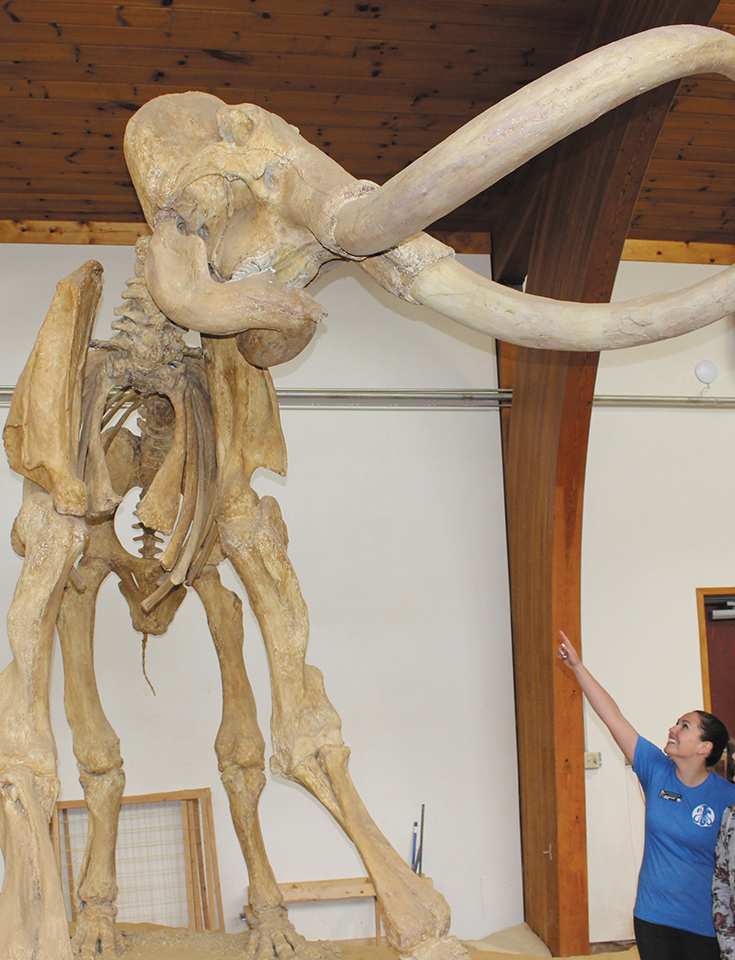
Visit the only late-Ice Age facility of its kind in North America.
By Anna Lee Braunstein, F351629
July 2018
Mammoth Site of Hot Springs, South Dakota
Relatives of modern elephants bearing long tusks once roamed in family groups across North America. Twenty-six thousand years ago, many of them stopped at a watery place surrounded by lush grassland. They wanted to drink and settle their warm bodies in the cool grasses. Instead, they were trapped in a sinkhole and unable to climb back up the slippery banks.
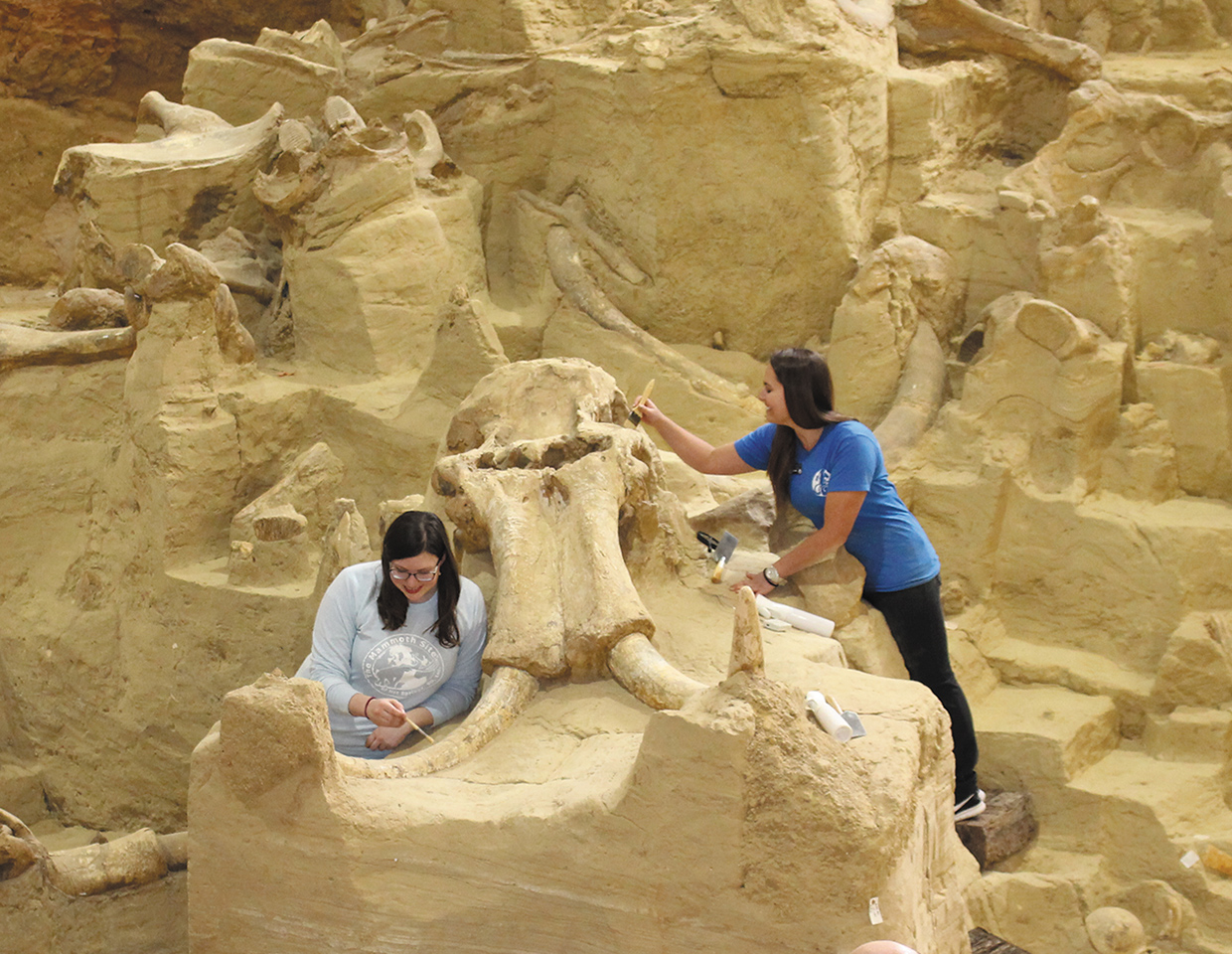
The bones at Mammoth Site are not petrified, so their fragile nature requires meticulous work.
In 1974 a South Dakota developer named Phil Anderson hired heavy equipment operator George Hanson to excavate a site in Hot Springs, South Dakota. Hanson’s blade struck something shiny and white, and he got out to investigate. Imagine his surprise to see a 7-foot-long mammoth tusk, among other unusual bones.
Anderson stopped the building project. Ultimately the site and adjacent land were acquired by a nonprofit group formed to preserve it. Today the Mammoth Site of Hot Springs, South Dakota, continues to reveal fossils of mostly Columbian mammoths, which had no hair, as well as a few woolly mammoths. Ice-age camels, llamas, short-faced bears, coyotes, prairie dogs, wolves, and other species also have been found in the hole. According to museum estimates, more than 1,200 fossil bones and fragments are in the sinkhole.
While researchers painstakingly uncover prehistoric bones using hand shovels, buckets, cotton swabs, toothbrushes, tweezers, and other tools, visitors get within arms’ length to view these discoveries. In fact, in 2017, they watched as a 900-pound mammoth skull was moved from the hole for relocation to the research center.
About the Museum
Begin your visit by watching a short video, and then join a 30-minute tour around the “in situ” (in its original place) bone bed led by a paleontology interpreter. The original site is now enclosed by a climate-controlled building.
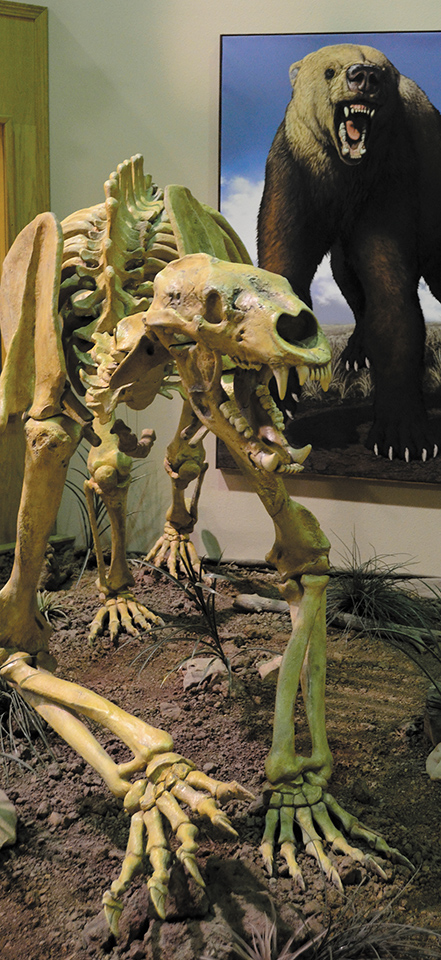
Remains of a variety of creatures have been found at Mammoth Site in Hot Springs, South Dakota, including short-faced bears.
In the adjacent museum are models of prehistoric creatures that roamed the area, as well as displays of other sites where paleontologists have worked.
Hands-on learning activities provide children and adults with thrilling opportunities. Looking through laboratory windows, visitors can watch the scientists as they work. By downloading the site’s Scarab Hunt gaming app, you can compete against other visitors of all ages. Part of the $1.99 app fee goes to the site’s educational programs.
Kids can join Junior Paleontologist and Advanced Paleontologist programs, offered daily June 1 through August 15. In the junior program, ages 4 to 12 participate in simulated digs, learning paleontological techniques and animal identification. Ages 10 and over can join the advanced program, which involves learning even more. Reservations are recommended for both of these programs, as they fill quickly.
Adults can dig in the actual site themselves during the Mammoth Site Excavation and Preservation Program. Reservations are required for this two-week experience that includes cleaning and sorting bones.
The Mammoth Site of Hot Springs, South Dakota, is open year-round; hours vary depending on the season. An added plus is that the parking lot accommodates RVs. Call (650) 745-6017 or visit www.mammothsite.org for more information.