
Oklahoma’s first state capital is a fun, friendly, and historically interesting spot.
By Anna Lee Braunstein, F351629
October 2018
Charming, playful, lovely . . . these are a few of the ways to describe Guthrie, Oklahoma. Toss in a dose of history and a large dollop of delight, and you have the recipe for a dandy small-town destination.
Guthrie started as a railroad station stop in 1887 and was named after John Guthrie, a railroad attorney and judge from Topeka, Kansas. It was a time when settlers and American Indians fought physically and politically over land. After the U.S. government okayed plans for settlement, anyone with the filing fee of $14 (approximately $370 in 2018 funds) could claim a lot, if they met certain conditions.
At noon on April 22, 1889, cannons resounded, officially opening the land, though many settlers, known as “sooners,” already had breached the line and grabbed the best sites. Regardless of whether they snuck in or not, the pioneers built a territory that became the 46th state. Guthrie became the capital of the territory, and later, Oklahoma.
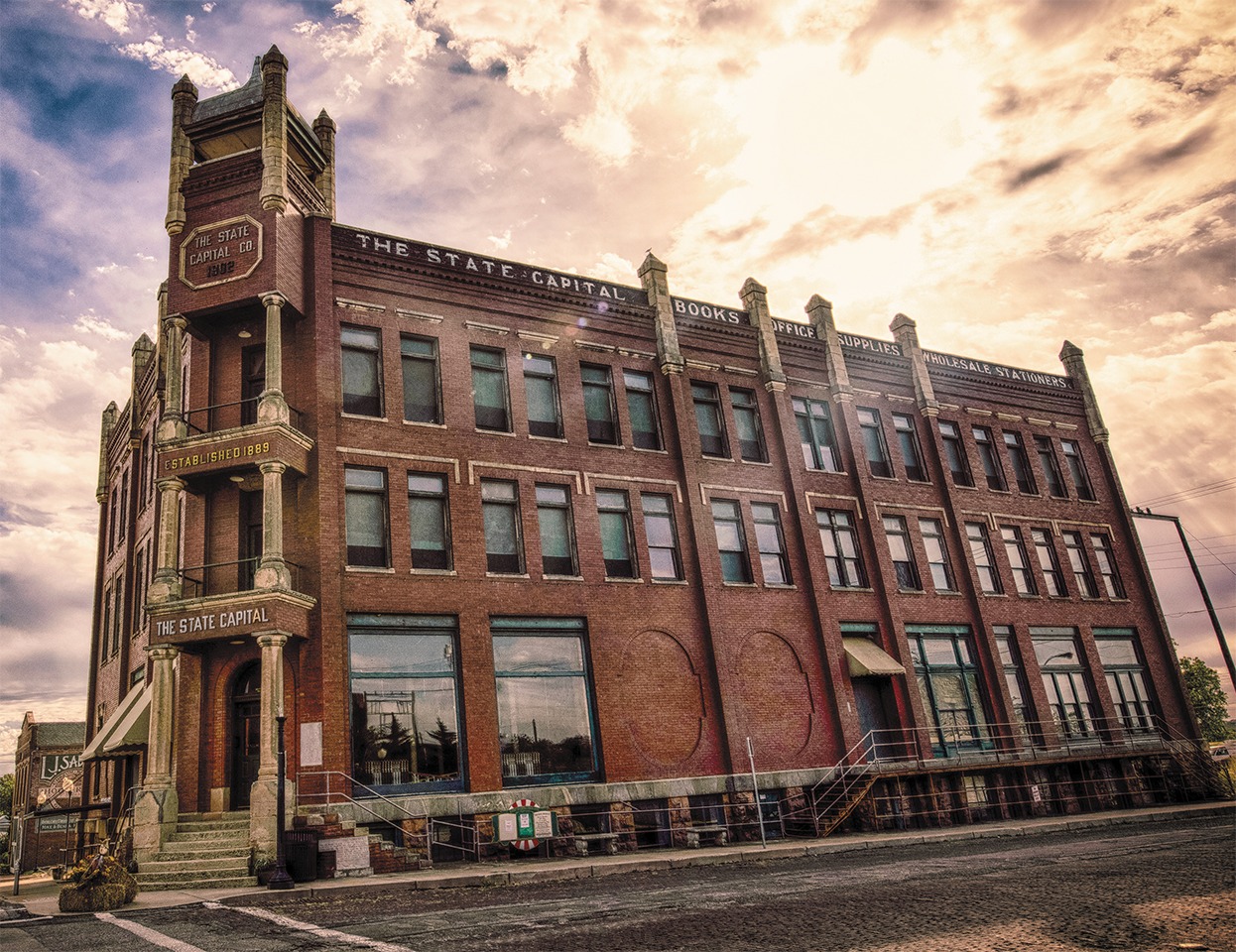
From 1902 to 1911, the State Capitol newspaper was produced at the Co-operative Publishing Company Building.
Its reign ended in 1910 following a feud between the Democratic governor and the Republican owner of the state’s major newspaper, who lived in Guthrie. A legislative vote approved moving the capital to Oklahoma City. Some claim that the Oklahoma state seal was stolen quickly thereafter in the dark of night and smuggled to Oklahoma City. Over time the story has become a Guthrie legend; it’s even mentioned in a stone plaque in front of the first capitol.
Among the early arrivals to Guthrie (two months after the land run) was Joseph Foucart, a Belgian architect. Foucart designed in the Gothic style, adding his own touches of Russian and American Romanesque. Changes in style and stone color distinguish his buildings, which are now museums, shops, galleries, restaurants, and homes. Additional architectural attractions in the town are built in Victorian, Beaux Arts, and Romanesque styles. These structures have earned Guthrie its listing on the National Register of Historic Places.
In all, the town has the state’s largest urban historic district, with more than 2,000 buildings spanning many city blocks. To get a quick view of the highlights, hop aboard the First Capital Trolley for a delightful alternative to walking and enjoy narrations about local sites as you ride around town. For the schedule and rates, check www.firstcapitaltrolley.com.
Since one of the best characteristics of this town is its compact size, visitors can enjoy its history, beautiful architecture, and boutique shopping just by strolling around. Specialty shops, galleries, and restaurants abound. To see the historical buildings, explore on your own, or contact Guthrie Ghost Walk to hear entertaining stories during an evening walking tour, visit www.guthrieghostwalk.com.
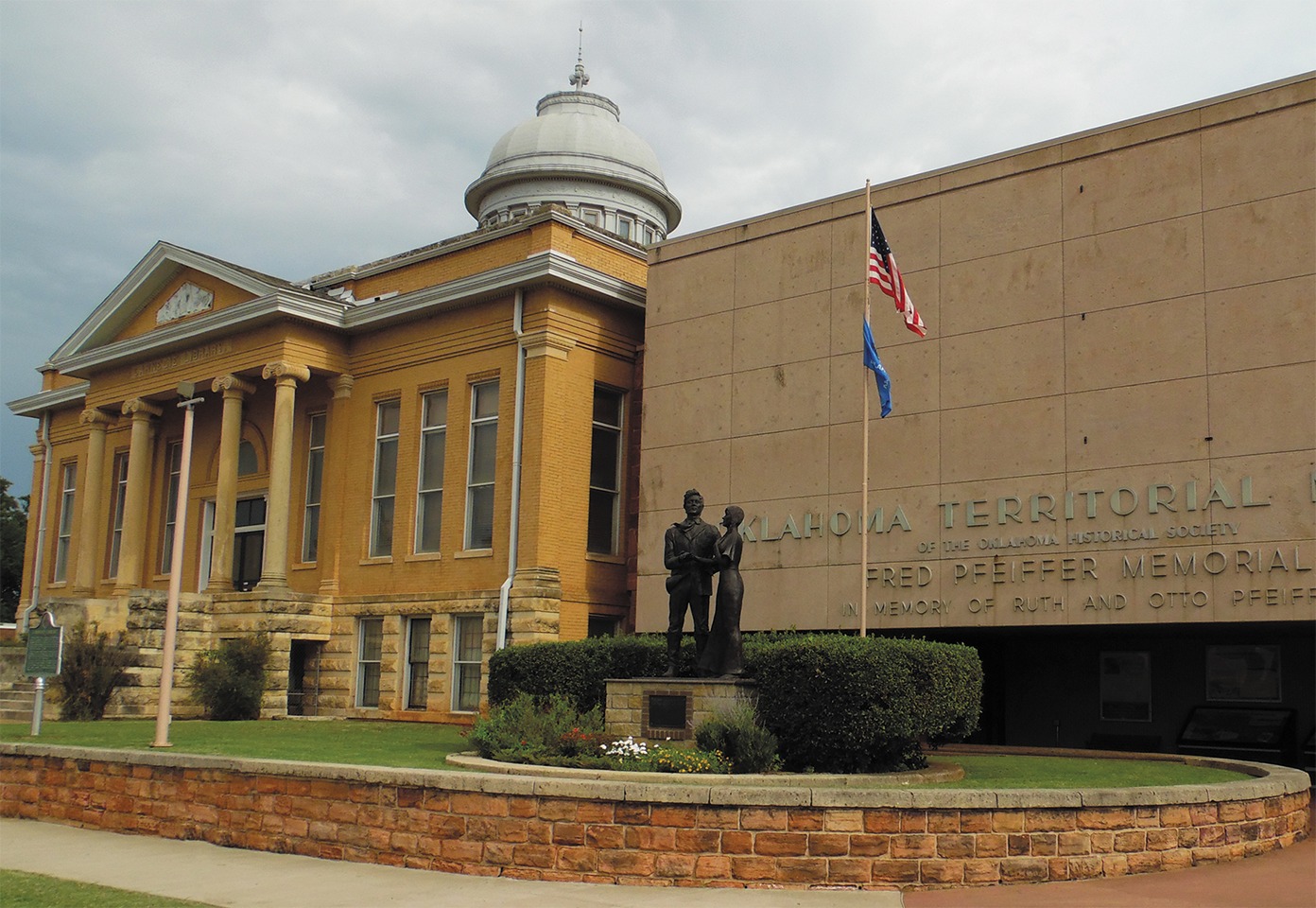
The Oklahoma Territorial Museum is known for its statues of Mr. Oklahoma and Miss Indian Territory.
It’s said that Guthrie is home to the smallest national park in the United States, designated to mark the site of the land office associated with the Land Run of 1889. So, we asked and were sent to find a tree in a parking lot behind the post office. Technically, we think we found the tree, but there was no plaque to identify it as a national park. Were the tourism folks pulling our leg, or was the man we asked just showing the town’s sense of humor? We are not sure.
To learn more about Guthrie’s history, visit the Oklahoma Territorial Museum. A statue of Mr. Oklahoma marrying Miss Indian Territory, symbolizing Oklahoma becoming a state, stands in front. Before entering, check out the Spotlight Exhibits, which present changing displays about Guthrie’s history and people. Inside, three galleries provide details. The story begins with the Louisiana Purchase and the establishment of the Indian Territories, and continues through the transition from struggling in the dry, sparse land to becoming a more sophisticated society. It culminates in the political battles for statehood and the town’s brief term as state capital.

Photos of movie star Tom Mix line the wall of a café inside the former Blue Bell Bar, where he once worked.
More exhibits on the peoples and history of the area are presented on the main floor of the adjoining Carnegie Library. The beautifully preserved second Renaissance-Revival style building has served many purposes since it was built in 1902. Legend has it that silent-screen cowboy star Tom Mix taught exercise classes in the gym of the library.
That was before he made Hollywood Westerns, of course. Mix was also occupied in Guthrie as a bartender at the Blue Bell on the corner of Second and Harrison. It now houses a Mexican restaurant, which displays some photos from his cowboy movies.
In its heyday, the Blue Bell was a saloon, a popular meeting house, a bawdy house, and a flop house. Paranormal investigators claim they have electronically recorded voice phenomena inside. Gazing at the old bar, you can almost hear the music, voices, laughter, and occasional gunshots as locals gathered in the night to drink, gamble, and carouse.
Honor Park, across the street from the Blue Bell, has a memorial that pays tribute to American veterans from the Revolutionary War through the Persian Gulf War.
The Oklahoma Frontier Drugstore Museum focuses on pharmaceutical history. Its soda fountain may bring back fond memories for some folks. Remedies for many ailments grow in the Apothecary Garden outside. Take a break there to sit on a bench, watch the fountain and fish pond, and smell the fragrant plants.
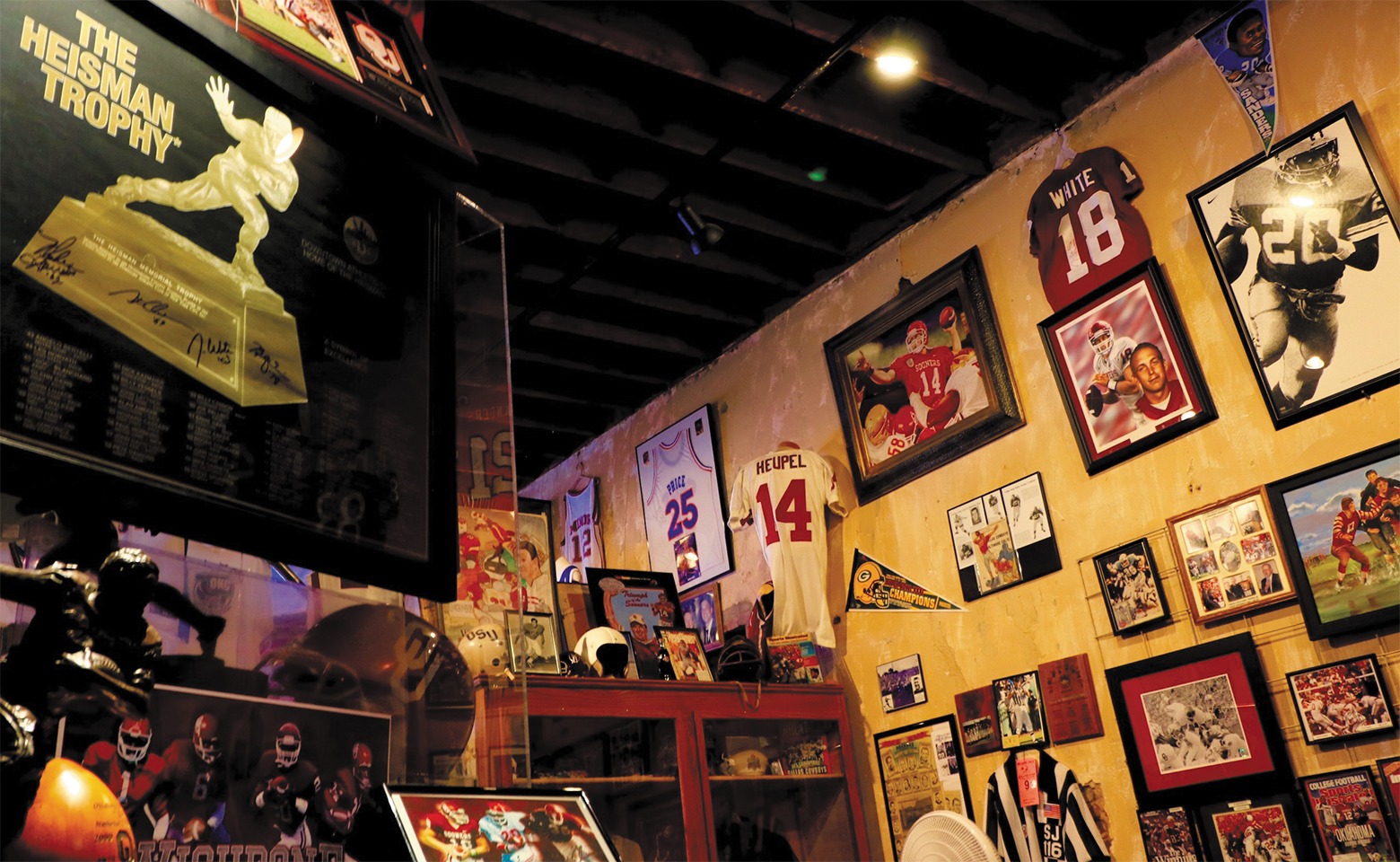
A small but impressive collection is displayed at the Territorial Capital Sports Museum. Oklahoma natives Mickey Mantle, Matt Holliday, Jim Thorpe, and Shannon Miller are among the athletes honored, along with other Oklahoma golf, rodeo, and basketball greats. Galleries are dedicated to Olympic and women athletes. The museum sponsors sporting events for children and teenagers.
A very active and stalwart part of the Guthrie community is the Pollard Theatre. The shows take place in a 1901 Romanesque Revival-style building, which has hosted 100 years of performances from artists such as Lena Horne, Henry Mancini, and Luciano Pavarotti. Upcoming presentations include musicals and more; check the current schedule at www.thepollard.org.
Whether you are a resident, newcomer, or visitor, the townsfolk of Guthrie extend friendly greetings. Upon entering one artist’s studio, we were greeted like long-lost friends. It seems that the glassblower next door, after learning where we were from, let the painter know we were from the same town as she. We had fun discovering connections. At a table next to us in a restaurant, an old-timer leaned over, sharing his pride in the town and wanting to make sure we visited the memorial at Honor Park. Their welcoming is typical of everyone we encountered, even the man who sent us to find that “national park.”
Guthrie holds a huge parade and festival each April to commemorate the Land Run of 1889, called the Oklahoma ‘89er Celebration. Specific dates for 2019 were not yet set at this writing, but besides the parade, it includes a carnival, a chuck wagon feed, an old-timers baseball game, and more. And October 4-6, 2018, are the dates for the annual Oklahoma International Bluegrass Festival in Guthrie. Other annual events include a Christmas celebration that involves a lighted evening parade, historic homes tour, and Victorian walks. For information about these events and more, go to the Historic Guthrie website, www.historicguthrieok.com, or call (405) 260-0170.
Guthrie is a great day trip from Oklahoma City, or a place to park the RV for a few days of pleasure and relaxation.
Further Info
City of Guthrie, Oklahoma
(405) 282-0197
www.guthrieok.com
Guthrie Campgrounds
Americas Best Value Inn RV Park
(RV sites behind hotel; fee includes breakfast)
2323 Territorial Trail
Guthrie, OK 73044
(405) 282-8831
Cedar Valley RV Park
725 Masters Drive
Guthrie, OK 73044
(405) 282-4478
www.cedarvalleyrvpark.com
Pioneer RV Park
1601 E. Seward Road
Guthrie, OK 73044
(405) 282-3557
www.pioneerrvparkguthrie.com