

American history comes alive at these smaller, lesser-known war-related monuments.
By Kathleen Walls
November 2018
The United States was formed through conflicts, so perhaps that’s why it has so many war memorials and museums. Their backstories can be fascinating. In fact, the few details related here about the following sites only scratch the surface. Consider a visit to each of them, as well as a deeper look.
French And Indian War
When Virginia was the western frontier of the British colonies, Fort Edwards stood guard against the French and their American Indian allies. George Washington, then a young colonel in the Virginia militia, learned battle skills in this area during the French and Indian War. He urged settlers to protect themselves with a string of forts, in addition to those built by the army.
A few scattered settlers lived in what is now Hampshire County, West Virginia. One of them, Joseph Edwards, built a fort to enclose the most vital buildings on his property. From there, soldiers from Washington’s British regiment pursued a few Indians and stumbled into an ambush of more than 100 French and Indian raiders. It did not end well.
Over the years, Fort Edwards disappeared. But the memory of it was passed down through generations of local residents. Thus, when a developer sought to purchase a parcel of land for a housing development, a few old-timers wondered whether it was the site of the old fort. This piqued the interest of local historians. When the land deal fell through in 1995, they formed the Fort Edwards Foundation, purchased the site, and began an archaeological excavation. Edwards is the only civilian-built fort from that era that is open to the public.
Visitors can walk back to lines of stockade set where old fort boundaries were unearthed. Inside the museum, displays of artifacts make you imagine you’re there watching historical events unfold. The items are augmented by period guns, clothing, and maps. A Colonial-style garden is in back.
This site is small, and parking on the paved curved driveway in front is easy. However, you may need to pull your RV onto the grass. The fort’s visitors center is open Saturdays and Sundays from late June through the first weekend in October, and offers special events with costumed interpreters. Admission is free. It is 20 miles west of Winchester, Virginia. For more details: www.fortedwards.org; (304) 579-5084.
Civil War
Wilson’s Creek National Battlefield in Republic, Missouri (12 miles southwest of Springfield), recalls the first major Civil War battle west of the Mississippi River. It is where the first Union general was killed in action, Brig. Gen. Nathaniel Lyon.
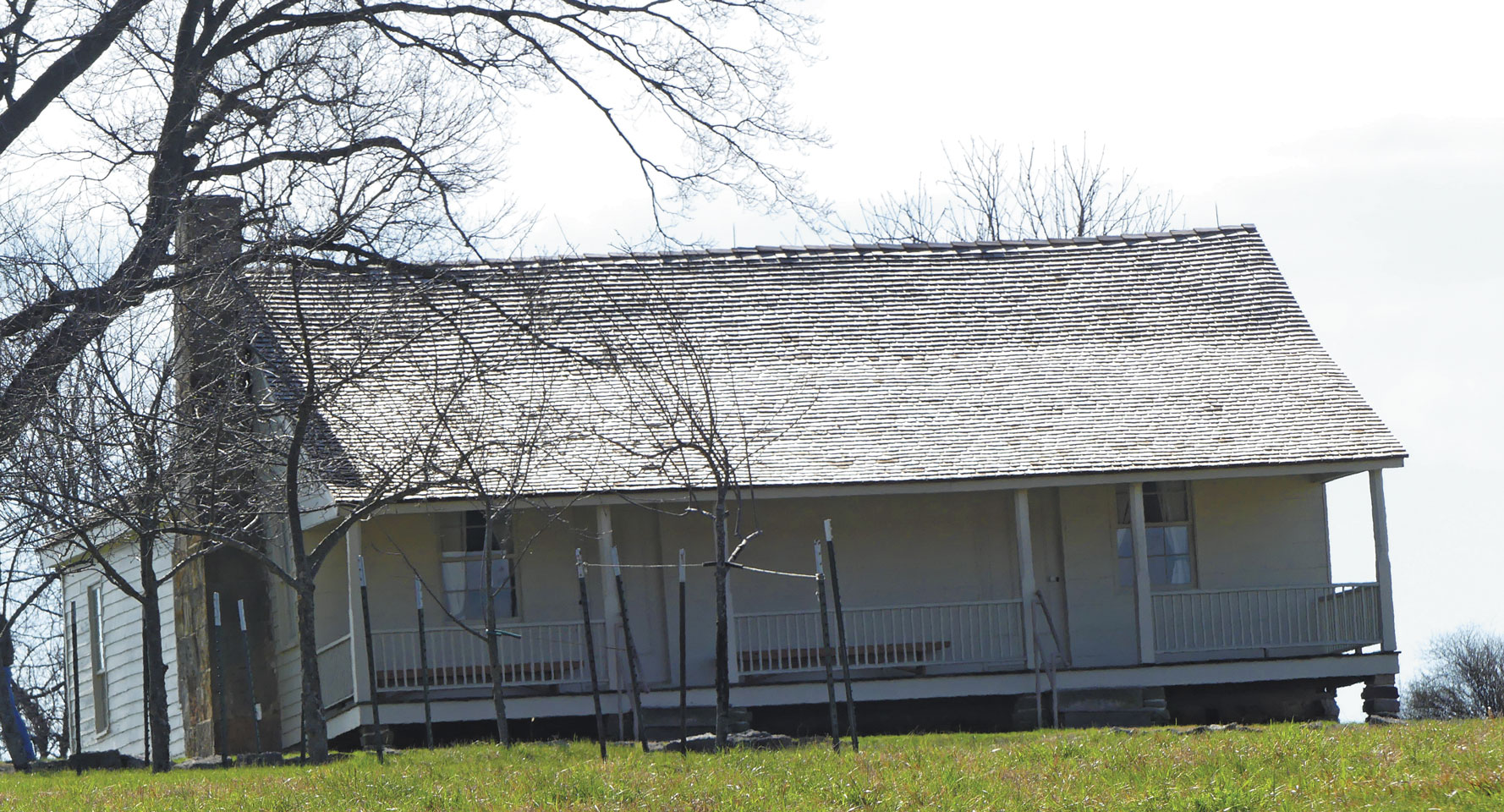
The original Ray House at Wilson’s Creek National Battlefield was used as a hospital following the skirmish. The home was not damaged in the fight, but hungry soldiers took most of the Ray family’s livestock and crops.
Leaders at a state constitutional convention in July 1861 met to decide whether Missouri should secede, and the notion was rejected. Since state governor Claiborne Fox Jackson favored the Confederates and already had worked for their side, he was removed from office. He refused to accept his ouster and continued to act as governor, although President Abraham Lincoln appointed Hamilton R. Gamble provisional governor.
Lyon’s Union forces were opposed by Missouri State Guard troops under Maj. Gen. Sterling Price and Confederates commanded by Brig. Gen. Ben McCulloch. The battle took place on August 10, 1861, and resulted in a Confederate/Missouri victory.
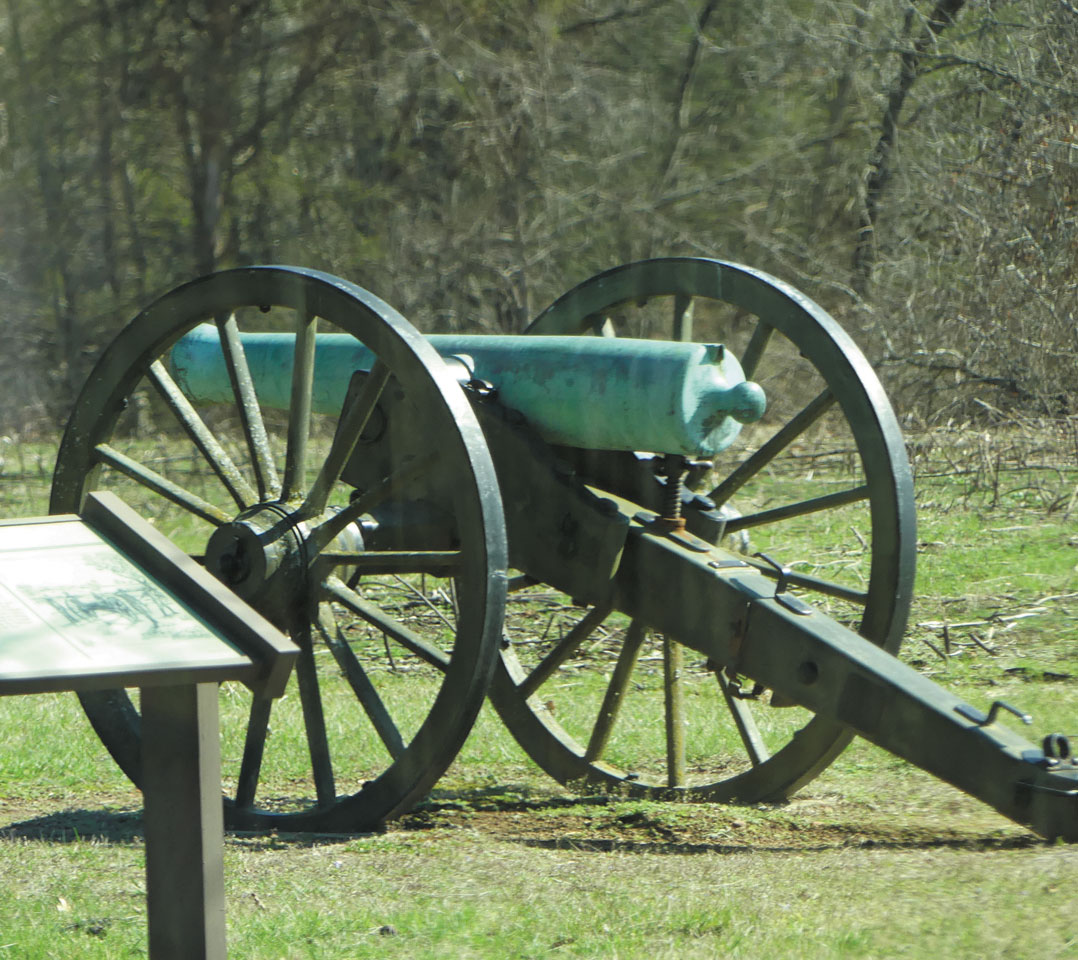
Stops along the driving tour at Wilson’s Creek National Battlefield mark important sites.
Wilson’s Creek National Battlefield is remarkably well-preserved and well-marked. In the combination museum and visitors center, artifacts range from soldiers’ documents to a knife-and-fork combination created for a fighter who lost a hand. A 29-minute film about the battle and a battle map explanation also are presented. An authentic Medal of Honor is displayed, too.
Visitors can drive a 5-mile self-guided tour route with eight interpretive stops, as well as take hiking and horseback trails. Driving and pull-off parking spots are adequate for RVs.
The Ray House and springhouse are the only surviving structures on the battlefield. Ray House was in the thick of the fighting and served as a hospital afterward. It’s open occasionally in the summer. The Edwards Cabin, used as Sterling Price’s headquarters, was moved to the site where Edwards’ home stood. The signage and cannons, many of which are original, are placed so well you can visualize the battle.
Admission is $20 per vehicle or $10 per adult; the battlefield is open year-round, with visitors center hours varying by season. For more details: www.nps.gov/wicr; (417) 732-2662, ext. 227.
Indian Wars
Fort Concho National Historic Landmark in San Angelo, Texas, was built in 1867 to protect area settlers from American Indian attacks. It also helped to usher in more understanding between African Americans and their fellow soldiers at arms.
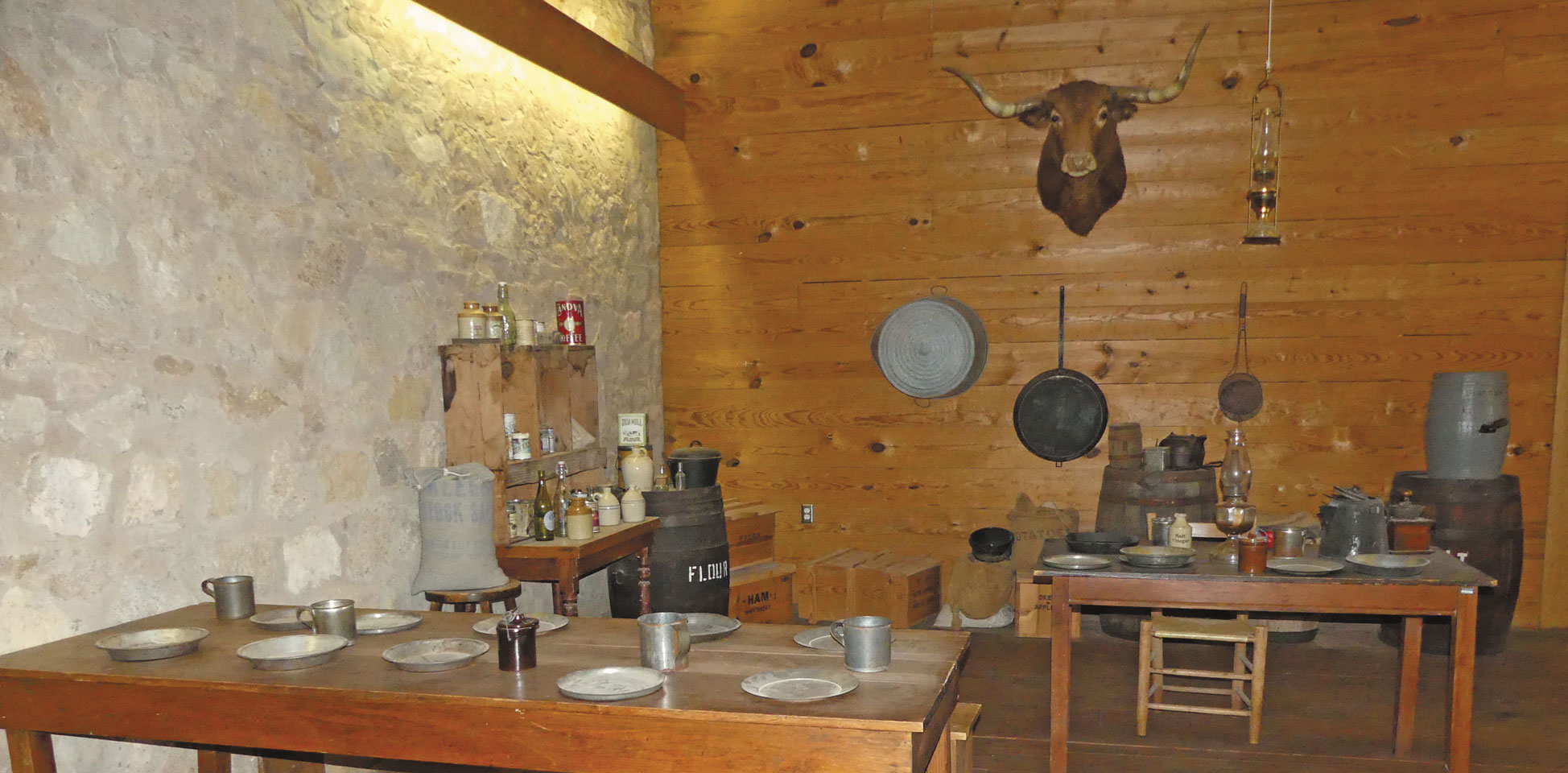
A mess hall in the restored barracks at Fort Concho appears ready to serve troops as it did when the fort was active.
After the Civil War, many African American men sought a way to earn a living and be treated with some measure of respect. At the same time, friction abounded between Western migrants and American Indians. On September 21, 1866, at Fort Leavenworth, Kansas, the first all-black regiments of a peacetime army were formed. From then up until the early 1890s, many of them served in posts on the Western frontier.
By April 1875, the headquarters for the all-African American 9th and 10th cavalries were moved to Fort Concho. Several cavalry and infantry companies were stationed at the fort until 1885. The “Buffalo Soldiers” got their nickname from American Indians, who admired their bravery and strength. Here the Buffalo soldiers earned their place in history. Eighteen of the troops were awarded the Medal of Honor during the Indian Wars.
Videos, exhibits, and knowledgeable personnel at the visitors center can help build your understanding of the fort. The compound was organized like a small town, and 10 of the 23 buildings are open to the public. The fort is run as a living historical museum by the city of San Angelo.
Buffalo Soldiers were treated almost equally, considering the era in which they lived. Step into the barracks and you see what all soldiers used daily: a cot, a field box, and some pegs for hanging their uncomfortable woolen uniforms. They ate communally. Each barracks had its own mess hall with a regular cook. The cook was so important that he was relieved of more unpleasant jobs, such as guard duty and latrine cleanup.
The hospital is a fascinating place. Sanitation was at a minimum. One look at its toilet, known as an “earth closet,” was enough to convince you never to get sick enough to go to the hospital.
The chapel doubled as a schoolroom, with the chaplain in charge of education. By the 1880s the army decreed that soldiers must learn to read and write.
While you’re at the fort, check out the amazing collection of antique telephones inside one building housing the officers’ quarters. Devices include an Alexander Graham Bell phone and a hand-operated switchboard, revealing the evolution of the equipment.
RV parking is available in a large paved lot across the street. The fort is open Monday-Saturday 9:00 a.m. to 5:00 p.m. and Sunday 1:00 p.m. to 5:00 p.m. Guided tours are offered Wednesday through Sunday for $5; self-guided tours are available daily for $3. More details: www.fortconcho.com; (325) 481-2646.
World War II
Holocaust Children’s Memorial in Whitwell, Tennessee, is a small museum with an amazing origin story. In 1998, Whitwell Middle School principal Linda Hooper asked assistant principal David Smith and teacher Sandra Roberts to organize a project to teach students the importance of tolerating and respecting different cultures. They decided to start a voluntary after-school program about the Holocaust.
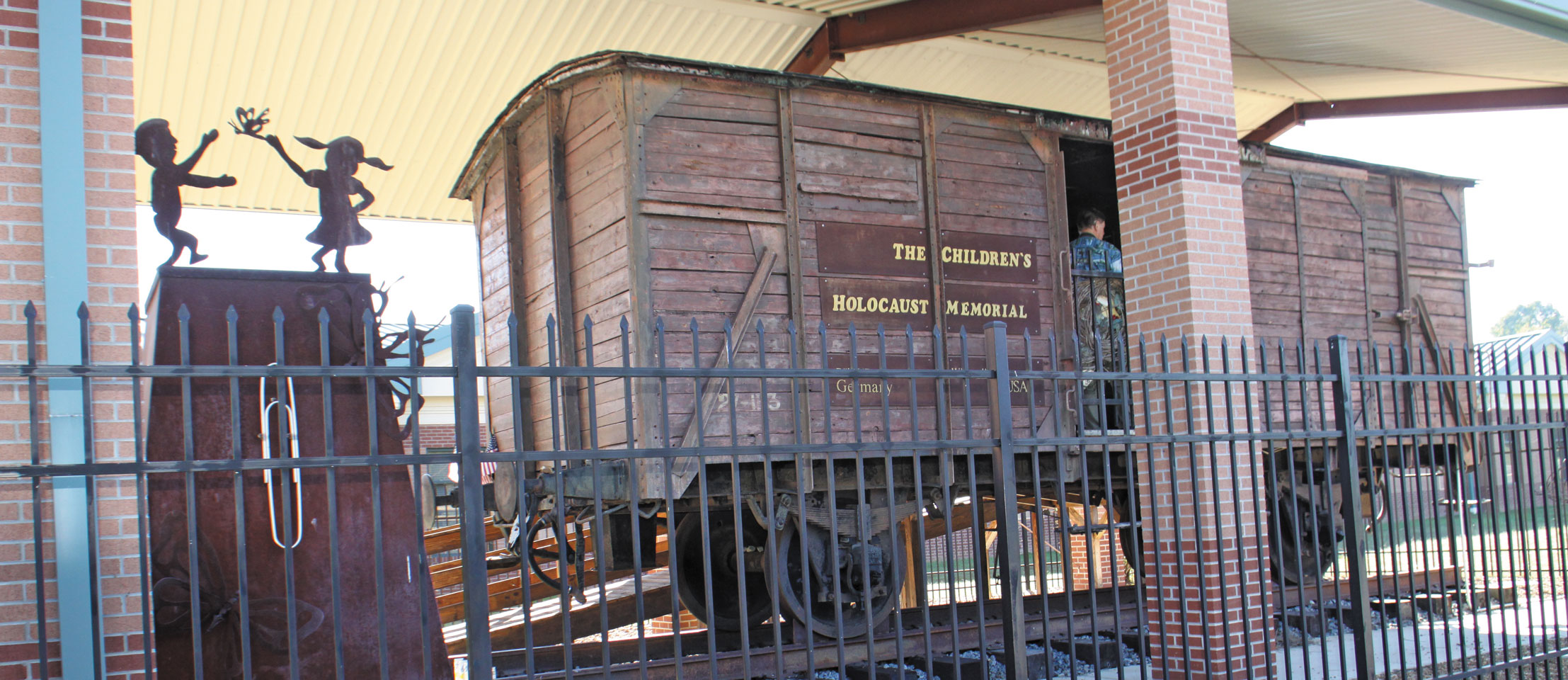
This railcar outside Whitwell Middle School in Whitwell, Tennessee, site of the Children’s Holocaust Memorial, transported Jews to labor and death camps.
The sheer number of Jews exterminated was difficult for children to imagine; something was needed as a visual aid. The only stipulation was it had to relate to the Holocaust or World War II.
The students settled on paper clips, which were invented by a Norwegian Jew. When Norway was occupied by Nazis in World War II, Norwegians wore paper clips on their lapels as a symbolic protest. So, the children began a campaign, asking the public to send them paper clips. Their goal: to collect 6 million.
Thirty million paper clips later, they quit counting. The paper clips are still coming in today. Some of the extras have been sent out for use as other memorials. A documentary film about the project, titled Paper Clips, was released in 2004.
Visitors from all over the world now come to see the memorial, which has been given precious gifts; among them, a huge collection of Holocaust literature and a handwritten Torah that is more than 100 years old. These items and more are inside the school’s Children’s Holocaust Memorial Research Room, open during regular school hours.
In front of the school is a railcar surrounded by 18 butterfly sculptures and a monument to the children of the Holocaust, which was unveiled in 2008. The authentic railcar was used to transport Jews to the labor and death camps. Among the items it holds is a suitcase from German schoolchildren filled with apologies; artifacts from the Holocaust; and a lot of paper clips. Press a button inside, and you’ll hear a 20-minute automated audio presentation. Outside of school hours, the train car may be unlocked by picking up a key from nearby Castle’s Grocery (423-658-6542).
Whitwell is approximately 40 minutes northwest of Chattanooga. A large paved parking area is located in front of the school. More details: www.whitwellmiddleschool.org; (423) 658-5635.