
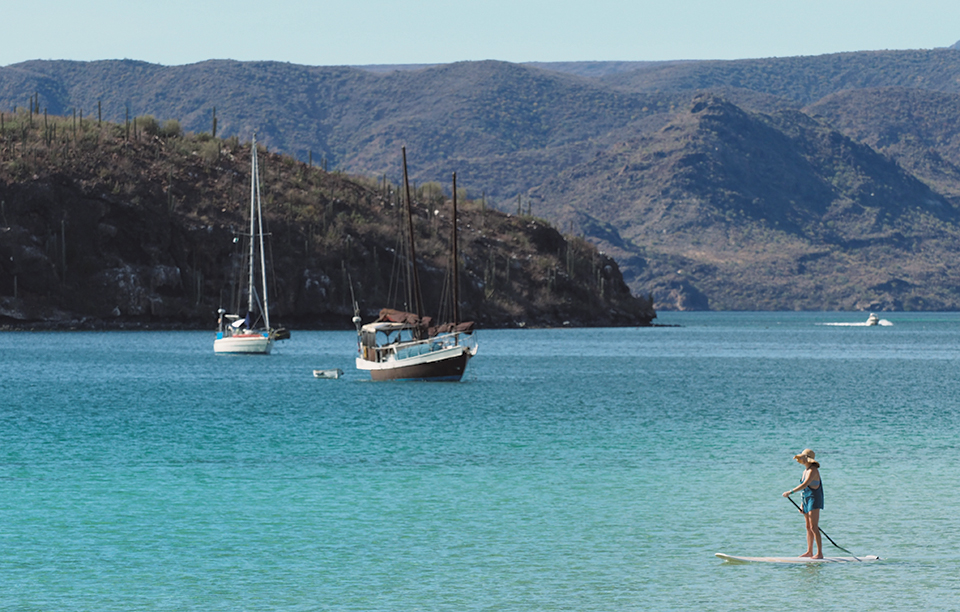
During the winter of 2018, an FMCA family found a welcoming culture and beautiful sights.
By Jesse & Jennifer Ingram, F485755
March 2019
It’s funny what a few months in Mexico can do for one’s outlook on life. After our Baja RV adventure last year, we returned changed, both physically and mentally. Losing weight and getting sun were great, but it was the mental shift we found most noteworthy. We now worry less about life’s details and focus more on tasty food, interesting conversation, and having fun, new experiences daily.
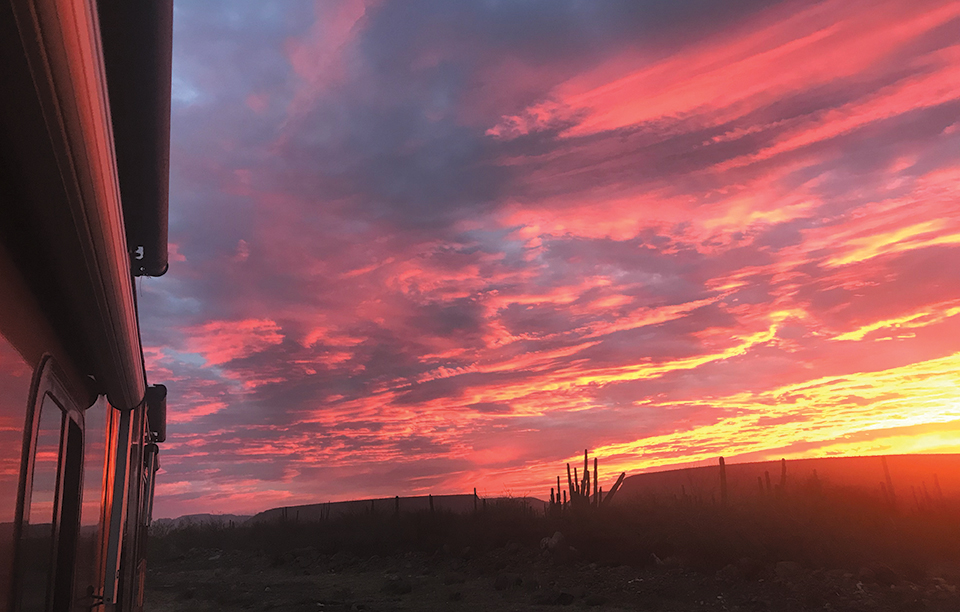
Desert, ocean, and mountain views make Baja a never-ending photo opportunity. Shown here, a sunset near San Ignacio.
Initially we thought our large RV — a 2002 American Coach American Eagle diesel motorhome — would annoy locals each time we blocked an intersection, or when we failed to go as fast as smaller cars. But most people weren’t in a hurry. And when you see some of the horse- and human-powered vehicles Mexicans already contend with, it makes sense that our RV really isn’t as big a deal as we thought. In Mexico, we were just another crazy-shaped vehicle passing by!
If you take your RV to Baja, Mexico, you’ll inevitably have some excitement during your visit. We hope you embrace the experience, grow from it, enjoy it, and return home more humble and changed, just as our trip through Baja changed us.
So, why were we so drawn to this Mexican paradise?
Reason 1:
International RVing offers the best of adventure travel AND comfort.
You get to try new foods and experience new smells, sights, languages, and cultures. You travel with your own personal bed, bathroom, and modern comforts, which aren’t always guaranteed during international travel. If that’s not enough, the cost of living in Mexico is very affordable, so you can stretch every penny.
Reason 2:
You can park your RV on the beach.
One of the two primary objectives during our trip was to visit as many beaches as possible. Baja gives RVers the ability to choose their own adventure, from mild to wild. If you’re looking for easy RV beach access with all your needs covered (freshly caught seafood, water, pump-outs, souvenirs), Baja has it. If you’re looking for remote, unspoiled beauty, with desert mountains touching the sea and not a single neighbor or footprint in the sand, Baja has that as well. We paddleboarded with whale sharks on an empty beach, went scuba diving with sea turtles, and surfed more uncrowded waves than we can remember. The adventure is there, awaiting your arrival.
Here are two great RV spots to enjoy the beach:
*Bahia Concepcion. This bay on the Gulf of California (also known as the Sea of Cortez) is about two-thirds of the way down the Baja peninsula. With perfect weather, live music, cheap drinks and food, an RV park called Playa Santispac (at kilometer marker 114 on Highway 1) is heaven on earth. The cantina on the beach, Armando’s, surprisingly wasn’t limited to RVers. The tranquil patch of sea at our doorsteps was also a perfect harbor for those nomads traveling by water. All sorts of vessels were anchored close by. We would walk to the beachside cantina each night and join boat owners who were equally excited about the grub and margaritas. We regularly met new people and heard amazing stories about RVing and cruising across the globe.
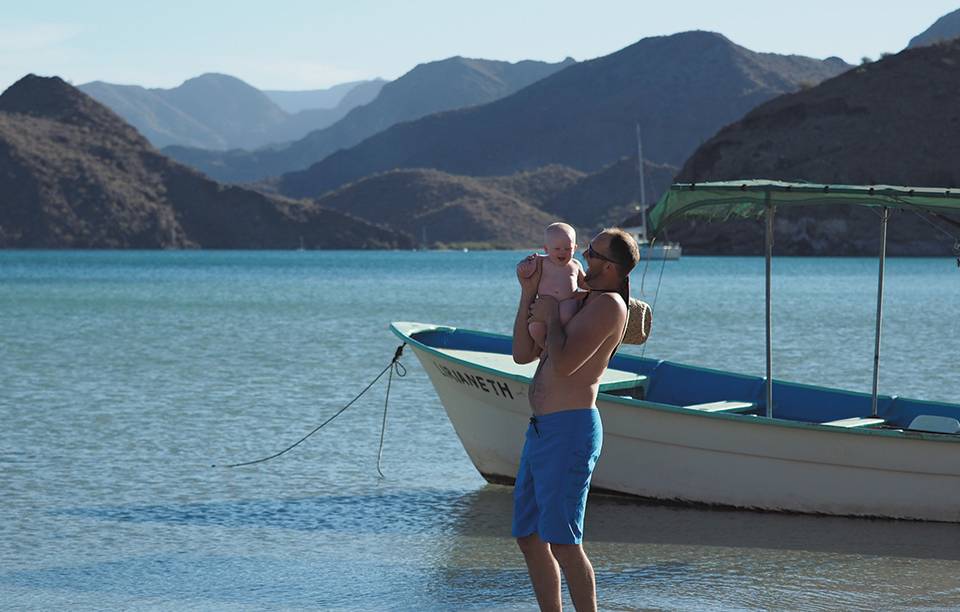
Tucker Ingram and his dad, Jesse, enjoy some outdoor fun in Baja, Mexico.
Playa Santispac, which has beachfront parking, was the very first camping area we came to, and we pulled in. We didn’t need to see any other beaches; it was perfect. It has no hookups, but you can get water and propane for a fee. The best part about Playa Santispac was the price: 200 pesos per night, or about $10 U.S., to be right on the beach.
Travelers Guide to Camping Mexico’s Baja, Chapter 7, lists other nearby RV parks that do have hookups. For restaurants, Armando’s and Ana’s are close by. At Ana’s, a fellow named Carlos spoke nearly fluent English and was quite willing to help, especially when we purchased an ice-cold beverage or Wi-Fi from their store.
*Cabo Pulmo. No hookups; just paradise in the lower southeast portion of the Baja peninsula. A cool breeze blew from the Gulf of California, and waves crashed onshore 20 feet in front of us. This would be the first of many times we declared we had found paradise on Earth.
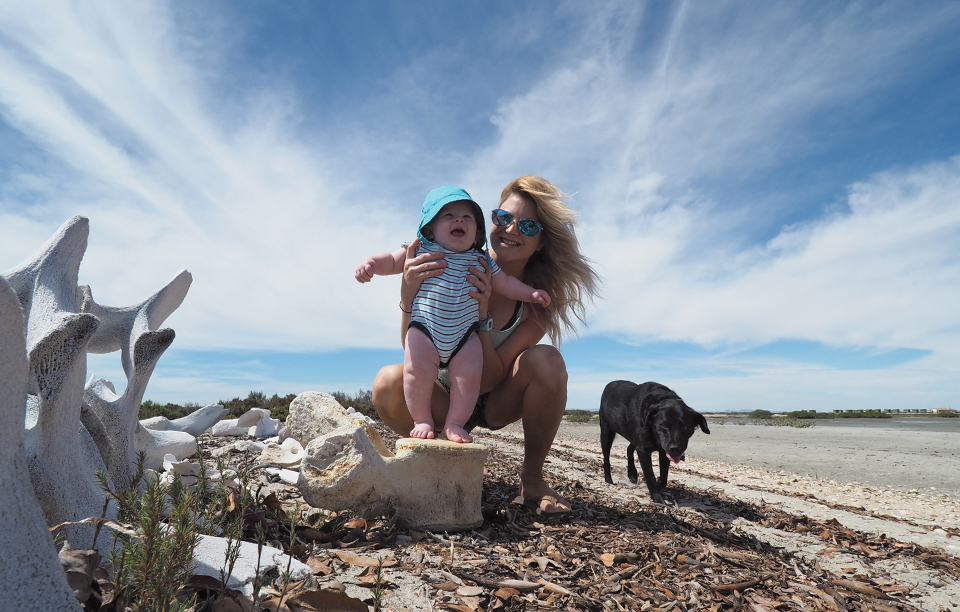
Jennifer poses Tucker atop one of the many whale bones that dot the beach at San Ignacio Lagoon, where whale-watching is popular.
The last 10 miles of road to Cabo Pulmo is dirt, but it’s well traveled, and we found good traction while driving our motorhome all the way to the cobblestone parking area. Best part? The RV camping area is free and offers trash receptacles. That’s all it offers, as this is 100 percent boondocking, but good cell service is available. We will always remember stepping from our RV and onto the round stones lining the beach.
This site has mountainous terrain on either side. You can hike up a short but steep hill to the north of the beach for gorgeous views. You’ll see the dive boats make their daily rounds for scuba and snorkel trips, many of which you can easily join simply by walking into town and asking about availability. The beach is rocky and steep, but the sounds of crashing waves and tumbling rocks make for an excellent lullaby.
Cabo Pulmo is a National Marine Park. Reefs, shipwrecks, and a healthy shark population make for a scuba diver’s dream, and the number of dive resorts reflect that. Divers and snorkelers are both accommodated, so there’s a level of adventure for all. Hiking trails are abundant, and we heard about a decent mountain bike trail. Off-roading is a pastime here as well.
Details: If you have a larger motorhome, use caution on the hills, as we dragged our hitch a couple of times when the road dipped. See Traveler’s Guide to Camping Mexico’s Baja, Chapter 9.
Regarding food: A short walk into town takes you to several small restaurants, some offering Wi-Fi. Fresh water for your RV is available in La Ribera, approximately 20 kilometers (12.4 miles) north of Cabo Pulmo. Fill up on propane in La Paz or San Jose del Cabo.
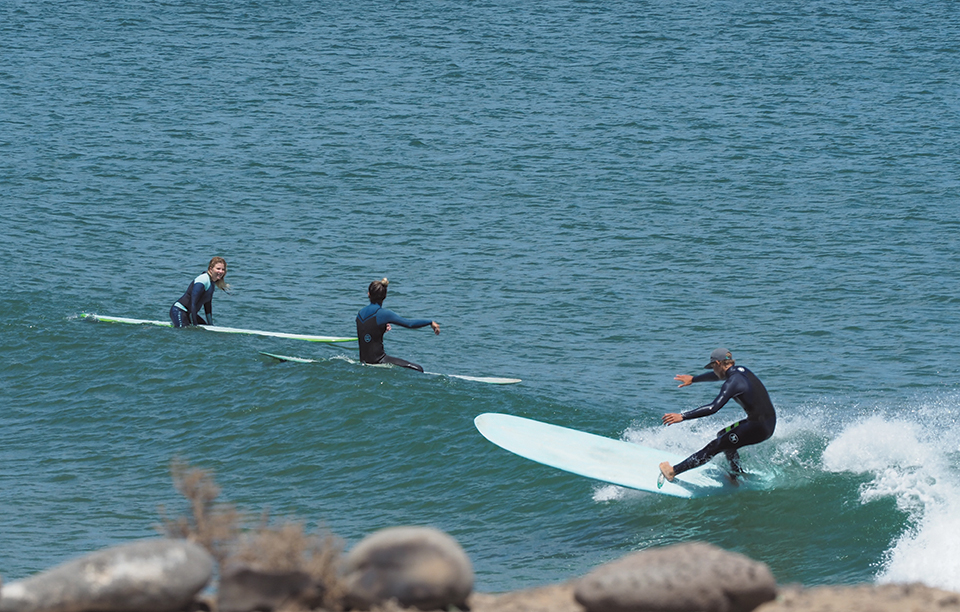
Scorpion Bay is a perfect spot for beginners and pros alike to do some surfing.
Reason 3:
You’ll meet the friendliest people on Earth.
When’s the last time a stranger stopped everything they were doing to help you with a problem? This might happen on occasion in the United States, but it’s an everyday occurrence in Mexico’s Baja. Perhaps it’s due to their slow pace of life, or strong religious beliefs, or perhaps they are simply polite, friendly people.
Before visiting Baja, we worried about saying something wrong and finding ourselves in a confrontation. And about corrupt police officers asking for mordida (slang for “bribes”). We traveled all over for three months and experienced none of this. We did block traffic, embarrassingly more than once. We did pronounce words wrong. Every police officer we waved hello to waved a polite hello back.
In the end, all that anxiety was unnecessary. If drivers were in a hurry, they’d just go around us, but more often than not, they’d stop what they were doing and try to help.
As for words, the Spanish word for “man” (hombre) and “hungry” (hambre) are oh-so-similar. Every time one of us botched them, our server would smile, correct us, and proceed to communicate in very fluent English. By being polite, and trying to speak some Spanish here and there, all we received in return were kindness and understanding.
Which leads to the warnings about traveling there. In the weeks leading up to our departure to Baja, we received advice such as, “Are you sure you want to visit Mexico? It’s so dangerous. And with that rig of yours!” And “You’ve got a beautiful wife and baby; you’re just asking for trouble. Don’t go. Go anywhere else!”
We were admittedly nervous after being pounded by statements such as those. Luckily, we’ve traveled enough to know that places are generally only as dangerous as you perceive them to be, and so our trip commenced.
Many people assume that the negative news they hear about Mexico reflects the entire country. While parts of the mainland are potentially dangerous, the small towns throughout Baja were anything but violent. The beaches and tourist zones rely on visitors for their livelihoods, so the locals go out of their way to see that you enjoy your visit, and to ensure you’ll return year after year.
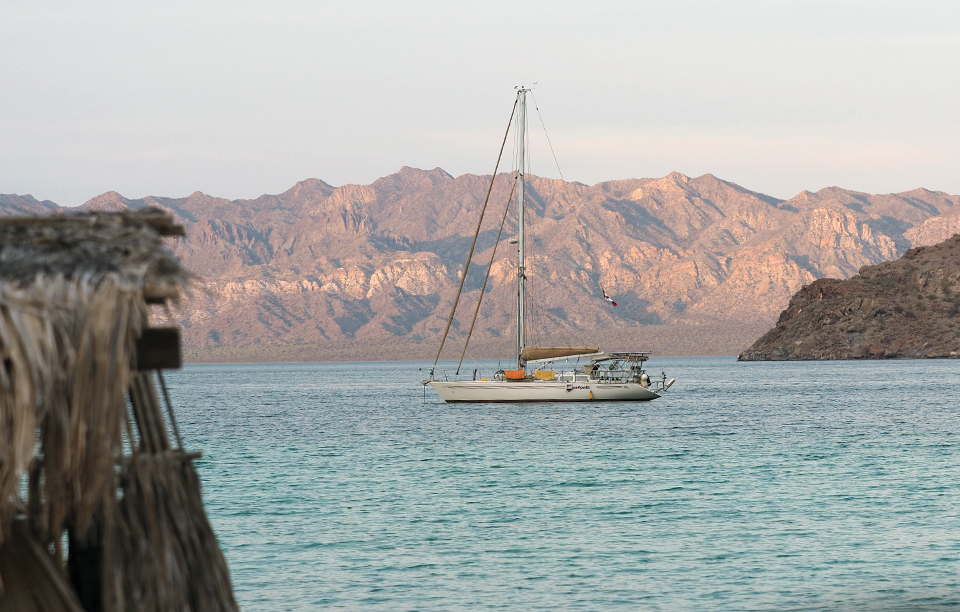
Sailboats anchor at nearly all beachfront RV parks, lending even more beauty to the scene.
Finally, to address the second prime objective of our trip: Taste the best margarita! We found it at the Rice & Beans Restaurant outside San Ignacio, a place that became famous when racecar drivers stopped there. It offers hotel rooms and RV sites. Ricardo’s 100 percent made-from-scratch margaritas are served without fanfare, but they were our favorite.
Finds, Facts, And Tips
*The travel guidebook we mention is Traveler’s Guide To Camping Mexico’s Baja: Explore Baja and Puerto Penasco with Your RV or Tent by Mike and Terri Church. It is sold online. We had the fifth edition of the book, but now a sixth edition is available. It was invaluable and worth obtaining. We also used National Geographic maps and a Moon travel guide to Baja, also available through online retailers.
*We suggest you get a Spanish translation book/translation app. Another great tool is the iOverlander phone app, which gives info about where RV needs such as water and propane can be found.
*Fuel was available in plenty of locations. Gas was less expensive than diesel. The government owns all of the fuel stations (which is why all are named Pemex), but they are now slowly transitioning to private ownership. Fuel prices are per liter, and costs typically were 25 cents more per gallon than in the United States.
*You may wonder why we did not emphasize electrical hookups. This is because Baja’s weather in winter is literally perfect. It is cool at night, and during the day, the air blowing across the Gulf of California keeps it comfortable. If you have solar panels, depending on how much power they provide, you may not lack for power at all.
Plenty of RV parks in Baja do have electrical and water hookups; we stayed at a few of them. One RV park, in a larger town called La Paz, had everything you’d find in the States, and then some: you could swim with whale sharks!
*Bring your sense of adventure to Baja. After you visit, let us know where your favorite beaches and beverages are!
For videos of Baja and other adventures, visit Jesse, Jenny, and little Tucker Ingram on their YouTube channel, Outside Is Calling. Their website is www.outsideiscalling.com, and the family Facebook page can be found by searching Outside Is Calling.
13-Day Baja Whale Watching Tour
FMCA’s Tour Connection, powered by Fantasy RV Tours, offers member-only RV caravans at discounted rates. Fantasy RV Tours is offering an FMCA Baja Peninsula Tour from March 9 to 21, 2020.
FMCA members will visit local Baja communities, camp on beaches along the glimmering Sea of Cortez, and relish native foods. They will caravan to Guerrero Negro and through Baja’s central desert, all while enjoying fiestas; taking whale-watching tours; and exploring optional side trips, museums, and more. At Scammon’s Lagoon, a stopover for grey whales, RVers will come face to face with grey whale mamas and their babies — so close they can reach out and touch them!
This tour sells out fast. Call (855) 385-3622 or visit www.fantasyrvtours.com/fmca.