
PLEASE NOTE: Because of concerns over the escalating COVID-19 virus, FMCA’s 101st International Convention and RV Expo, scheduled for March 26-29, 2020, has been cancelled.
A region north of Tucson lures travelers with iconic Arizona sights.
By Karen Lee Ensley
March 2020
FMCA’s 101st International Convention and RV Expo in Tucson, Arizona, March 26 through 29, is fast approaching. Attendees can look forward to fun entertainment, interesting seminars, and socializing with an enthusiastic group of RVers. But the journey to and from the event also should be savored. Extend your trip and discover Arizona’s extraordinary Verde Valley.
The Spanish word verde means “green,” so the name may seem like a misnomer for desert Arizona. Yet, in the central part of the state, approximately 200 miles north of Tucson, lies Verde Valley, with nearly 80 percent of its land set aside as national forest. The valley encompasses about 714 square miles of red rock formations and lush canyons fed by the Verde River.
The river accommodates pursuits such as boating, and plenty of hiking trails, golf courses, and shopping opportunities await. The valley has historic towns and one of the highest concentrations of archaeological sites in the United States. And on top of all that, the city of Cottonwood, in the Verde Valley, is considered the heart of Arizona’s wine country.
With so much to see and do there, where do you start? Here are five attractions that are a sure thing. And, here’s a quick tip: The word “verde” is pronounced locally so that it rhymes with “birdie.”
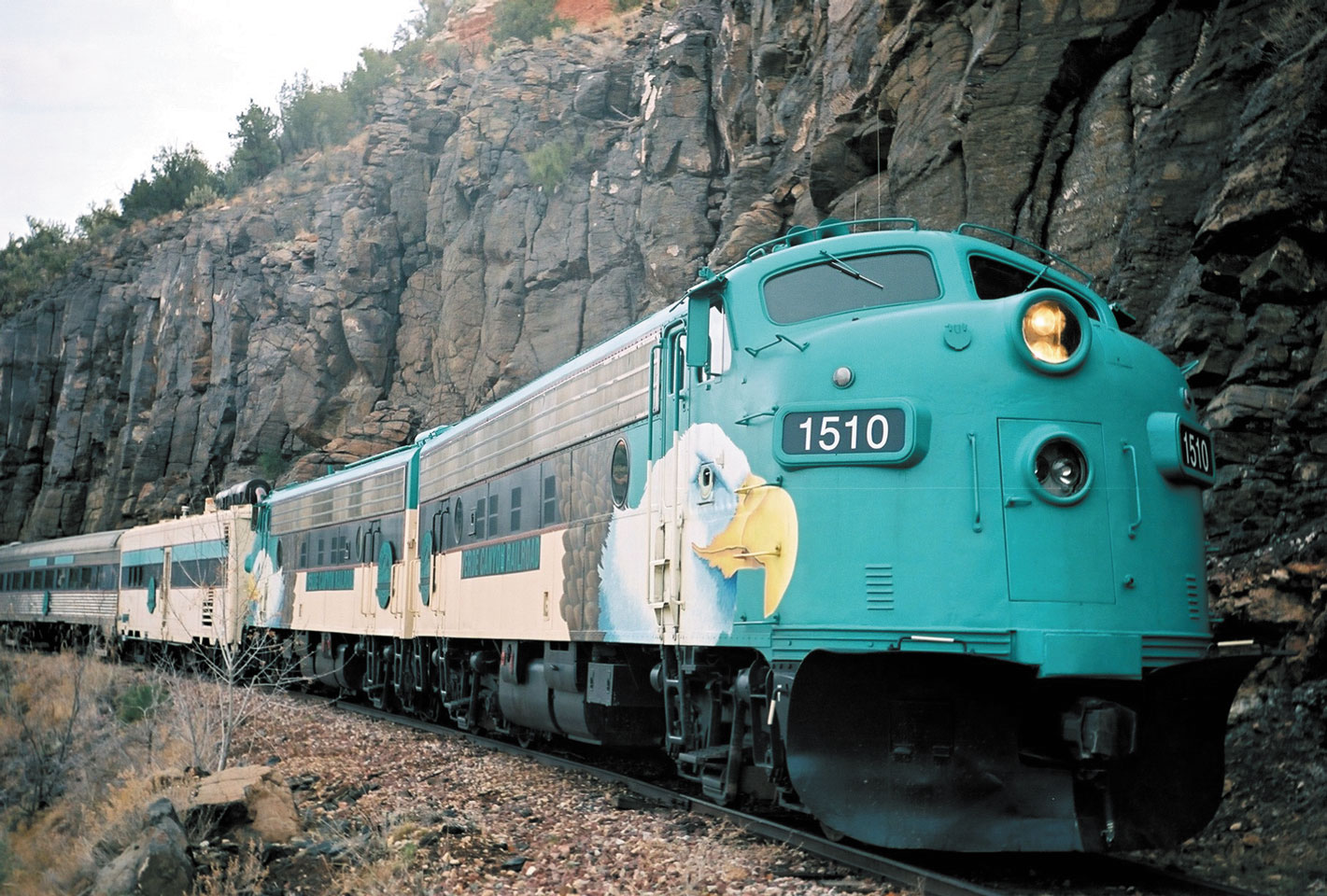
Verde Canyon Railroad, Clarkdale. Park the RV and board the train, because you’re about to embark on a spectacular journey accessible only by rail. Keep your eyes on the scenery as the engineer takes you on a four-hour, 40-mile round-trip excursion between two national forests, through a 680-foot tunnel, and past ancient ruins and towering red rock buttes. Gaze at the remote wilderness through large windows as you sit comfortably in climate-controlled passenger cars complete with rest rooms. Or choose to enjoy the open-air viewing car for fresh canyon air and an amazing 360-degree panorama.
Powering the train are two EMD FP7 diesel locomotives built in 1953 for the Alaska Railroad. They were painted in 2019 with an apropos American bald eagle motif. Alert passengers may spot the U.S. national bird soaring in the canyon. From December to March, visitors have a greater chance of seeing these special raptors, since migrating and resident bald eagles share the canyon during nesting season.
The train offers coach and first-class seats, or a private party caboose option if you’re traveling with a group. For a truly exceptional experience, you may want to be that one person who gets to ride inside the cab with the engineer and the conductor.
At the train depot, you’ll find a restaurant, shopping, and a museum inside a renovated boxcar. Read the storyboards along the quarter-mile length of the loading platform, and you’ll have an introduction to the animals, plants, and people of the Verde Valley.
The railroad station is in Clarkdale. For schedules, rates, and more, see www.verdecanyonrr.com or call (800) 582-7245.
Tuzigoot National Monument, Clarkdale. The Sinagua people began building the limestone and sandstone hilltop pueblo around the year A.D. 1000. They expanded the settlement over the next 400 years to involve 110 rooms, housing more than 200 people. Then, in the late 1300s, the inhabitants began to abandon the pueblo. By the time the first Europeans arrived, Tuzigoot had been empty for nearly 100 years. It’s believed the citizens joined what are now the modern Hopi and Zuni tribes, or stayed nearby and became the ancestors of people now belonging to the Yavapai-Apache Nation.
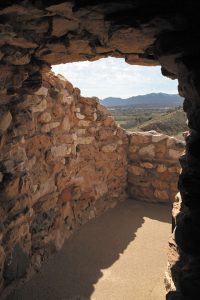
Visitors can climb into and around the dwelling at Tuzigoot National Monument, enjoying an extraordinary view of the valley below.
Tuzigoot is considered to be such a fine example of its time period that the era is called the Tuzigoot Phase of the Sinagua culture.
The extent of this giant complex was revealed in the 1930s as out-of-work miners were paid to excavate it. Pottery shards they found were pieced together by local women. The name of the site came from an Apache word meaning “crooked water,” referring to a nearby lake.
At Tuzigoot, be sure to stop at the impressive visitors center, and then take a walk along the trails, especially the paved, 1/3-mile trail around the pueblo. You’re permitted to venture inside the stone home and gain a sense of what it was like to live there. Climb the stairs to the rooftop and enjoy the fabulous panoramic view. As you look out over the valley, imagine the ancients watching from this rooftop for traders who brought goods and news from other tribes.
The entry fee at Tuzigoot includes admission to the next stop in this story, too. If you do not already have a National Park Service America the Beautiful Pass, you may find it is worth the price. Passes come with different fees for seniors, military, and others. See www.nps.gov/planyourvisit/passes.htm for details about passes and fees. For more information about Tuzigoot, call (928) 634-5564 or see www.nps.gov/tuzi.
Montezuma Castle National Monument, Camp Verde. The name of this incredible settlement really is a misnomer. Montezuma Castle was named in the 1860s by people who mistakenly thought the Aztec emperor was somehow affiliated with it. Truth is, it was built by the Sinagua people, who lived in it and then abandoned it before Montezuma was born.
Montezuma Castle, built directly into the side of a cliff, rests 50 feet above the valley floor. Standing five stories tall, the castle has 20 rooms and covers 3,500 square feet. Truly a must-see, it’s a unique example of southern Sinagua architecture, and considered to be one of the best-preserved examples of prehistoric architecture in the southwestern United States.
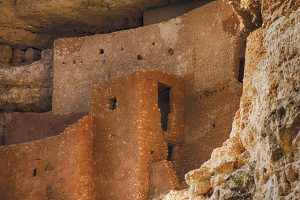
Montezuma Castle is a cliffside dwelling built circa 1100 that was occupied for approximately 400 years.
A 1/3-mile trail leads to the base of the limestone cliff where you can marvel at the remarkable home. But visitors can’t enter it as they can at Tuzigoot. Regardless, bring a lunch, relax in the park’s picnic area, and wonder about the way the people lived here nearly 1,000 years ago. Montezuma Castle is in Camp Verde; call (928) 567-3322 or see www.nps.gov/moca/ for details.
And as they say, wait — there’s more. A second, detached part of the park, known as Montezuma Well, is about 11 miles northeast of Montezuma Castle and has its own extraordinary features.
First, Montezuma Well is not actually a well. The water in it is continuously refreshed by subterranean springs in an enormous limestone sinkhole measuring 368 feet across. An astounding 1.5 million gallons of water per day flow here. Even more amazing, the water fell as rain on the nearby Mogollon Rim, a geographical high point, between 10,000 and 13,000 years ago. For years, the water has been slowly seeping through the rock until it reaches an impenetrable layer of rock and then is forced back to the surface.
Several species that live in the Montezuma Well aren’t found anywhere else on Earth, because the water has a low oxygen level and higher than usual amounts of arsenic — a harsh environment where fish cannot survive. The adapted creatures include a type of amphipod, akin to tiny shrimp; a new genus and species of leech; and a type of snail.
Admission to Montezuma Well is free. It is in Rimrock. Parking near the well area cannot accommodate large RVs, so be sure to visit only in a towing or towed vehicle. For directions and other info, call (928) 567-4521.
Fort Verde State Historic Park, Camp Verde. The Indian Wars-era buildings at this spot are used as a backdrop for living-history programs and for visitors’ education. They help illustrate part of the many happenings here between 1871 and 1891.
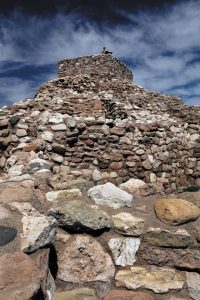
Rocks from the nearby Verde River Valley likely were used to construct the buildings at Tuzigoot.
Plan to spend some time at both the visitors center and the main museum, the latter of which is housed in the former military headquarters. When the Arizona territory was created in 1863, more Anglo settlers moved into the region and disrupted the hunting lifestyle of the Apache Indians. The tension increased until the Tonto-Apache and Yavapai tribes, who lived in the Verde Valley, began raiding farms for crops and livestock. Settlers demanded military protection. Fierce volunteer military units composed mostly of Mexican recruits, marching barefoot and surviving on half rations, protected the fledgling settlements. The United States infantry relieved the volunteers around 1866 as the Indian Wars escalated. The current Fort Verde was officially completed in 1873.
This fort never had those iconic picket walls seen often in movies, because area Indians raided settlers’ lands, not forts. But you will see the three original buildings, each with period furnishings. One was for officers, one for bachelors, and the third for doctors and surgeons. And the fort museum has artifacts, photos, videos, and more.
Ample RV parking is provided, but camping is not allowed. The fort is open daily; admission is $7 for adults and $4 for youth; and free for children age 6 and under. For more info, call (928) 567-3275 or visit www.azstateparks.com/fort-verde/.
Arizona Copper Art Museum, Clarkdale. On the brighter side of Arizona’s history is copper. This shiny metal was one of the first extracted and used by humans. Copper coins were made as early as 8000 B.C. It’s interesting to know we use copper daily in appliances, building construction, heating and cooling systems, plumbing, power generation, and even in our autos. A luxury car may contain a whopping 99 pounds of copper! But why have a copper museum, and what does it have to do with the Verde Valley?
So much copper was found in Arizona that it’s represented on the state’s seal, and “the copper state” is one of Arizona’s nicknames. The center of the Arizona state flag has a large copper-colored star. And, specifically, the town of Clarkdale, where the museum is located, was a company town founded by William Andrews Clark, and occupied by workers affiliated with Clark’s copper mine in nearby Jerome.
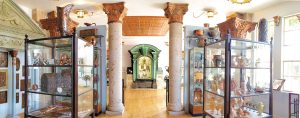
Art comes in all sizes at the Arizona Copper Art Museum, from small bits of décor to large architectural elements.
Copper has an enormous variety of practical and artistic uses; you’ll be astonished when you see how it’s brilliantly showcased at the Arizona Copper Art Museum. For instance, here in Arizona’s wine country, the museum includes an exquisite, ornate 1600s copper Italian wine pitcher. Here, everything from sculptures to candlesticks to ceilings are made from copper.
The beautiful displays in the museum are divided into various collections. There’s a distillery and winery section and, of course, a kitchen collection, with all its glistening pots and pans. But wait until you see the art and architecture collection, with intricately detailed relief sculptures sure to wow you. The military section has trench art, a term for works created by soldiers during their free time. In this case, copper shell casings take the spotlight, covered in beautiful, meticulously crafted designs.
The Arizona Copper Art Museum is open daily. Admission is $9.75 for adults; $8.75 for seniors, veterans, and students; $3.50 for kids ages 10 to 17; and $1.25 for children 5 to 9. For more details, call (928) 649-1858 or see www.copperartmuseum.com.
FURTHER INFO
Verde Valley, Arizona Travel Guide
www.go-arizona.com/Verde-Valley
A free visitors guide in the mail may be requested from this site.
Arizona Office of Tourism
(866) 275-5816
www.visitarizona.com
VERDE VALLEY CAMPGROUNDS
The following may not be a complete list, so check your campground directory and the FMCA RV Marketplace in the January issue of this magazine and online at FMCA.com.
Clear Creek Campground
4600 E. Forest Service Road 626
Camp Verde, AZ 86322
(928) 203-2900
www.fs.usda.gov/recarea/Coconino/recarea/?recid=55274
No hookups.
Dead Horse Ranch State Park
675 Dead Horse Ranch Road
Cottonwood, AZ 86326
(928) 634-5283
Reservations (877) 697-2757
www.azstateparks.com/dead-horse
Large sites; electric-only or no hookups
Distant Drums RV Resort
583 W. Middle Verde Road
Camp Verde, AZ 86322
Reservations (877) 577-5507
(928) 554-8000
www.ddrvresort.com
Full-hookup sites.
Verde Valley RV & Camping Resort
6400 E. Thousand Trails Road
Cottonwood, AZ 86326
(928) 567-9562
Thousand Trails Member reservations (800) 388-7788
Non-members: (877) 570-2267
www.thousandtrails.com/Arizona/verde-valley-rv-camping-resort/