
Campground Spotlight
Thunder Bay Resort, Hillman, Michigan
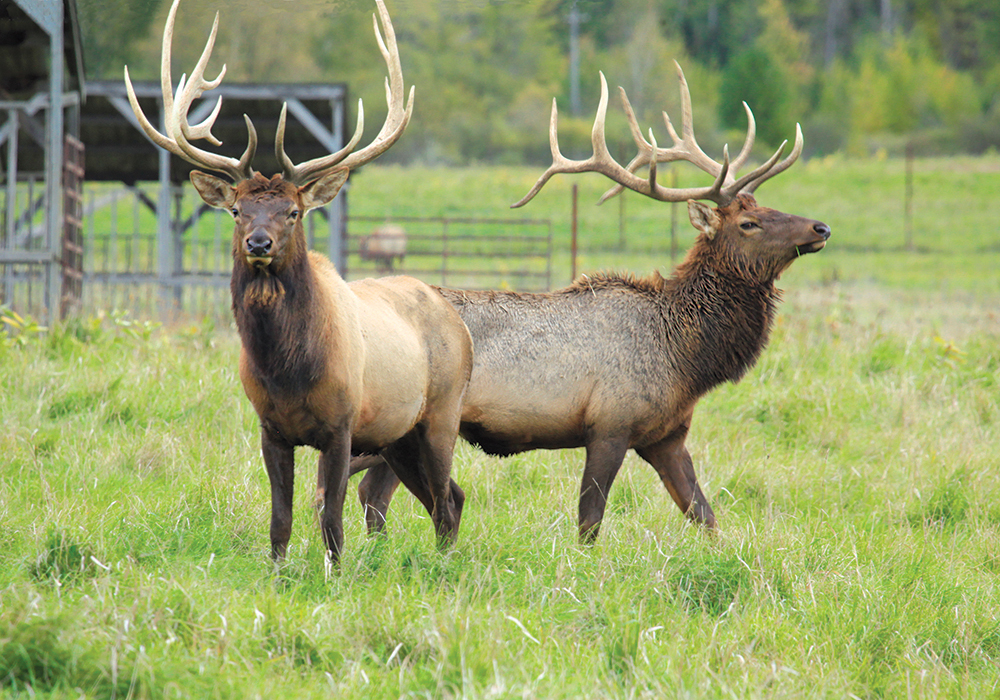
Nature is weird. Case in point: the high-pitched squeals, whistles, and squawks that bull elk emit each autumn, calling for a mate. It’s an unforgettable sound. Nature is also beautiful, as autumn brings splashes of color to Michigan trees. The combination makes fall the most popular time to visit the elk at Thunder Bay Resort in Hillman, Michigan.
But in summer, visitors can see young calves, and the elks’ antlers are in their glory. In fact, between early May and early June, a bull elk’s antlers can grow 6 inches a day! Something is always worth seeing, and that’s why people love to partake in the resort’s Elk Viewing Ride and Gourmet Dinner.
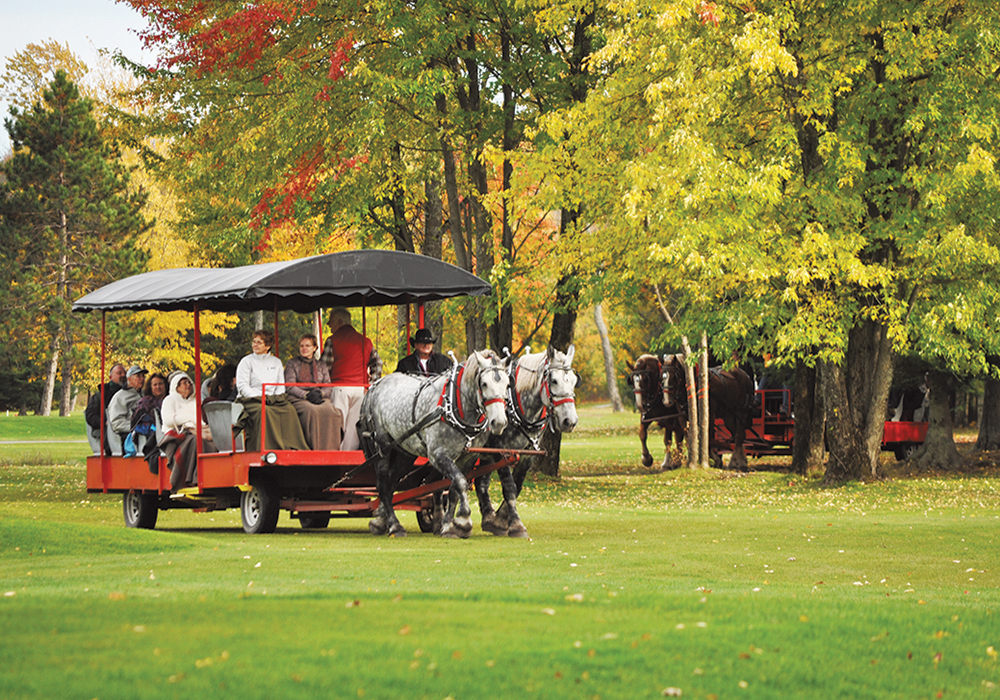
Award-winning horse-drawn carriage tours at Thunder Bay Resort showcase northern Michigan’s beauty, including views of elk in their natural habitat, followed by a gourmet dinner and wine tasting.
The event starts as passengers climb aboard a festive carriage pulled by beautiful Belgian draft horses. A tour guide provides narration throughout the ride, which winds through the resort’s own 160-acre elk habitat. Photos likely will be taken and many stories told before the journey ends.
Then, it’s time to tuck into a multiple-course gourmet dinner accompanied by tastes of local wines. The meal is prepared in front of everybody on 125-year-old cookstoves, resort owner Jack Matthias said. It includes fruit dumplings, shrimp cocktail, homemade soup, salad, crown roast of pork with potatoes, and a delightful dessert.
The Elk Viewing Ride and Gourmet Dinner is available 11 months of the year, from early May through late March. Rides are offered accordingly as spaces are reserved. Priority is given to guests using the on-site lodging or the resort’s RV park, but some space for those who want to do the ride and dinner only (without staying overnight) is available. Call the resort for more details.
The Elk Viewing Ride and Gourmet Dinner has earned positive mentions nationally in the American Bus Association’s Destinations magazine, as well as in USA Today and on Fox News.
This FMCA commercial member resort has a 23-site RV park with large, paved, pull-through spaces and patio furniture at each site. It is open mid-April through mid-October/November, weather permitting. Amenities include full hookups and free Wi-Fi, and RVers receive $10 off per person on the elk viewing event. The RV park does not have a bath house. The campground is alongside the resort’s 18-hole golf course. See https://www.thunderbayresort.com/rv-park for more information.
Details
Thunder Bay Resort, C10974
27800 M32
Hillman, MI 49746
(800) 729-9375
(989) 742-4502
www.thunderbayresort.com
Bookshelf
The Campground Is Calling
Stephanie and Jeremy Puglisi share a “road map” for finding adventure and happiness in a tent, RV, or cabin in their new book See You At The Campground: A Guide to Discovering Community, Connection, and a Happier Family in the Great Outdoors ($18.99, Sourcebooks).
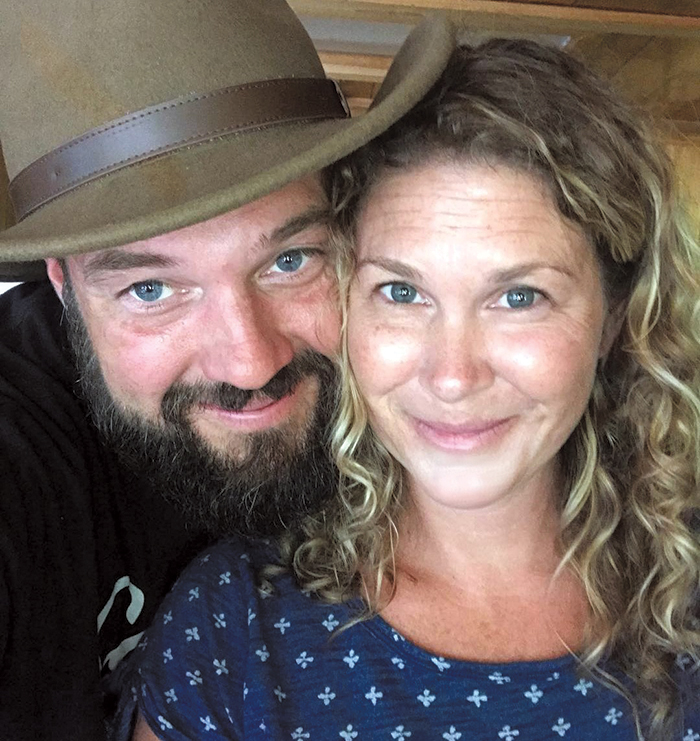
Stephanie and Jeremy Puglisi, authors of See You At The Campground.
The Puglisis are the creators of the Family Travel Atlas blog and the authors of Idiot’s Guides: RV Vacations. They spend more than 80 nights a year in their RV.
Obviously, most readers of this magazine are already sold on RV travel. But the couple’s book might contain just the right amount of anecdotal charm and helpful information to convince children, grandchildren, or friends on the bubble to give camping a try — or RV vets to try something different.
This how-to guide is laced with personal stories, examples, tips, recipes, checklists, survey results, and more. Writing alternating chapters, the Puglisis describe their own trial-and-error journey as young parents struggling to travel with twin baby boys and, soon, another young son. The book reflects what they learned.
“Our family bond is strong because it has been forged by that time spent together, by setting up and breaking down camp — and by all the fun stuff that happens in between,” Jeremy notes.
No matter what type of shelter a family chooses, be it a tent, an RV, or a camping cabin, the authors maintain it’s more about the experiences a campground offers than the type of conveyance used to get there and stay in. They offer pros and cons about tents, RVs (each type), and camping cabins. They discuss buying used versus new; traveling in one’s own RV versus renting; being weekend warriors and also taking longer road trips — “slow travel.”

Jeremy and Stephanie Puglisi (left) leave no campground stone unturned as they examine the camping/RVing experience in their new book (above): equipment, packing, traveling with children, etc.
The book presents an unbiased view of many facets of camping. Yet, the Puglisis also volunteer travel strategies that work for their family. Their own experiences — good and dreadful — drive many points home.
Among the chapters are Trip Planning Trips; The Art Of Packing And Unpacking; Camping With Family and Friends; and What’s In It For The Kids?
In chapter 1, Why Campground Vacations Are Better, Stephanie writes, “The campfire has become a sacred place in our family . . . the place where we talk, laugh, sing songs, and eat s’mores.”
What could be better than that?
See You At The Campground is available from online retailers, including www.sourcebooks.com.
App File
Lightning Trackers
The spring storm season is upon us, and with it comes the risk of potentially deadly lightning strikes.
 My Lightning Tracker: Strikes around the world are monitored “in close to real time,” according to the app description. Push notifications alert you when strikes are detected within a range that you specify. A “hotspots” button highlights places where lightning strikes occur most often. A “radar” button displays a precipitation map. Free for iOS and Android; paid versions are ad-free. www.jrustonapps.com.

Thunderly: This app’s appeal is its photorealistic globe, which you can spin around in search of lightning strikes anywhere on Earth. With each strike, your smartphone’s camera flashes, and you hear a sound like thunder. Also cool is the aurora button; switch it on to see the location of the northern or southern lights. Free for iOS.
 WeatherBug: This all-purpose weather app includes a feature called Spark, which turns a smartphone into a personal lightning detector. Spark can be set to monitor either a fixed location or a smartphone’s GPS location. Users are alerted to lightning activity, and the distance to the closest strike is displayed. Free for iOS and Android; paid versions are ad-free. www.weatherbug.com.
Nature
Guided Hikes In San Diego
Studies show that getting outside into nature provides many physical and mental health benefits. In Southern California, “Canyoneers” from the San Diego Natural History Museum lead free, guided hikes on trails throughout San Diego County. Currently scheduled hikes continue through June 2020.
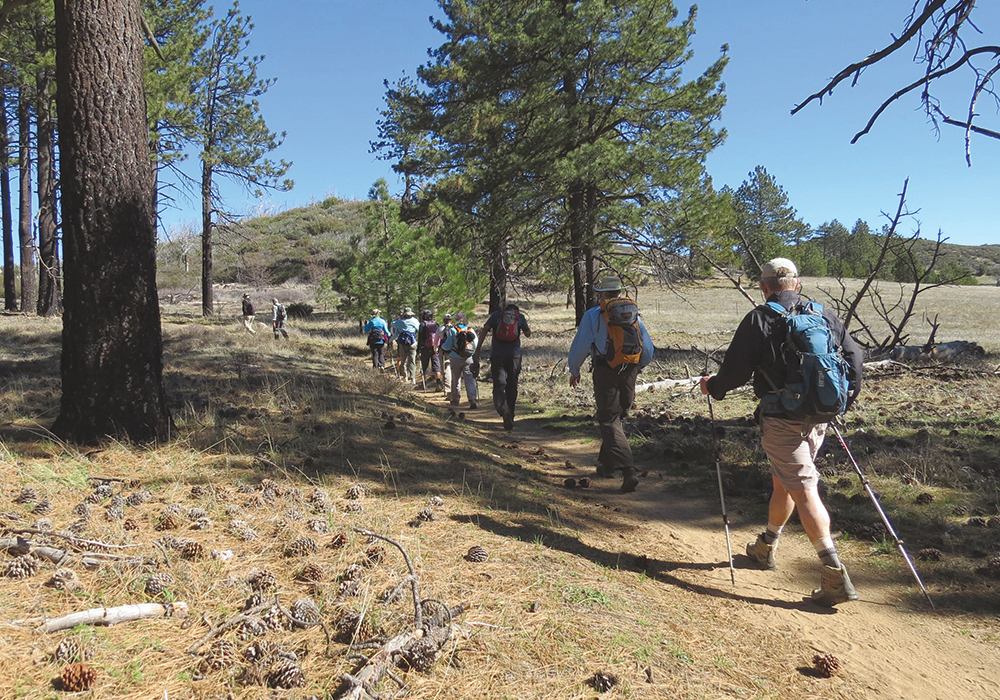
Since 1973, volunteer Canyoneers from the San Diego Natural History Museum have led guided hikes through various locations around San Diego County, California. They encourage hikers to learn and discover along the trails.
Canyoneers are citizen scientists and volunteers who have received comprehensive training on the natural history of the region from the museum’s scientists and from local experts. One of the few trail-guide groups nationwide that is affiliated with a natural history museum, the Canyoneers have provided free guided tours in San Diego County since 1973.
Most hikes are offered on weekends — with a few midday treks scheduled — and cover diverse terrain, ranging from coastal canyons to Anza-Borrego Desert State Park, and from the Ramona Grasslands to Palomar Mountain. Hikes traverse Cleveland National Forest and Los Peñasquitos Canyon Preserve, and offer views of waterfalls along the Green Valley Falls Loop in Cuyamaca Rancho State Park.
Once a month, the Canyoneers lead a midweek hike to locations that often are crowded on weekends — for example, Luelf Pond Preserve in Ramona; the next hike is scheduled for May 12.
Some trails offer shorter hikes with little elevation change — good for younger walkers. Some very flat, paved hikes are perfect for those in strollers and anyone with a disability.
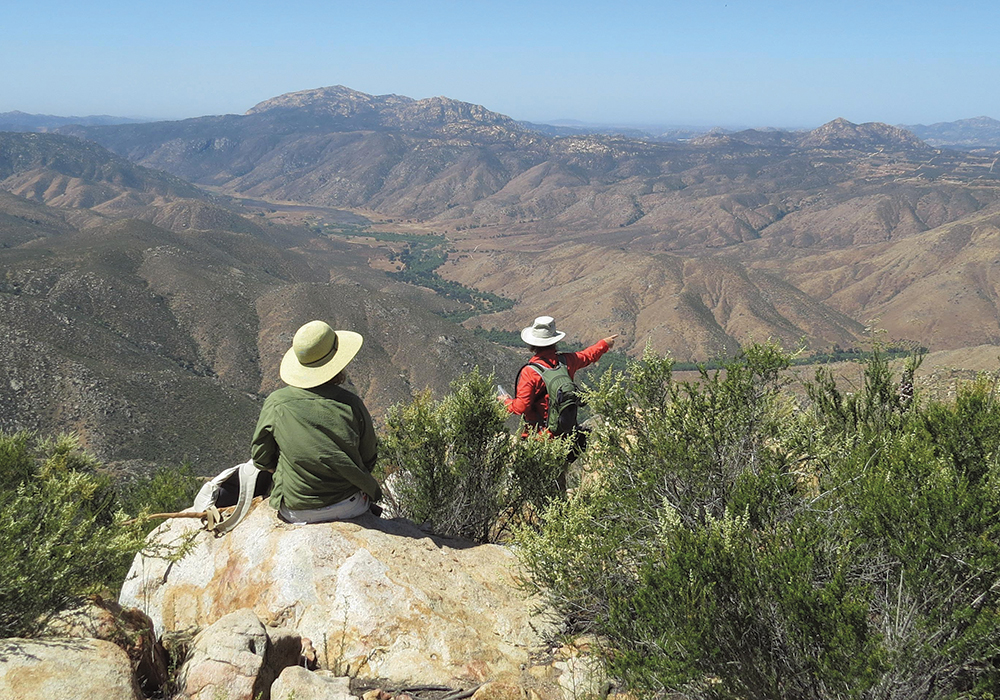
Since 1973, volunteer Canyoneers from the San Diego Natural History Museum have led guided hikes through various locations around San Diego County, California. They encourage hikers to learn and discover along the trails.
The hike schedule and an interactive map are available online at sdnat.org/canyoneers. Printed brochures can be picked up at local outdoor retailers such as REI and Adventure 16, and at local Subaru dealerships. Each hike description includes level of difficulty, duration, driving directions, and more.
Hikers also are encouraged to explore local trailheads through Coast to Cactus: The Canyoneer Trail Guide to San Diego Outdoors, a hiking guide written, edited, and published by the Canyoneers and Sunbelt Publications. The book can be purchased online or in the museum store for $29.95.
The San Diego Natural History Museum is located at 1788 El Prado, San Diego, CA 92101 in Balboa Park and is open daily from 10:00 a.m. to 5:00 p.m. For more information, call (877) 946-7797 or visit sdnat.org.