
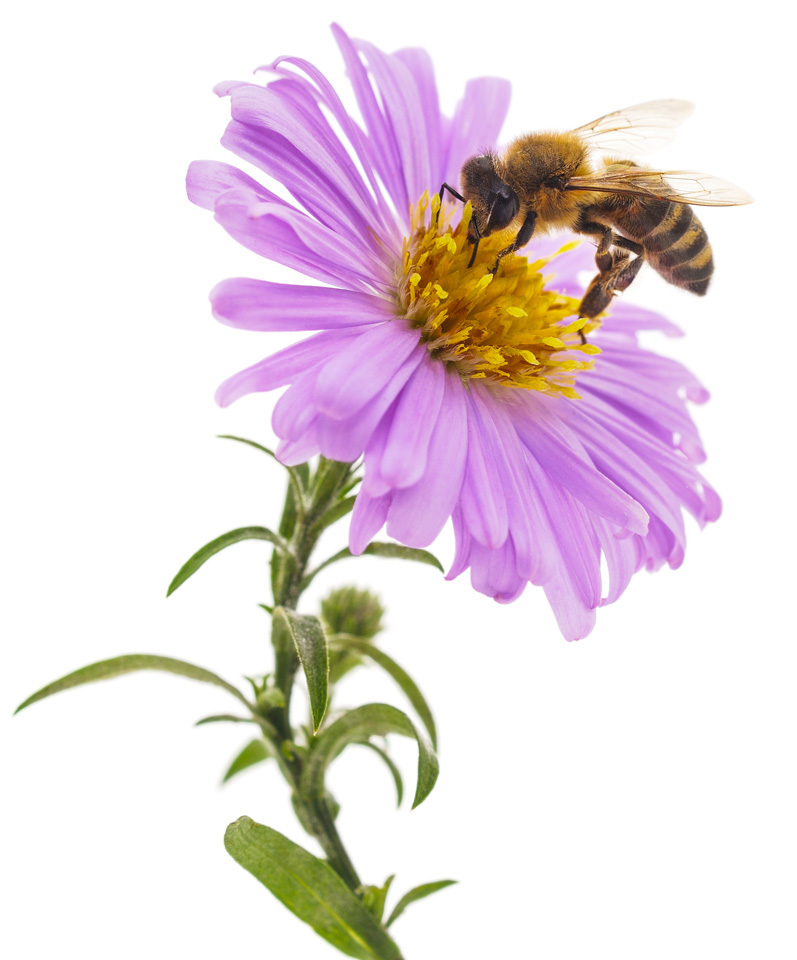
While enjoying nature, RVers can contribute to a growing body of research on many subjects.
By Phillip Meeks
October 2020
Outdoor activities help define the experience of many RVing families. Camping, hiking, and nature-viewing are just part of the equation. In fact, if an artist were to draw a caricature of this demographic, elements of that picture likely would include binoculars, a butterfly net, and/or a guidebook. Nature experience is worthwhile for its own sake, of course, but it’s easier now than ever for families to contribute to science while enjoying a walk in the woods or a day at the beach. Whether a family’s interests include birding, wildflowers, weather patterns, or geology, there’s scientific research going on somewhere that needs input from people who are out and about.
The fact that RVers call wildlands home for a few days or months each year makes them valuable to the scientific community. Budgets are tight and time is at a premium, so what better way for universities and nonprofits to collect data than an army of entrenched volunteers? By embracing the “citizen scientist” concept, travelers can add value to their next adventure, contributing to a growing body of data about everything from monarch butter-fly migration patterns to soil types. In the process, they can plug into a virtual community of other nature enthusiasts.
 The concept of citizen science isn’t new. It can be argued that science began as such. The first scientific data was generated as farmers, hunters, royalty, and poets moved about their day and recorded their observations of the natural world — and this was going on long before “scientist” was a profession. As more folks have gained access to the internet and smartphones over the past two decades, it has become easier for researchers and citizens to connect with one another.
Darlene Cavalier of Arizona State University is a founding board member of the Citizen Science Association, as well as the founder of SciStarter, an online tool that helps connect citizen scientists with formal and informal research. She explained how modern communication has shifted the relationship between people in the field and those in the lab.
“It used to occur from the bottom up,” she said. “You’d have amateur weather enthusiasts or bird-watchers, for instance, who’d record observations and then pass that data up the line. Now you have scientists and engineers who need data to advance areas of research or to influence public policy.”
And those scientists and engineers of today are reaching out, rather than just passively waiting on whatever data trickles its way to their tables.
Finding A Good Fit
With SciStarter.com, travelers can enter a location and then use a drop-down menu to choose from 28 broad topics, from agriculture to transportation. That generates a list of projects and events the user might find of interest. Further fine-tuning through the site’s Project Finder will narrow opportunities even more.
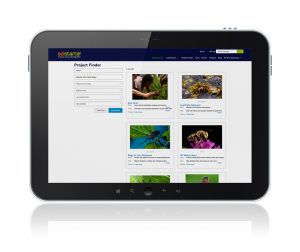
RVers can help scientists gather valuable research data by using the SciStarter online tool.
For example, as of this writing, someone who plans to be in Oregon and who has an affection for insects will be presented with a list of 85 projects and events, some of which can be done from anywhere, and some that are specific to Oregon. If that same user then specifies that he/she is only interested in activities that can be done while at the beach, that are suitable for elementary-school-aged students, and that contain the keyword “pollinators,” then the list is whittled down to four.
Of course, another way to find citizen science activities is to reach out to natural resource agencies in regions where the RVer will be spending time. Consider contacting national forests and parks where you plan to camp, as well as state and local forestry and wildlife management agencies covering the geographic regions where you’ll be. There’s a good chance they’ll be aware of data-gathering needs.
If you’re a member of a garden club, a conservation organization, or other group, they may be involved in ongoing data collection, too. Trout Unlimited, for example, coordinates stream sampling in certain geographic regions in order to gauge industry impacts on trout habitat.
Connecting With A Virtual Community
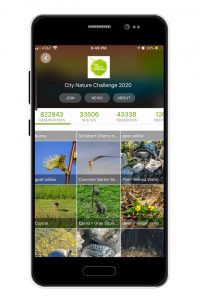
The iNaturalist app helps participants to find projects of interest based on location and a wide variety of topics.
While a core knowledge of whatever species or natural features you’ll be observing is beneficial, full-blown expertise isn’t necessarily a prerequisite. A willingness to expand your knowledge and learn from others can be a good start, and a benefit of online connectivity is having experts at your fingertips. For example, iNaturalist.org, a joint initiative of the California Academy of Sciences and the National Geographic Society, allows users to upload pictures of species they observe via a free smartphone app, and the flora and fauna in question often can be identified by some of the more than 400,000 folks who populate this virtual community. In addition to images, iNaturalist records GPS coordinates. The end result is an extensive catalog of biodiversity, largely developed by hikers, campers, commuters, and practically anyone willing to take the time to record what they’ve seen.
The iNaturalist app is essentially a modern take on the classic guidebook that many RVers never leave home without, but with an element of social media thrown in.
Being Prepared
It’s possible to log into SciStarter after you settle into your home-away-from-home in the RV park or public campground, but that’s not the ideal scenario. Waiting until the last minute will limit participation considerably. To get the most from citizen science opportunities, Ms. Cavalier stresses the importance of doing one’s homework. 
“SciStarter lists over 1,600 projects and events,” she said. “If you’re prepared ahead of time, these will tend to be more exciting and enriching. Some projects ask for an app to be downloaded onto your phone or require you to have a rain gauge, for example. Preparation is key.”
If citizen science sounds appealing, it pays to invest some time in the SciStarter website at least a couple of weeks prior to your travels. Thoroughly read the requirements of the projects that interest you, and make a list of tools required to make the most of your time. A willingness to spend some time up front will mean a more rewarding experience in the long run. Then, by the time your travels conclude, you’ll be able to rest in the knowledge that you’ve contributed to a body of research, and it’s probable that you’ll gain meaningful expertise and contacts in the process.