
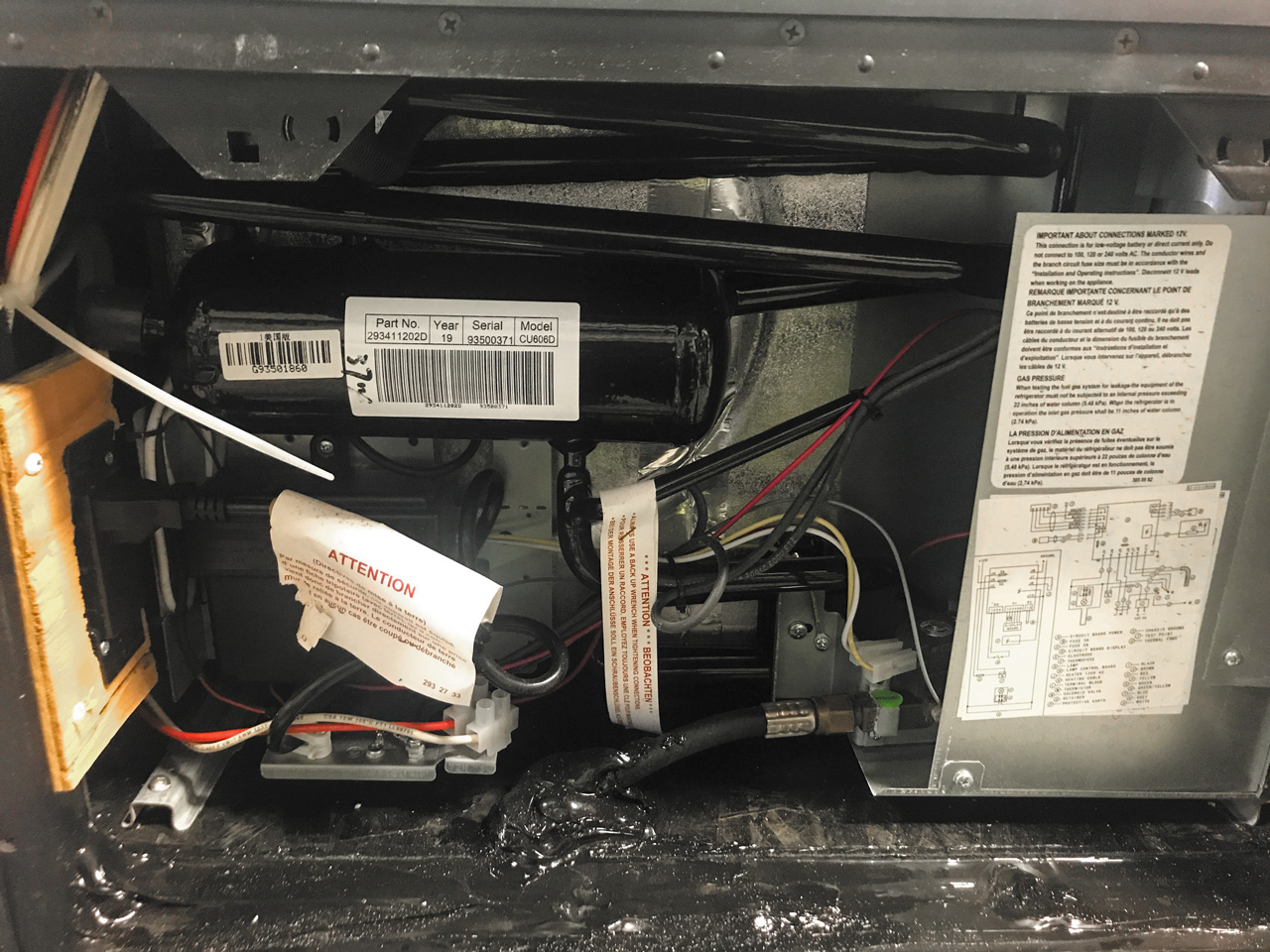
A professional propane system inspection each year is a must, but some basic maintenance helps to keep everything running safely and smoothly.
By Steve Froese, F276276
March 2021
This month, I want to discuss the RV propane system, including ways you can ensure your system runs at peak performance. If you have been following my advice — and that of most RV experts — you have been faithfully taking your RV to a professional service center to have the propane system inspected annually. I can’t emphasize enough how important this is to the reliability and safety of your propane system and appliances. Many states and provinces require RV technicians to be trained and certified to work on RV propane systems. You should be concerned about the training level of the technicians at the service center you go to for all service work, especially propane. It’s always a good idea to ask for certification and/or experience level of the tech working on your RV. Certification is a huge peace-of-mind benefit for owners.
The device designed to warn you of any propane leaks in your RV is the propane alarm. You always want this device to be functioning properly. If you have your RV’s propane system inspected regularly, the hope is that you won’t ever hear the alarm go off, indicating a problem. But should a leak occur, it is a good first line of defense in warning you and your family of an issue. Many people are not aware that the smoke, propane, and carbon monoxide alarms in their RVs have a shelf life. It is a good idea to replace each one every five to seven years based on the manufacture date stamped on the back of the device. Follow the manufacturer’s recommendations in this regard. Remember to test your detectors once per month. Regardless of whether your propane alarm goes into alert mode, if you smell propane, immediately shut off your appliances, as well as the propane container, and have your system inspected by an RV service center before you use the LP system again. If the alarm does go off, ventilate the RV and leave until it is safe to return.
Stove/Oven
Keep your stove and oven clean. If your cooktop has a removable top, regularly clean under it. While many people use aluminum foil to line the range pan under the burners, it can affect the functionality of the burner ignitors. If the ignitors get close enough to or touch the aluminum foil, the spark can ground against the foil instead of the burner itself, preventing the burner from lighting. If you do use aluminum foil or another type of metallic liner, keep it clean and do not allow it to get close to or contact the ignitors. Replace it on a regular basis, and do not become complacent about it. Having a pan liner does not mean you don’t have to regularly inspect and clean under your cooktop cover. Similarly with the oven, be sure to keep it clean, and if you use a drip tray, clean it regularly and replace it when necessary.
If you have issues with your burners not lighting properly or having irregular flame patterns, the burner ports may be blocked. If you suspect a blocked burner port, inserting a toothpick is an inexpensive and safe way to clean it. If the toothpick breaks off in the port, you’re using too much force. Avoid using twist drills or metal objects to clean the ports, as they will abrade the aluminum and oversize the port, causing a hazardous situation. Keeping your range clean helps eliminate grease fires, so be sure to clean your range hood as well and wash or replace your filters regularly.
Refrigerator
In addition to keeping the inside of your fridge clean, it is also important to clean the outside. If your RV has an absorption refrigerator (as opposed to a residential model), vent panels are located on the outside of the RV — one at the bottom on the sidewall, and one on the top of the RV. If the fridge is in a slideout, a vent is on the sidewall near the top of the fridge. Otherwise, the top vent will be on the roof. For roof vents, carefully climb onto the roof and inspect the vent for debris. The vent should have a cover to prevent debris from falling in behind the fridge. Clear any debris, and if the cover is missing or damaged, replace it. Remember: Exercise extreme caution on ladders and on the RV roof. Avoid going on the roof if it’s wet, or if you are uncomfortable doing so.
Remove the lower vent on the sidewall and clean the area at the back of the refrigerator. Compressed air or a vacuum are good tools to use for this. Turn your fridge to propane operation and check the flame at the back of the unit by opening the observation port at the bottom of the burner tube. Make sure the flame is blue with soft yellow tipping. Also make sure the flame and ignitor are not impeded by debris. If they are, blow out the area with compressed air. As with all other appliances, make note of any deficiencies and take your coach to an RV service center for diagnostics.
Water Heater
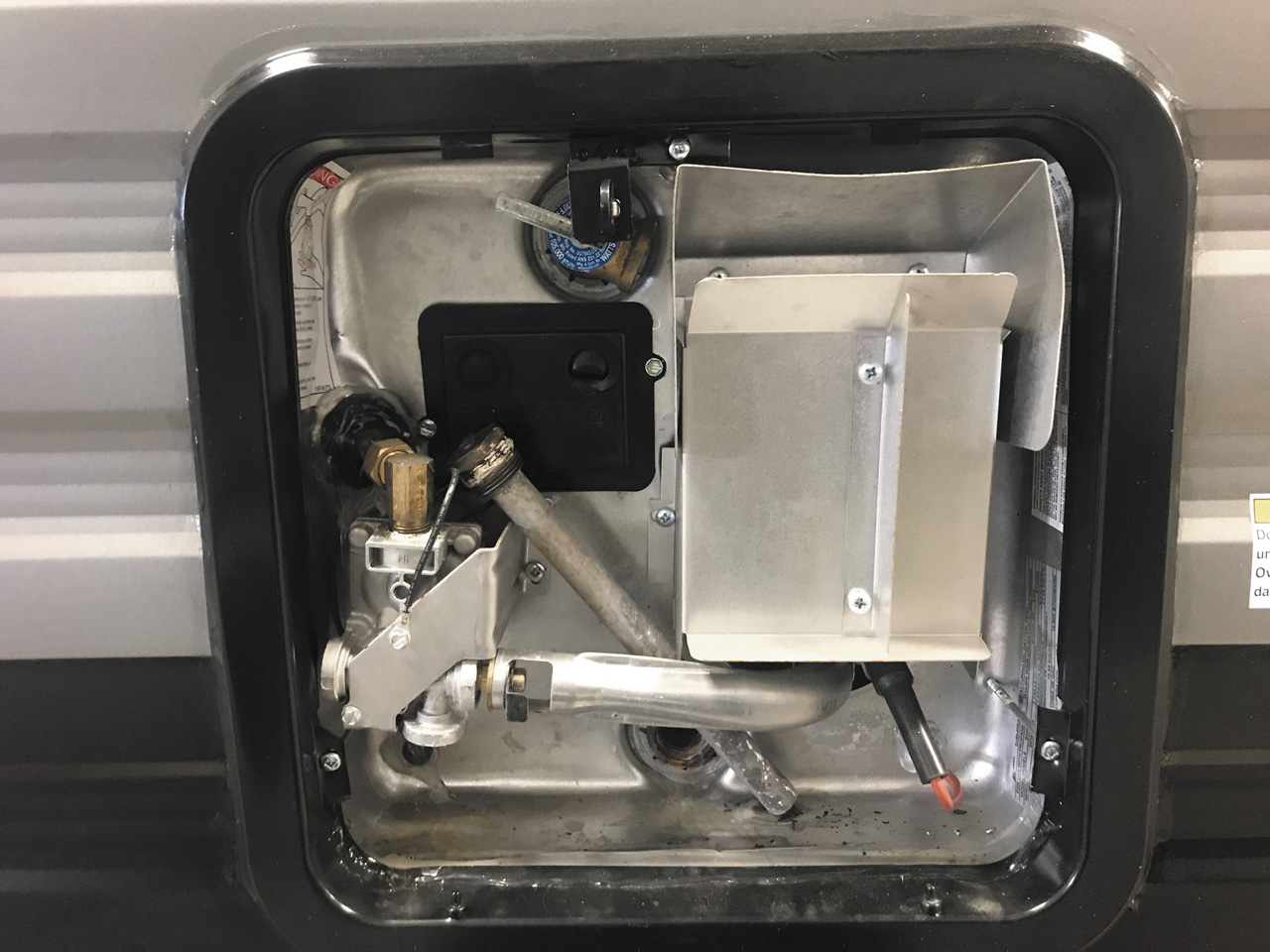 As with the refrigerator, the water heater has an outside access panel. Remove the panel and clean the area. Inspect the flue and burner tubes for debris, and blow the area clean if necessary. A small bottle or test-tube brush may help. Turn on the water heater burner and observe the flame. As with the fridge, it should have a blue flame with light yellow tipping. It should barely be audible from 10 feet away, but be sure to close the access panel before listening to the flame, as the open door results in more air entering the mixer. Although Suburban water heaters cannot be adjusted, if you have an Atwood water heater, you can adjust the flame mixture. Loosen the screw securing the mixing baffle and adjust the baffle until it is ¼ open. If adjusting the baffle does not fix the flame, the appliance should be inspected by a service center. Failure to resolve an overly rich or lean flame results in inefficient or incomplete combustion, propane waste, and/or carbon buildup in the area around the water heater.
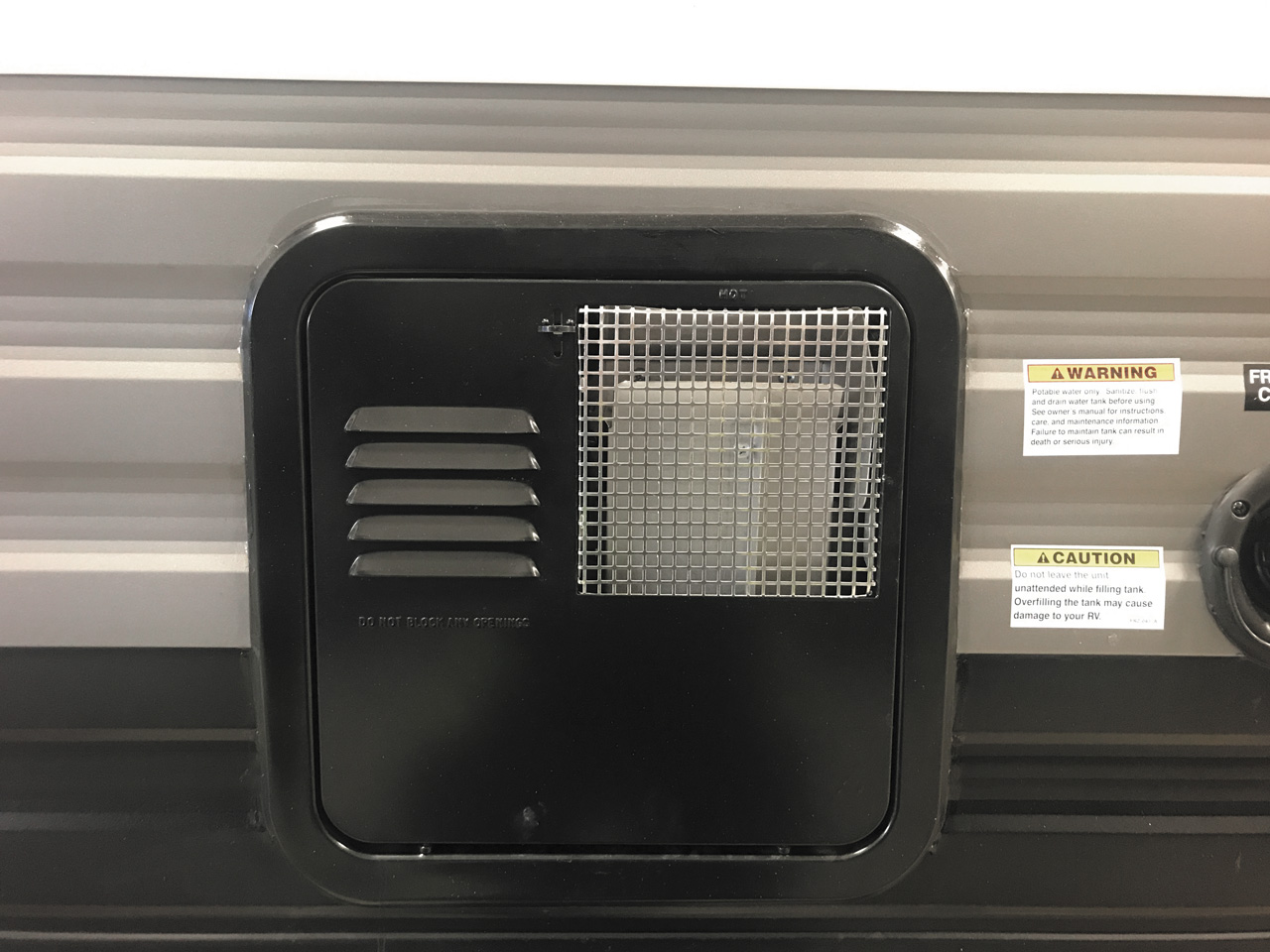
With the panel on, the water heater burner should barely be audible from 10 feet away.
When cleaning the water heater, look for nesting materials. Insects and rodents are attracted to the smell of the propane odorant and enjoy building nests around appliance burners and vents. Remove anything you find.
Furnace
The furnace does not require much maintenance. Remove the access panel on the inside of the RV that exposes the furnace (it may be marked as a non-storage area), and make sure the area is clean. If you have a ducted model, check for crushed or damaged ducting.
If the furnace has an exterior access panel, remove it and clean the area. As with the water heater, look for signs of insects or rodents.
Tanks/Cylinders
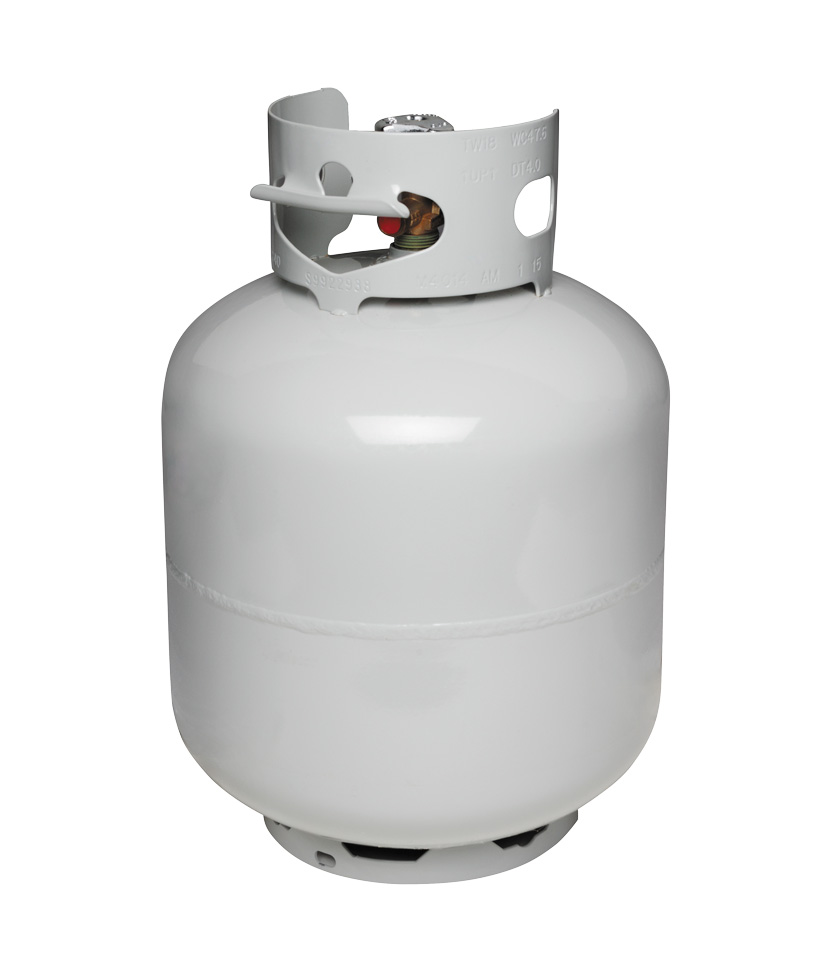
Propane cylinders need to be inspected on a regular basis.
Inspect your tank or cylinder (motorhomes have permanently mounted propane tanks, whereas trailers use portable cylinders) for damage on a regular basis. In the United States, the Department of Transportation requires that original cylinders must be recertified every 10 years or they cannot be legally filled. After the initial 10-year recertification, cylinders must be recertified every five years. In Canada, cylinders must be recertified every 10 years. When a cylinder is recertified (by a propane dealer or depot), the recertification date is stamped into the tank ring and highlighted, often in red. The new recertification date is five years from this date, or 10 years in Canada. Many people opt to simply trade in their expired cylinders for new ones, which is more convenient and usually cheaper. Replacement tanks can be found at many big-box stores or a local propane retailer. Propane tanks mounted on motorhomes do not require recertification, but it’s a good idea to inspect them regularly for damage, rust, etc.
Regulators
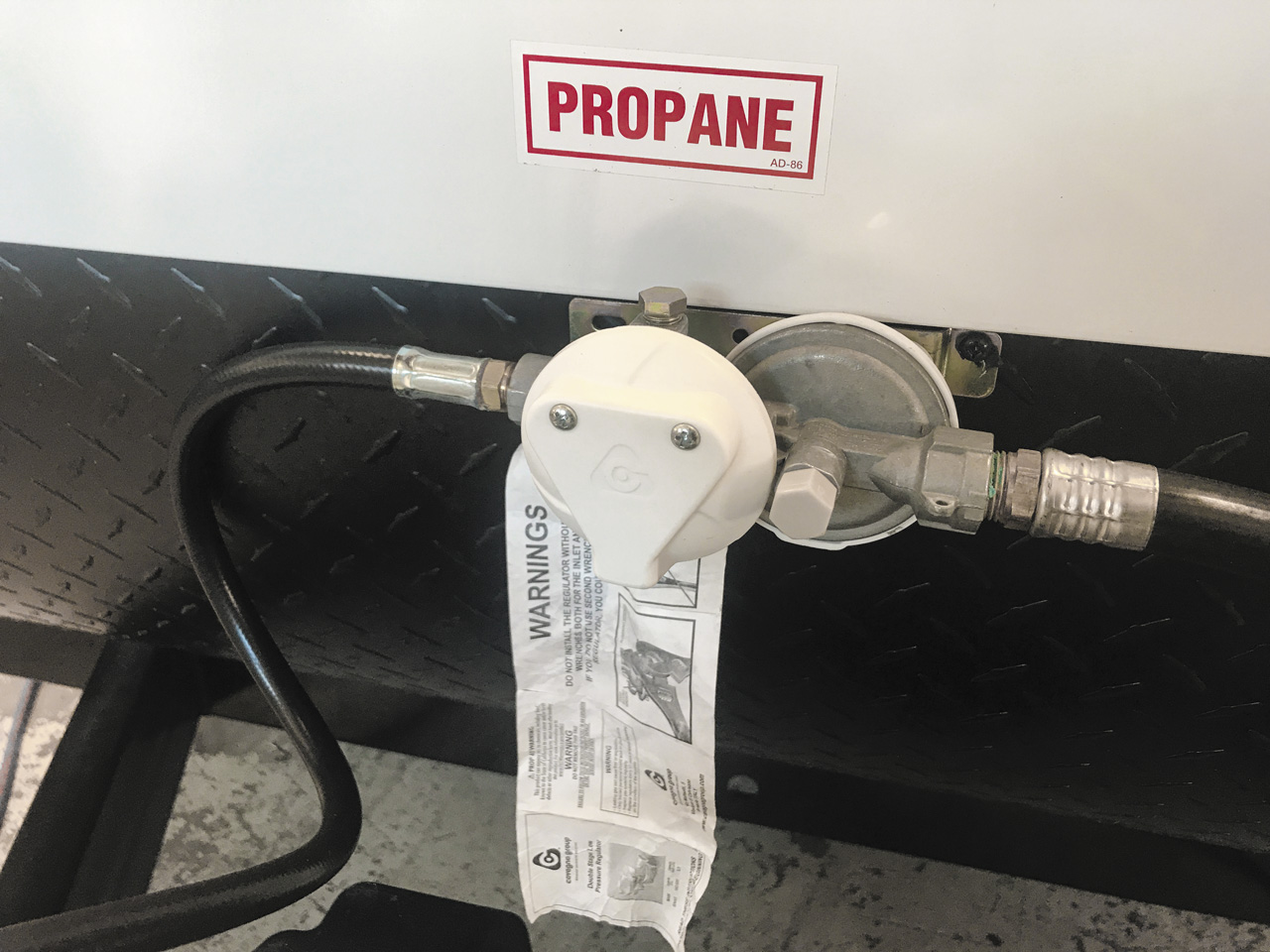
The propane regulator should be checked frequently for debris or damage.
Regularly inspect your propane regulator for debris or damage. Replace the regulator cover if it is missing or damaged. Inspect the regulator vent to ensure it is not blocked. The vent must be facing within 45 degrees of vertically down and should be covered by a mesh. It is a good idea to replace regulators every 5 years. Flex lines should always be replaced when replacing the regulators. Flex lines need to be inspected carefully for cracks and signs of aging. If the flex lines are stiff, replace them. This avoids small leaks.
Performing these tasks on your propane system should provide peace-of-mind and make the job of your RV service technician easier when it comes time to have your annual inspection.