
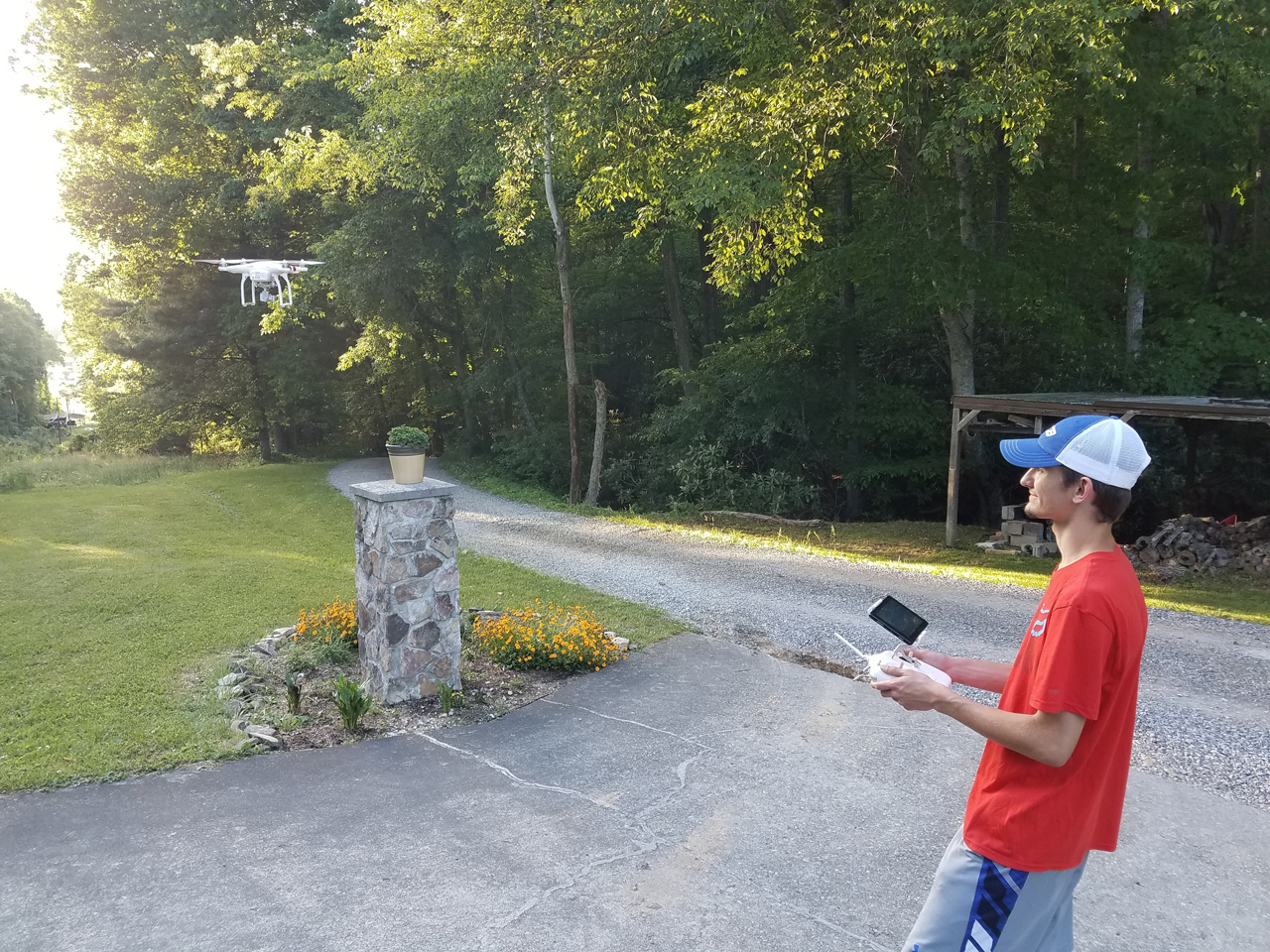
Used for many purposes — military work, scientific research, emergency rescue, photography, and even delivery — drones also entertain casual tech enthusiasts.
By Phillip Meeks
January 2022
Chances are, you weren’t thinking of robots — and especially not flying robots — when you first began pursuing your travel goals, but that’s kind of where we are today. Unmanned aircraft systems (UAS), or “drones,” as they’re more commonly known, have found a place among the travel gear of more and more folks, young and old alike.
Not everyone will find a good fit for a drone in their traveling, but somebody’s making the investment. According to the Federal Aviation Administration (FAA), more than 865,000 drones are registered in the United States, and almost 340,000 of those are used commercially.
Perhaps this technology caught your fancy early on, but you were turned off by the prices or capabilities. If that’s the case, a fresh look may be worth your time.
What You Can Do With A Drone
If you access social media, you’ve probably seen some friends’ breathtaking, bird’s-eye captures of destinations or events. And from a practical standpoint, a drone can provide a real-time idea of where you are and where you want to be. (“Which road takes me out of this campground?” “Is there a rest room within biking distance?”) Just like cameras and computers, the technology continues to become smaller and lighter, so you can tuck your aircraft into your backpack or purse while you shop or explore. You have access to natural features and habitats that would otherwise be out of reach, such as a forest’s upper canopy or that island that’s too marshy for human feet.
Regarding service projects you might participate in during your travels, a drone can help with mapping a property boundary, checking fences and ponds, surveying the success of an invasive species control effort, or grabbing a quick snapshot of storm damage. The first glance afforded by a drone is quick and economical compared to the investment in time that can come with putting boots on the ground.
Some drones can be programmed to follow a predetermined flight path each time you take them up, making them valuable in documenting a progressive event such as the arrival of spring or the expansion of a woodland disease issue.
You can even use a drone to transport tools from one site to another, provided the drone and cargo combined weight doesn’t exceed 55 pounds.
What You Can Buy
What types of drones are most accessible and affordable to the average person?
Fixed-wing drones, as the name suggests, have permanently mounted wings that do not move. These devices are able to stay in the air longer, but they require more space for takeoffs and landings. Plus, buyer’s remorse can set in when you realize you’ve shelled out your hard-earned money for what essentially feels like a foam triangle.
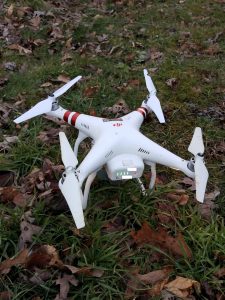
DJI 2 Phantom 2 rotary-wing drone
Rotary-wing drones have rotor blades, or wings, that rotate around a center mast and force air downward to create a vertical lift. They can move in multiple directions and can hover at a fixed point. The most common are quadcopters, which come with four blades, although six-blade hexacopters and even eight-blade octocopters are also available. Their upward and forward thrust of movement does require considerable energy, which restricts their range and endurance.
If you haven’t priced drones in a few years, you’ll be pleasantly surprised. A highly functional, commercial-level quadcopter can be had for well under $1,000. If you’re just hoping for some basic aerial photographs or videos to add spice to your travel vlogs, you can find what you’re looking for at less than $100.
The units typically are sold with cameras, controls, and the necessary software, but once an operator masters the basics, it’s possible to make upgrades — better cameras, antenna boosters, or propeller guards, for example. A GPS drone tracker is another aftermarket investment that will lessen the likelihood of your drone getting lost.
The Legalities
With limited exceptions, the drones must always be kept within 400 feet of the ground and can’t be flown from a moving car. Under certain conditions, they may be flown over moving cars vehicles or people, and at night. The pilot is responsible for knowing the type of airspace that’s around, and this will further define limitations. Class G airspace is uncontrolled and is therefore the most conducive to drone flight. To enter other airspace, formal permission from Air Traffic Control (ATC) may be necessary, or in the case of Class C and D airspace, at least radio contact with the airports should be made.
In order to understand where those airspaces and other relevant restrictions are located, one of the skills required of a drone pilot is the ability to interpret Visual Flight Rules (VFR) sectional charts. These are available online at sites such as www.skyvector.com. Hard copies also can be purchased; keep in mind, though, that the hard copies are regularly updated and have to be replaced every six months.
If your UAS weighs between 0.55 and 55 pounds, it must be registered with the FAA and that number affixed to the aircraft. Registration can be handled online in just a few minutes and currently costs $5.
Since 2016, any commercial use of a UAS — including on one’s own property — requires Remote Pilot Certification, which can be obtained by any eligible person ages 16 and older who is able to pass a 60-question exam. Unless one already holds a pilot license, preparation will take some time — 30 hours is recommended. The FAA has free, downloadable study materials on its website; you also can find fee-based workshops, books, and practice exams that will help prepare you. At this writing, the exam itself costs $150 and will include questions about aircraft operations, weather, airspace, and Part 107 regulations. “Part 107” refers to the federal rules governing UAS operation. These are found in Part 107 of Chapter 14 of the Code of Federal Regulations. A summary is available on the FAA website: https://www.faa.gov/newsroom/small-unmanned-aircraft-systems-uas-regulations-part-107 )
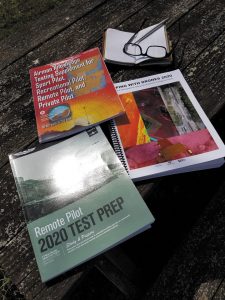
Various study guides — plus free online material from the FAA — assist those seeking remote pilot certification for their UAS.
Current regulations stipulate that the drone must stay within the operator’s line of sight. So, if you’re daydreaming about sending your drone a few miles up the road to check the lines at a tourist destination while you finish your coffee, it would be good to tone that idea down a notch.
If you’re using your drone commercially, many of these rules have exceptions if you can make the case that your work or research makes them impractical.
Public lands often have strict UAS policies, and they can vary from one region to the next. Generally, national parks have the tightest restrictions, whereas national forests allow some drone use, provided it’s away from designated Wilderness Areas and the drone in no way interferes with wildland fire-suppression aircraft. In the case of state lands, polices vary widely; so, if you’re interested in using your drone on a state forest or wildlife management area, for instance, it would be a good idea to check with a local office first.
Beyond The Campground
Once you understand the strengths and limitations of your UAS and you hold the proper certifications, you might consider hanging out your shingle and offering drone services. Think of land management companies, real estate firms, insurance companies, or wedding planners based near the spots where you’ll be spending time in your RV. It would behoove parents, grandparents, aunts, and uncles to acquaint young people with these skills, as all indications are that drone pilots will be in demand for the foreseeable future.
If you want to “give back” to the community in which you’re staying, let the local rescue squad know that you’re willing to assist with search-and-rescue efforts should hikers or hunters become lost. Just be sure to coordinate with local authorities to ensure there’s no conflict with other aircraft.
Most folks likely know someone who is successful today without ever having embraced cell phones or email; likewise, a UAS isn’t a requirement for RVing. However, if you are intrigued by this technology and are willing to invest a bit of time and money, a drone could add a lot to your next adventure.
Drone Info
Federal Aviation Administration
www.faa.gov/uas
To learn more about flying drones for recreational use, click on “Recreational Flyer and Modeler Community-Based Organization.”