
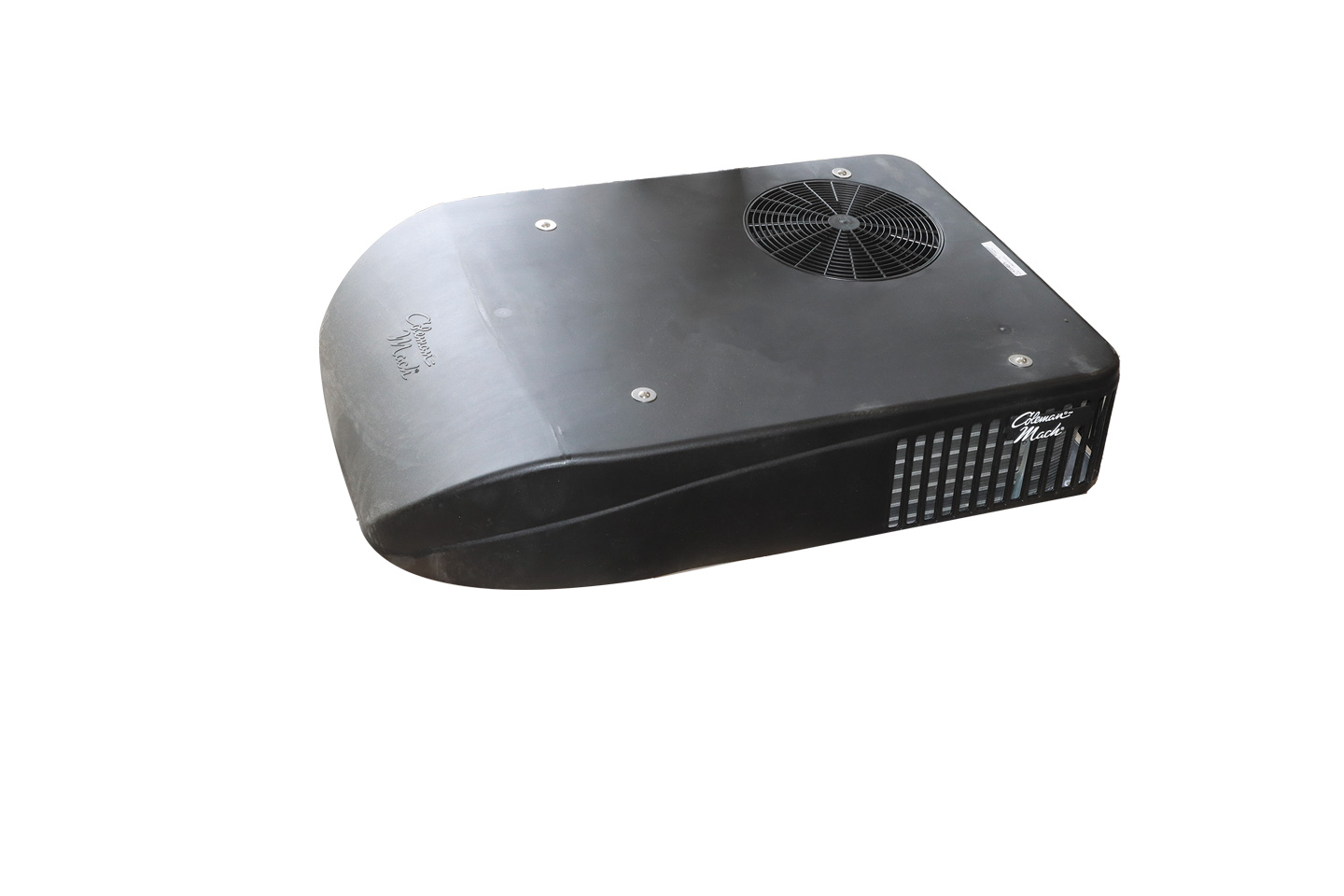
After a rooftop air conditioner on his motorhome failed, the author documented the do-it-yourself replacement project and shares the process here.
By Mark Quasius, F333630
March 2022
(story with photos here)
ACReplacement-Reprint_FRV0322-compressed
Air conditioners are one of the core components found in most RVs today. After all, RV travel typically occurs during months when an RV’s interior can become extremely warm. These days, air-conditioning units are available even in some of the smallest teardrop trailers.
RV owners have grown accustomed to the benefits afforded by air conditioners, and when one fails, it can make for a very uncomfortable camping trip. These units stop working for various reasons. Rectifying the problem may be as straightforward as replacing a burned-out capacitor, starter unit, or fan motor, or it could be that the condenser coil is plugged with dirt and debris and needs a good cleaning. These are simple repair and maintenance tasks, but sometimes the cause is more serious.
For instance, if the compressor has a locked rotor or shorted motor, you will need to replace the entire air-conditioning unit. The issue also could be that the refrigerant in the unit has leaked out past seals, worn or corroded fittings, or condenser coils or copper tubing that has developed some porosity over time.
Unlike automotive air-conditioning systems, RV rooftop A/C units are not designed to be recharged. They are sealed and do not have service valves for that purpose. They also utilize a different refrigerant from the R-134a or R-1234yf in automotive systems — possibly R-22 in older units or R-410a, a residential and commercial refrigerant, in newer ones.
The only way to recharge these units would be to find an HVAC contractor who would be willing to tap into the system to install a charging port. The labor expense to do that and to evacuate and recharge the system wouldn’t be cost effective. It would make more sense to replace it with a new rooftop unit, especially considering the old one likely would leak again.
When one of the air conditioners on our motorhome failed recently, it was time to take action to help us keep our cool. Air conditioners, like many other RV components, have been in short supply of late. At the time I was looking for a replacement, my local dealer had 20 of them on order but no idea when they would ship. After shopping around, I found one at a dealership in Texas; so, I ordered it, and they shipped it to me within a few days. Now it was time to go to work.
First, a couple of notes. This would be a good time to share a safety warning. Not all RV roofs are intended to be walked on, so if you plan to tackle a project such as this, check with the manufacturer first. And make sure you are comfortable using a ladder and working up on the roof. Most RV owners will want to leave this type of project to a professional technician.
I also should mention that with different A/C units and setups being used by RV manufacturers, not all the steps described in this article will apply in every case. The goal here is to give you a basic idea of what such a project entails.
Installation Begins
RV air conditioners are heavy. The new one is a Coleman-Mach 15,000-Btu unit with heat pumps and weighs 93 pounds. I had to figure out the logistics of getting it up onto the RV roof. I used a rental hoist designed to lift unit heaters and other materials up to commercial ceiling heights – sort of a manually operated mini forklift.
The first step was to switch off the circuit breaker for that air conditioner, because you should never work on these units with 120-volt current present. I then set my extension ladder in place and took the tools I knew I would need up to the rooftop. I placed the new air conditioner on the forks of the hoist, raised it, and pushed it so that the forks hung over the roof of our motorhome. I then went up on the roof to lift the new air conditioner off the hoist and carefully set it off to the side.
The new A/C unit was shipped on a wooden frame to protect the foam gasket on the bottom, so I left it on that structure until I was ready to position it at its new location. That also served to protect the roof surface. I kept the hoist in place, ready to receive the old unit once I removed it from its mounted location.
Taking the cover off the old unit turned out to be the easy part. Four #3 Phillips-head screws fastened it to the air conditioner, so I removed them and lifted off the cover and set it aside. That exposed most of the inner components of the air conditioner, but to get to the evaporator and electrical control box, I had to remove four 3/8-inch hex nuts that secured the fiberglass-reinforced plastic plenum cover. I easily removed the nuts using a cordless ratchet and socket and lifted off that cover.
The electrical control box had several connections. A 120-volt Romex cable was wired directly into the box, and a number of low-voltage wires were connected to terminals on the control box. Most of these wires ran down into the return air plenum beneath the roof, but one other harness led from the air conditioner itself to the control box and was connected via a single AMP-style connector plug. To remove the air conditioner from the roof, it was necessary to separate it from the wiring coming up out of the RV.
Air conditioners can be equipped with a wide array of control boxes that are specific to each RV configuration. For this reason, replacement air conditioners don’t come with control boxes, and the existing box normally is reused, unless it has failed. Because it was easier to disconnect the air conditioner from the control box versus disconnecting the coach wiring from the control, I decided to unplug the single AMP connector and leave the control box on the roof when removing the old air conditioner. The control box was fastened with two small wing nuts, so I removed them, unplugged the AMP connector, and lifted the control box off the air conditioner, placing it on the roof temporarily.
This opened the return air plenum that provided intake air to the air conditioner’s evaporator coil. Inside the plenum was a blue PEX condensate drain line that routed evaporator coil condensation water to a drain point beneath the motorhome. The upper end of this PEX line connected to a clear plastic hose leading to the condensate drain pump.
During normal operation, the air conditioner’s evaporator coil would wick moisture out of the air and allow it to run into a drain well. The pump in this well sent the water to the ground via the PEX tubing, eliminating water streaks that would form if condensate ran down the side of the RV.
I loosened up the worm-drive hose clamp that held the clear hose to the PEX fitting so that the PEX would no longer tie the air conditioner to the coach. I then took the control box, turned it on end, and slid it down into the return air duct so that it would remain with the RV while the old air conditioner was lifted off the roof. But first I had to remove the mounting screws.
The air conditioner was secured to the roof using four long hex-head self-tapping screws. These screws went through designated mounting points where they threaded through the fiberglass roof, through the 3/8-inch plywood, and into the structural aluminum tubing roof trusses beneath. The screws also passed through some steel reinforcing plates to spread the clamping force across more of the air conditioner’s plastic base plate. I removed these screws with the same cordless ratchet and 3/8-inch socket.
Once these screws were removed, it was time to take the air conditioner off the roof. When I lifted the unit, it made a peeling noise as the gasket released from the roof. I set the old unit off to the side and was given a view of six years of dirt, debris, and mold that were hiding beneath the air conditioner. It was pretty disgusting, so I decided to take the opportunity to clean it. Be sure to use a cleaner that is compatible with the type of roof installed on your RV.
New Addition
Air conditioners are not installed on RV rooftops using adhesives or sealants. Instead, they come with a thick foam pan gasket that seals around the large square hole in the roof as well as between the supply and return air sides. These gaskets usually are about 1 inch thick and should be compressed to approximately 1/2-inch thick. Four large nylon spacers came with my original unit and were installed beneath it to prevent compressing the gasket too much. These round pucks had holes in them that the four mounting screws passed through. I moved the new air conditioner to its home and set it in place while positioning the four spacer pucks in the correct location.
At this point, I found I needed to do some additional work. Many RVs have a ceiling plenum that interfaces with the rooftop AC, connecting the interior ceiling fixture to the A/C unit. In that situation, the air conditioner attaches via four long lag bolts that extend upward from inside the RV into threaded connection points in the air conditioner on the roof, and the plenum hides the bolts.
Manufacturers of higher-end RVs tend to forego using a plenum for noise and aesthetic reasons. Instead, the air conditioner expels its cool air into a series of supply ducts within the roof structure, and air exits via small vents distributed along the ceiling of the RV. Since these units do not have holes cut in the ceiling for the plenum, the A/C unit must be secured from the top and screws run into the roof structure. The latter was the case with my motorhome.
The mounting boss locations that the screws pass through on my new air conditioner had threads, which reduced the inside diameter of the mounting bosses and prevented the screws from going through. That’s perfect for an installation with bolts and an inside diffuser louver but not so good for a ducted installation; so, I took a drill bit to enlarge the holes by reaming out the threads slightly, thus enabling the screws to pass through. These were the same mounting bosses as on my old unit, so they were now the correct size to accept the original mounting screws.
The second concern was that the replacement air conditioner did not come with a condensate pump; therefore, I needed to reuse the existing pump. The pump was held in place by two small hex nuts, which I removed easily. The clear discharge hose pulled right off, and I lifted the pump out of the drain well and set it aside. The two wires that powered the pump ran back to a 120-volt connection box next to the condenser fan. I removed the cover from that box, which exposed a terminal strip with several wire connections. I unplugged the two flat spade terminals on the condensate pump and removed it from the old unit. I then cleaned up the pump and tested it to make sure it worked properly before bringing it to the replacement air conditioner. Again, this setup may vary among roof-mounted A/C units.
Looking at the new unit, I found it had only one mounting stud to hold down the condensate pump. The unit had a thicker reinforced area with a dimple where the second stud would be, so I just drilled it out and mounted a machine screw in it to accept the pump bracket’s second mounting hole. I then dropped the pump into place, fastened it with two nuts, and attached the drain hose. Next, I ran the two wires back to the connection box. When I opened the box, I found that this revision had a different terminal strip arrangement than the old one. Fortunately, a wiring schematic was printed inside the cover, which showed me where to connect the two wires to the condensate pump.
Some of the fins on the condenser were slightly folded over, which tends to happen when removing covers and handling units like this. Unless the damage is excessive, this doesn’t make a large difference in cooling capacity, so I could have left the fins alone. But I get a bit picky and ended up using my radiator fin comb to straighten them out.
Next, I reconnected the condensate pump’s clear drain hose to the blue PEX line and tightened the worm-drive clamp. The wiring harness was coupled to the electric control box’s AMP connection terminal, and I tucked the excess wire into the plenum and remounted the control box using the original wing nuts. The freeze sensor probe was then tucked into fins in the evaporator coil.
After a quick review and check to make sure I didn’t forget anything, I reinstalled the evaporator cover, ensuring that the foam seal around the wiring harness was in the correct position to seal off the port and prevent airflow leakage.
After putting away my tools, I turned the circuit breaker back on and set the thermostat temperature so the unit would start up. It immediately fired up, and after a brief delay, it began to throw nice cold air through the coach ducts. The last installation step was to secure the main cover with the four #3 Phillips screws. I then loaded the old unit onto the hoist and lowered it to the ground.
Altogether, this project took me about three hours to complete, and we once again were able to keep our cool in our RV.
Story with photos here