
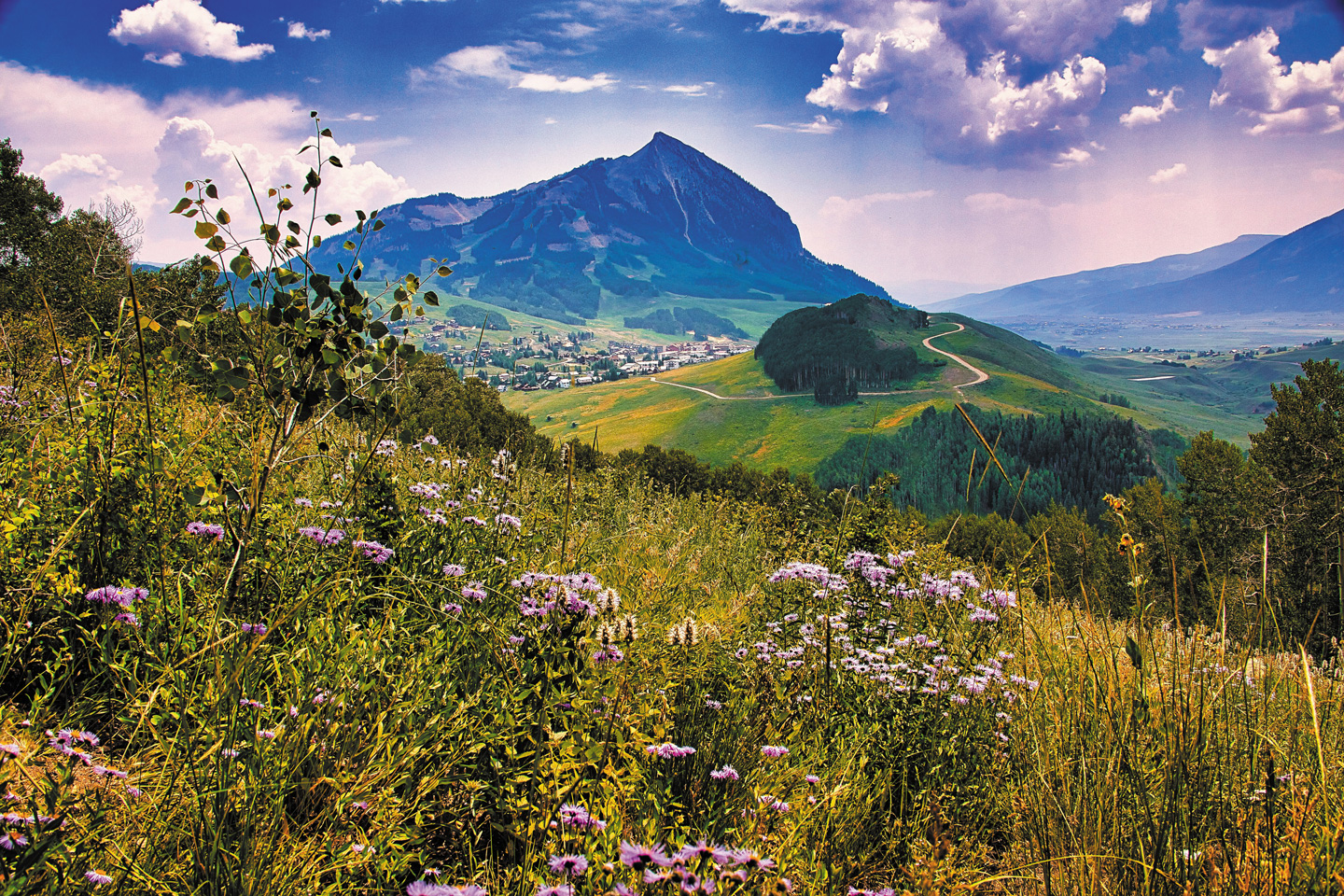
This small ski town nestled in the Rocky Mountains is often called the “Wildflower Capital” of Colorado.
By George Moore, F460576
July 2022
Crested Butte, Colorado, is a former mining town established in 1880. After the mines closed, the town reinvented itself as a destination ski resort, thanks to its elevation of nearly 9,000 feet. Today, as home to 1,819 residents, Crested Butte offers skiing and much more. It is designated a National Historic District and is a popular hub for mountain biking, hiking, fly-fishing, off-roading, and camping. It also is known as the wildflower capital of Colorado.
Crested Butte’s annual Wildflower Festival was created in 1986 and usually starts the second week of July. Meadows explode in a variety of colors around this time of the year. Visitors will find everything from small patches of flowers to large fields in bloom, much like English gardens nestled in aspen groves. During the festival, various nature- and flower-focused activities are presented, such as guided photography, garden tours, culinary and medicinal classes, birding and butterfly hikes, art workshops, and guided off-roading. These activities require reservations, which can be made online.
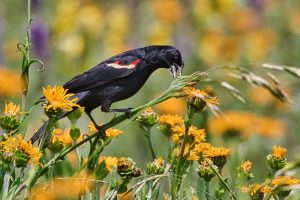
Red-winged blackbirds are commonly seen throughout the year in many parts of the United States and Mexico, including this one spied feasting on seeds along
the East River Trail near Crested Butte.
Visitors with restricted mobility can view the wildflowers from their vehicle. Paved and dirt roads such as Colorado State Highway 135, Gothic Road, Washington Gulch Road, and Kebler Pass all offer great views of the flowers.
Trails of varying difficulty for ATVs and four-wheel-drive vehicles provide access to more remote areas, and physically active visitors can hike the numerous trails in the area. The local visitors center is a good source of information regarding trail difficulty and flower locations.
My wife and I — both in our mid-70s — hiked the Judd Falls Trail, the Snodgrass Trail from the Washington Gulch Road Trailhead, and the East River Trail. The first two provided beautiful views of mountains, wildflowers, and aspen groves. The Judd Falls Trail was the most physically demanding, as the elevation increased several hundred feet in the first half-mile. The East River Trail was quite flat and treated us to wildflowers for the entire four-mile round trip.
We took a day off between hikes and drove over Kebler Pass to Marble, a small town with a population of 143. This is where white marble is quarried and shipped worldwide to be used in creating sculptures and monuments. We visited the quarry and picked up a couple garden stones from the scrap pile; had a delicious lunch at the café; and toured the “must-see” Marble Gallery, where we purchased a small souvenir. We took the long way back to enjoy some scenic views of the Black Canyon of the Gunnison National Park.
Elk Avenue, Crested Butte’s main business district, is lined with brightly painted buildings that date from the 1800s to the early 1900s. These superbly maintained structures are home to numerous restaurants, art galleries, boutique shops, gift stores, and ice cream parlors.
Primitive campgrounds in Gunnison National Forest, about 50 miles south of town, can accommodate RVs, and you can find commercial RV parks in Crested Butte, Almont, and Gunnison (28 miles south of Crested Butte). RVers who don’t drive in the mountains will find a variety of resorts, bed-and-breakfasts, and a hotel in the area.
Whether you come for wildflowers, outdoor recreation, or a stroll through history in town, Crested Butte will check all the boxes.
More Info
Crested Butte Visitors Center
601 Elk Ave.
P.O. Box 1288
Crested Butte, CO 81224
(970) 349-6438
The 2022 Crested Butte Wildflower Festival runs from July 8 to 17. Visitors can register for more than 200 workshops, including guided hikes and walks, art workshops, photography classes, and more. Learn more and view an events program at www.crestedbuttewildflowerfestival.org.