
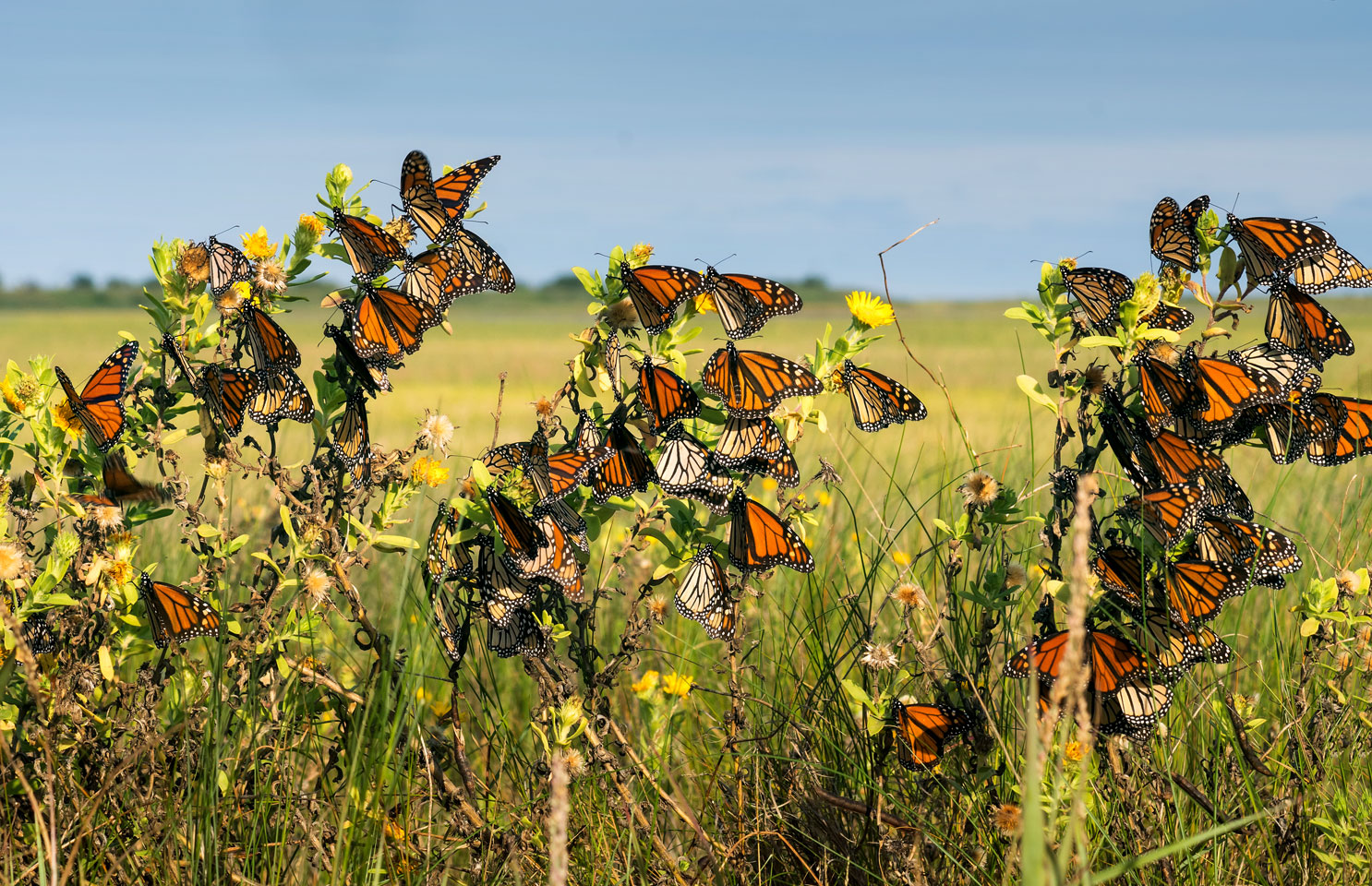
Just as many RVers travel for the winter, numerous species of animals do the same.
By Phillip Meeks
September 2022
Experiencing wildlife can be one of the greatest rewards of the RV lifestyle. There’s nothing quite like sipping one’s morning coffee to the sound of a bugling bull elk. Perhaps the thrill comes from a morning walk along the beach with dolphins at play just a few yards away, or from a late-afternoon stroll in a city park, binoculars in hand, spotting songbirds that aren’t common at home.
Wildlife has long been a travel motivation, and economically, wildlife tourism makes a big splash. According to a 2016 study by the U.S. Fish and Wildlife Service and U.S. Census Bureau, 86 million people in the United States participate in photographing, observing, or feeding noncaptive wildlife each year, and they spend an estimated $75 billion on travel, equipment, and other expenses.
Nowhere is the connection between travelers and wildlife more obvious than in migration behaviors. Just as an unseen force compels many families to spend a summer on the road, many species of wildlife set out to cover hundreds or thousands of miles once the seasons change. The intersection of human and animal travel routes can provide meaningful experiences for RVing families, who can even play a role in the conservation of these migratory species, if they understand what to look for.
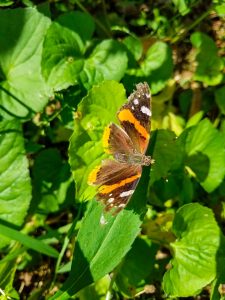
The red admiral is another migrating butterfly.
Not Just Monarchs
Ask someone to name an animal besides a songbird that flies south for the winter, and it’s likely that the monarch butterfly will come up. The multigenerational migration of Danaus plexippus is dramatic, no doubt, involving 3,000 miles for some individuals and a winter concentration within a relatively small geographical radius in central Mexico. That’s true for monarchs in the eastern United States, at least. Western monarchs overwinter along the California coast. What some folks may not realize, though, is that monarchs aren’t the only butterflies that migrate.
The painted lady butterfly (Vanessa cardui) is the most widely distributed butterfly in the world, found in North America, Asia, Africa, and Europe. Every spring, painted ladies in Mexico and the American Southwest begin making their way north, some well into Canada. Subsequent generations then point themselves southward by late summer. Another well-documented route for this species, between North Africa and Europe, is considered the longest insect migration in the world.
American lady (Vanessa virginiensis), red admiral (Vanessa atalanta), cloudless sulfur (Phoebis sennae), gulf fritillary (Agraulis vanillae), and common buckeye (Junonia coenia) are additional examples of U.S. butterfly species that make multigenerational migration flights.
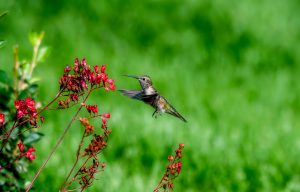
Winged travelers include rufous hummingbirds and related species.
Traveling Light
To think that any bird can fly for 600 miles nonstop across the Gulf of Mexico is impressive, but when one considers that a species weighing only as much as a penny is making such a trip, it’s awe-inspiring. The ruby-throated hummingbird (Archilochus colubris) does just that, first fueling up at summer flowers and feeders to nearly double its weight.
It returns in the spring, often visiting the same plants and feeders with which it became acquainted the previous year. A humorous myth about hummingbirds is that they’ll hitchhike on the backs of larger birds like geese during their migratory journey; however, while their petiteness lends itself to that notion, it’s not true. They rely on their own strength to cover that considerable distance.
The rufous hummingbird (Selasphorus rufus) will migrate from breeding areas in the Pacific Northwest, western Canada, and Alaska all the way to Mexico — a journey of up to 4,000 miles.
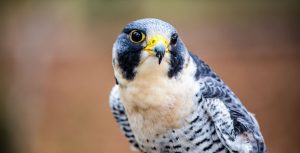
The peregrine falcon travels thousands of miles between continents.
Birds Of Prey
In 1970, peregrine falcons numbered only 12 percent of what their populations had been prior to widespread use of DDT (dichloro-diphenyl-trichloroethane), and Falco peregrinus remained on the U.S. endangered species list for more than two decades. Today, those who witness a peregrine falcon are seeing a conservation success story in the flesh.
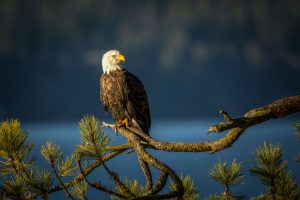
Some bald eagles migrate, depending on water and food availability.
Not only is the peregrine falcon one of the most widely distributed bird species in the world, found on every continent except Antarctica, but it’s also the swiftest, clocked at an impressive 186 miles per hour when diving for prey. And it has one of the most impressive migrations. For individuals that breed in Alaska and northern Canada, the annual round-trip journey to South America and back can be as great as 15,500 miles. It should come as no surprise that peregrine translates to “traveler” in Latin.
Formal hawk, falcon, and eagle counting events happen in the same locations across the continent annually, and these provide valuable trend data to the scientific community. Many of these counts have been going on for decades, and published records reveal how the numbers of species such as the peregrine falcon have shifted over time.
Dragonfly Clouds
The autumn of 2019 was especially enlightening for many in terms of dragonfly migration. National Weather Service radar detected clouds of insects over areas of the eastern United States, later determined to be the common green darner (Anax junius) en route to Mexico. Dragonfly migration isn’t as obvious every year, so it’s a phenomenon that many will miss, and as far as animal migration is concerned, it’s perhaps the least understood.
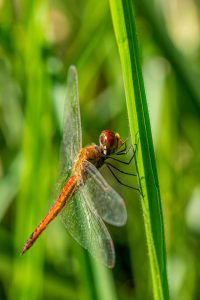
Migrating dragonflies include the globe skimmer.
In a given location, both migratory and resident populations of the common green darner can be found. Adult dragonflies mate, and the female lays eggs in aquatic vegetation. The migratory offspring will develop within a few months and then take to the skies. However, other newly emerged common green darner nymphs may remain in the same ecosystem for years before they reach maturity, overwintering in frozen ponds.
As many as eight other dragonfly species in North America are considered migratory, including the wandering glider (Pantala flavescens) and the band-winged dragonlet (Erythrodiplax umbrata).
Science Counts
For RVing families with a desire to do more than just observe migratory bird and insect species, participation in formal counts and record keeping can be a good way to contribute to conservation efforts. Data collected by enthusiasts across the continent can provide clues to how climate change, urbanization, landscape plant selection, and other factors have influenced populations and behaviors.
The Migratory Dragonfly Partnership (www.migratorydragonflypartnership.org) is a group that tracks the movements of common green darners, variegated meadowhawks, wandering gliders, and black saddlebags.
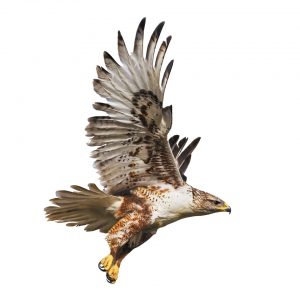
Hawks are counted during their migratory journeys.
Likewise, the nonprofit Hawk Migration Association of North America (www.hmana.org) maintains a list of raptor viewing sites, including fire towers, overlooks, and other natural or synthetic features — as well as a calendar of organized events where seasoned and novice hawk enthusiasts can tally species as the birds soar overhead in spring and fall.
The National Audubon Society’s Christmas Bird Count and Great Backyard Bird Count; the Monarch Watch of the University of Kansas; and the University of Wisconsin-Madison Arboretum’s Journey North are other examples of organized efforts to equip wildlife enthusiasts with the tools and knowledge they need to track wildlife migrations.
Beyond counting, travelers can leverage seasonal relationships with RV park managers and public spaces decision-makers to protect or develop appropriate habitats for migrating species. Think wetland areas needed by dragonflies, and native plant rest areas for both butterflies and hummingbirds on the move.
Migration is one of the most fascinating and mysterious features of the natural world. If anybody can fully grasp why some species have no choice but to hit the road when the seasons change, perhaps it’s RVers. No doubt these kindred spirits can contribute to a deeper understanding of why migrating creatures do what they do.