
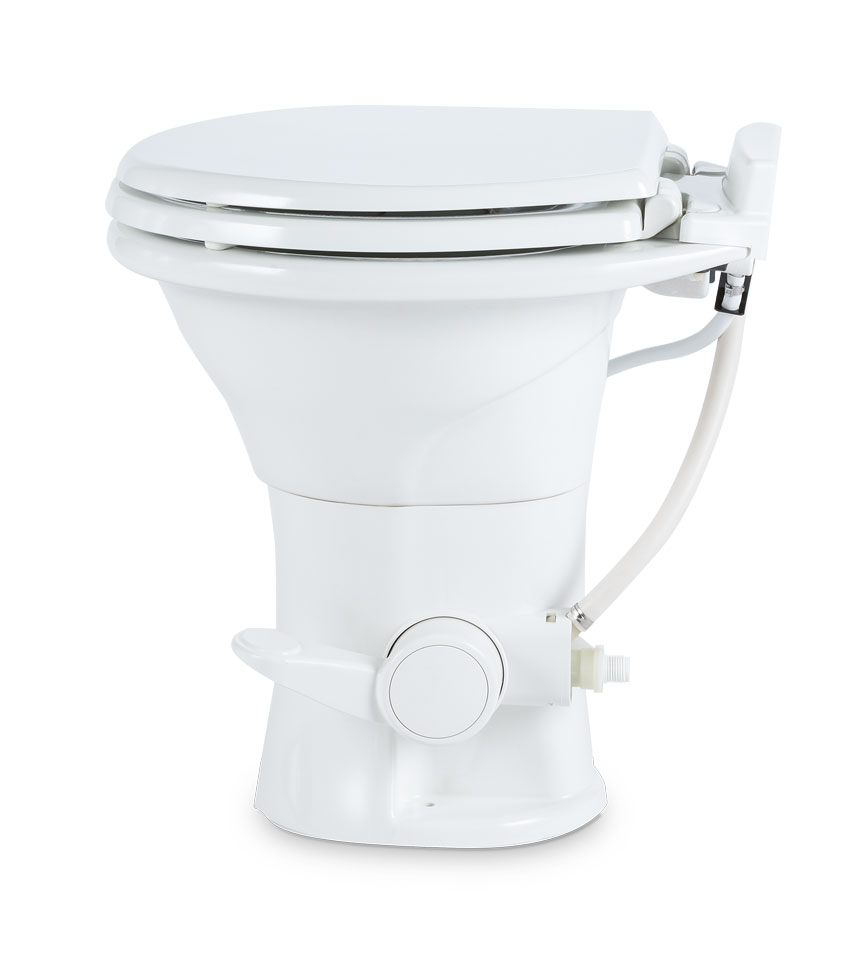
A look at the various options and features available.
By Steve Froese, F276276
September 2022
For many folks, their camping experience started by learning the location of the nearest outhouse. Or maybe you were one of the lucky ones who had access to a “port-a-potty,” either as part of your tent camping setup or in your non-plumbed RV. These were common in pop-up trailers and Type B camping vans in the early days.
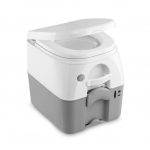
Dometic 976 portable toilet
Today, most recreational vehicles come equipped with the luxuries of home, and then some. We have graduated from plastic portable toilets with waste tanks that had to be dumped manually and fresh tanks that had to be filled to toilets that are plumbed directly to RV systems. These days, many types of RV toilets are available, from the classic port-a-potty to electric-flush, macerating, and composting models. Let’s examine what’s currently available in RV toilets.
First, the basics. Many companies offer portable toilets in various sizes and styles, from the classic models many of us remember to more feature-loaded offerings that include push-button flushing, toilet paper holders, and tank level indicators. If you’re in the market for a portable RV toilet, there are more options to choose from than you might expect.
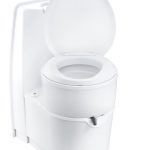
Thetford C220 cassette toilet
You can also purchase a “cassette” toilet — one that incorporates a small, removable waste tank. These models are a step up from portables, as they include a larger holding tank (5 gallons or so) and generally are connected to the RV fresh-water supply. Many models incorporate electric flush as well. They have a larger footprint than a portable toilet, but they are a good option if you want more tank capacity than a portable but lack the plumbing infrastructure.
Cassette toilets are permanently mounted, although the waste tank must be removed for emptying. As with all other types of RV toilets, many cassette toilet models are available, so you should be able to find one to suit your wants and needs.
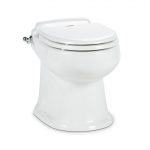
Dometic MasterFlush 8740 macerator toilet
When it comes to the “gravity flush” toilets most of us are accustomed to, many options are offered. RV gravity-flush toilets are available in plastic or porcelain; white or bone colors; electric, foot, or hand flush; round or elongated bowls; and short and tall heights. Gravity-flush toilets require a pressurized water source and a connection to a black-water holding tank, which are found in most RVs. As is true of portables, gravity toilets are inexpensive when compared to other options.
The latest toilets on the market include macerating, recirculating, composting, incinerating, and dry-flush toilets. These are of interest to many people, but especially to those considering building or converting their own RVs, or those who are interested in greener options or boondocking.
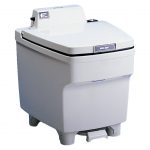
Thetford Electra Magic Model 80 recirculating toilet
Macerating toilets grind the waste into a liquid slurry that occupies less volume and makes draining the black tank as convenient as emptying the gray-water tank. These toilets operate on electricity and, as such, incorporate electric flush. They don’t rely on gravity and can even pump the waste uphill. This can come in handy when pumping out to a sanitation station, or even when utilizing holding tanks, since the tank doesn’t have to be directly below the toilet or even below floor level like gravity models.
Since the waste is pulverized, a one-inch hose is used for the waste evacuation instead of a three-inch hose. Some macerator toilets even have bidet attachments. Macerator toilets are more expensive than gravity-flush models, and pumping out the waste can take longer because of the small discharge hose. These toilets require more maintenance, such as regularly cleaning the macerator pump, and are prone to clogging from foreign objects.
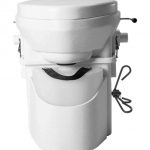
Nature’s Head composting toilet with foot spider handle
Recirculating toilets recycle the water for flushing. This means much less water is used. In fact, these toilets are completely self-contained and require no plumbing at all, similar to a portable toilet. The Thetford Electra Magic Model 80 recirculating toilet is one example. It has a termination valve on the bottom for evacuating the contents into a sewer outlet or into a holding tank.
Composting toilets don’t need a water source or other plumbing, but they do require a composting material such as peat moss or coconut coir. They work by separating the liquids from the solids. Collected liquids can be dumped into a regular flush toilet, and solids mix with the composting material and can be disposed of in a bag you can place in the regular trash. Composting toilets are essentially glorified outhouses — they must be properly used to avoid odors and mess, and they have a limited waste capacity due to the lack of a holding tank. However, they are a simple and good solution for those who truly enjoy roughing it.
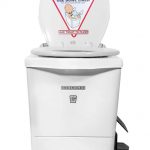
Incinolet incinerator toilet
Incinerating toilets are not common in RVs, but as the name suggests, they literally incinerate the waste using an electric heater and blower system that heats the waste to over 1,000 degrees Fahrenheit. The result is a few tablespoons of ash. This is performed in a special incineration chamber that is safe for use in RVs. These toilets take composting to the next level. They are expensive and require a chimney vent to the outside of the RV.
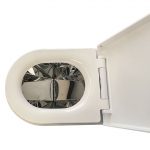
EcoJohn TinyJohn waterless incinerator toilet
Dry-flush toilets are similar to diaper pails; they are waterless and don’t utilize a holding tank. The waste is dumped into a disposable bag, which, when full, is automatically sealed by the toilet. The entire bag can then be lifted out of the toilet and disposed of in the regular garbage. These are useful for small camper vans or conversions.
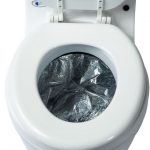
Laveo Dry Flush portable toilet
Who would have imagined that selecting a camping or RV toilet could be fraught with so many options? Considerations include price, the number of people using the toilet (large families or groups should not consider a composting or portable toilet), plumbing and space infrastructure, camping locations, as well as maintenance and environmental concerns.
Resources
Dometic
www.dometic.com
(800) 544-4881
EcoJohn
www.shop.ecojohn.com
(501) 833-0155
(incinerating toilets)
Incinolet
www.incinolet.com
(214) 358-4238
(incinerating toilets)
Laveo by Dry Flush
www.dry-flush.com
(203) 248-4440
(waterless toilets)
Nature’s Head
www.natureshead.net
(251) 295-3043 or (419) 701-9086
(composting toilets)
Thetford
www.thetford.com
(800) 543-1219