
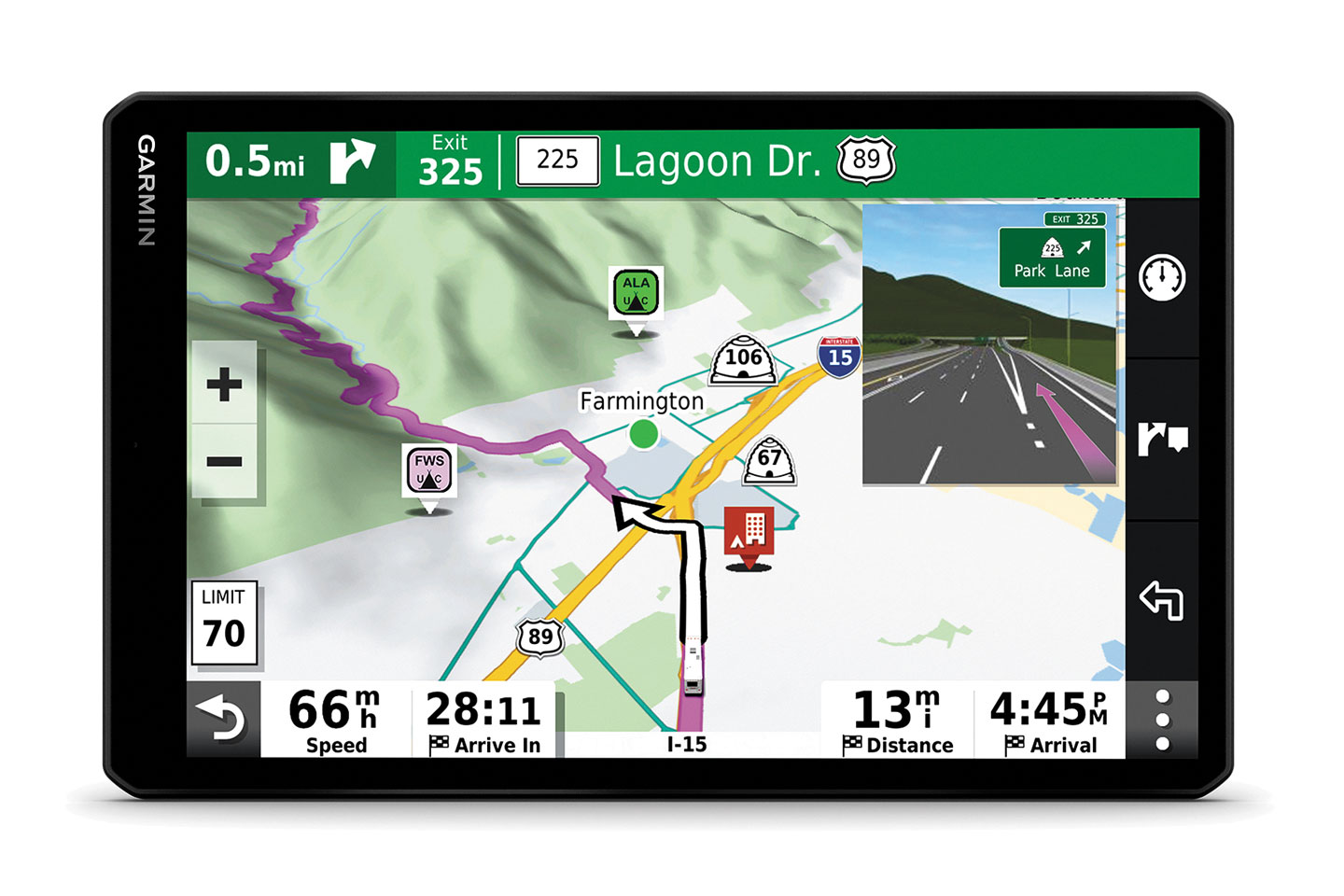
There are many benefits to using a dedicated GPS system to guide you during your travels, especially units specifically made for RVers.
By Steve Froese, F276276
November 2022
Many RVers will remember carrying physical maps, road atlases, and perhaps even guidebooks in their RVs; a number of folks still do. We continue to take along an atlas in our RV, but we have ditched other paper in favor of a global positioning system, or GPS. This satellite navigation system is truly a piece of modern technology that we love to hate, yet it is relied on by so many people to get us where we are going — most of the time.
I expect that most RV travelers use GPS systems, so let’s do a bit of a deep dive into these units and review which ones might be the best for recreational vehicle use. Some people might ask, “Why not simply use a smartphone mapping application?” Personally, I prefer a standalone GPS — I don’t have to consume data on my phone, the phone screen is not an ideal size, and I find the specific navigation features on a GPS unit more desirable.
Historically, a number of notable manufacturers have produced GPS systems; the main ones include Magellan, Garmin, TomTom, and to a lesser extent, Rand McNally. Many smaller players exist as well. All these brands offer several different models and features, or did in the past, including everything from live traffic updates to built-in dashboard cameras.
GPS units store onboard information and locations for millions of points of interest and can navigate the user to any entered location in North America with pinpoint accuracy (except for the occasional misstep when the unit guides us to a dead-end side road behind the desired destination, but I digress). Most GPS units provide both 2D and 3D views, and the user can access features such as elevation; travel direction; current location in hours, minutes, and seconds (HH:MM:SS); and other information.
GPS units are great because they provide turn-by-turn directions, estimated time of arrival (ETA), and in the case of traffic-connected units, real-time traffic information and detour guidance. These are standard features for any GPS unit, so let’s look at some makes and models geared toward RV use.
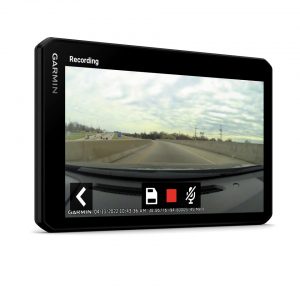
Garmin RVcam 795
Garmin
Garmin manufactures GPS units specifically for the RV market, including two new models. Four different screen sizes are available: 6.95 inches (RV 780), 7 inches (RV 795/RVcam 795), 8 inches (RV 890), and 10 inches (RV 1090). They can be used in both landscape and portrait mode. These models include a special routing mode for large and/or towing vehicles, as well as databases that warn of steep grades, sharp curves, road weight limits, and more. These units also incorporate built-in RV campground directories from several popular providers, such as KOA. They offer voice commands and have built-in Wi-Fi that allows for hands-free calling and convenient map updating.
Tripadvisor is included as well, so you can search for popular tourist sites. The Garmin units also include sites from the History database, featuring pictures and descriptions of notable parks, monuments, museums, and historic sites. You can also search the built-in database of national parks. The devices can be paired with the “Garmin Drive” smartphone app to acquire real-time traffic, weather, and fuel price data. The 6.95-inch GPS includes real-time traffic via a built-in traffic antenna. All models are compatible with Garmin’s backup and dashboard cameras, and the new RVcam 795 includes the dash camera as a standard offering. (www.garmin.com)
Rand McNally
At press time, Rand McNally had RV GPS options on its website: the standard-mount RVND 7, and the OverDryve 7 RV tablet. However, when we contacted the company, we learned that these devices are no longer being produced. Rand McNally has decided to concentrate on the truck market. You may still be able to find the RV-specific devices at retail outlets. And RV owners may want to investigate the options designed for truck drivers. They are available in standard and tablet forms also. (www.randmcnally.com)
TomTom
While TomTom does not offer an RV-specific GPS solution, they do have a few models geared toward truckers. These units do not offer points of interest of specific use to RV owners; however, they do allow you to customize routing based on vehicle size, although some of these are not overly useful to RVers, such as payload, axle weight, etc. (www.tomtom.com)
Magellan
Magellan has always been my GPS of choice, and I have used the company’s products for years. They once offered some good RV-specific GPS units (Roadmate 9365/9490). However, Magellan seems to have exited the consumer GPS space, now offering only fleet and off-road solutions. You may be able to find the above models if you search hard enough. These models have a 7-inch screen, contain over six million points of interest, and allow for large-vehicle routing. As with TomTom, although Magellan does currently offer GPS units designed for fleet (trucker) use, they are not ideal for RV use.
Garmin is currently the major player in the RV GPS game, and I am sure many readers have experience in this area and may want to reach out to FMCA to share their stories, questions, comments, and ideas. While many automotive GPS units are available at online marketplaces such as Amazon, I would avoid them and stick to the major players. I would not trust navigating my RV with an off-market GPS; at the very least, the maps may not always be dependable.
Do Your Homework
Before purchasing any GPS unit, please research its features, especially the ones that are important to you. For instance, does the unit offer live traffic reports, and are the map updates free? If so, for how long? It is also prudent to mention the GPS map upgrade scam. Please download GPS map upgrades only from the manufacturer websites or apps. A number of false websites exist to steal personal data via a misguided click by a user looking for a map update.