
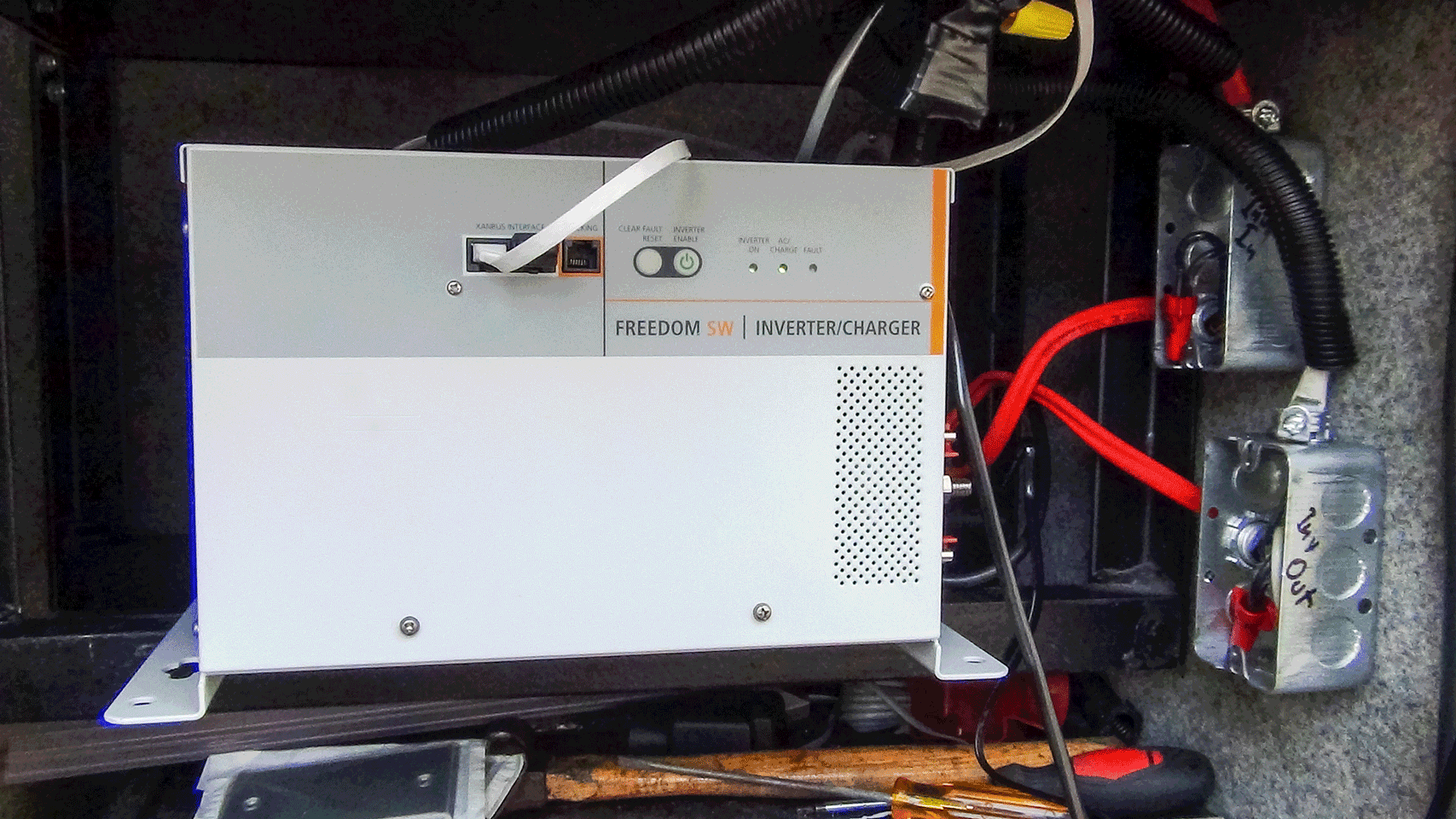
No Power For The People
Knowing how an inverter works can help you troubleshoot and diagnose RV electrical problems.
By Steve Froese, F276276
March 2023
In this month’s column, I respond to a member’s question regarding his inverter issue. From time to time, I discuss such email inquiries in this column to educate other members who may have similar issues. Member Bob writes:
“I have a 2005 National RV Dolphin LX. I bought this motorhome about two years ago. It had a 2000K Xantrex controller/inverter. I found that most of the inside power outlets would not work. I replaced the inverter with a new 2000K, thinking the old one was not producing AC power, but the outlets still do not work. Reading the original brochure, it says some were produced with a 1000K inverter that only powers the TV and the refrigerator. That’s what mine does now, so I’m thinking somewhere along the line a previous owner upgraded the inverter from 1000 to 2000. I had the RV in a shop for a couple weeks, and they could not figure how to get the power to all the outlets. I’ve tried putting the inverter power outlet directly to an electrical control panel next to the inverter, and that does not resolve the problem. Any suggestions?”
Without putting my hands on the RV, I am unable to provide a definitive diagnosis, but I do have a few suggestions for inverter troubleshooting. First, it is a drastic measure to replace an inverter without first ruling out other, less-expensive causes. In this case, always check for 120-volt-AC power at the inverter output first, as well as for 12-volt-DC input. For the most part, inverters are reliable and not generally prone to failure. I rate the technical difficulty in this troubleshooting example to be three out of five. This assumes you have a multimeter and know how to take voltage, current, and resistance measurements. That discussion will not be covered in this article, but many tutorials are available on the internet.
Important Safety Note: Be extremely cautious when working with and around electricity. Coming into contact with electricity can cause injury or death. It can damage equipment and also may cause a fire. Do not attempt to diagnose electrical equipment without a good understanding of electrical troubleshooting!
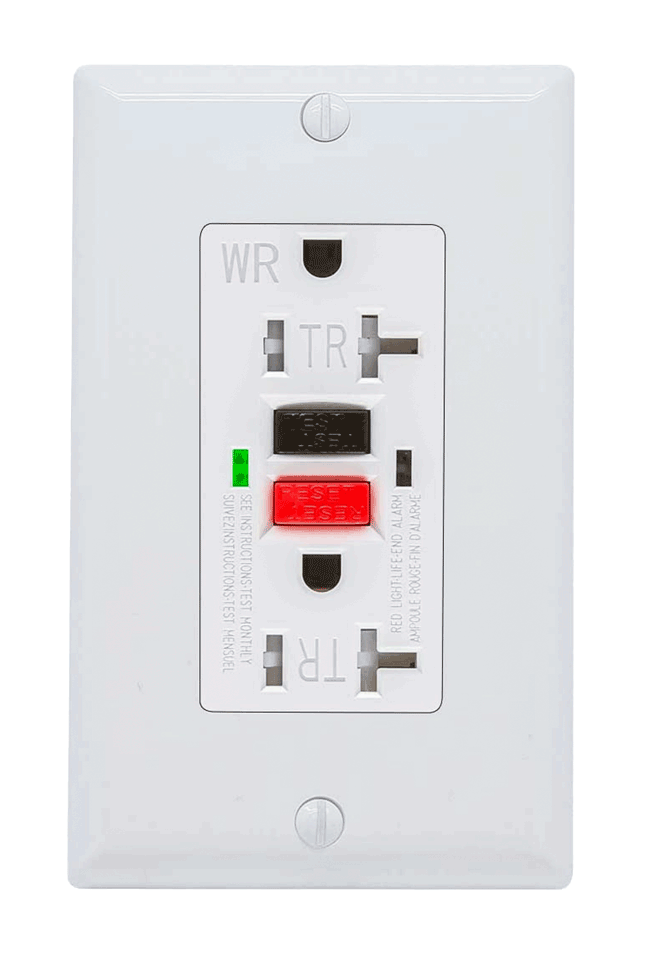
GFCI outlets sense stray electrical current from damaged appliances, improper wiring, or moisture and immediately cut off power.
The first thing I would check is the ground fault circuit interrupter (GFCI) receptacle for the fridge/TV to see if it has tripped. Note that the main GFCI receptacle (the one with the reset and test buttons) may feed additional receptacles downstream that will appear like regular outlets. Search the RV for any GFCI receptacles and press the “reset” button to see if that resolves the issue. Always be suspicious of GFCI receptacles being tripped when you can’t seem to find any other reason for a sudden loss of power in only part of your RV. Similarly, check all the breakers in your main and subpanels (if applicable) to ensure none of them are tripped.
From your statement, “I’ve tried putting the inverter power outlet directly to an electrical control panel next to the inverter, and that does not resolve the problem,” I’m assuming you wired the AC output from your inverter directly to the mains of your breaker panel. If so, there are several hazards related to this; probably the primary one is avoiding multiple power sources feeding the same circuit at the same time. In other words, never connect more than one power source to a load, such as a generator and shore power or an inverter at the same time. This can cause dangerous and damaging phase issues (how the sine waveforms interact with each other) and is prevented using a transfer switch. I can’t comment further on this step, as I don’t know exactly what you did. However, if done correctly, you may not have AC voltage coming out of your inverter, as you originally suspected. If this is the case, it could be that you don’t have 12 volts DC going in.
Many owners don’t realize that there should be a fuse between the battery bank and the inverter input. This fuse will be fairly large, on the order of 200 to 400 amps or so, depending on inverter size. It is possible that fuse is blown.
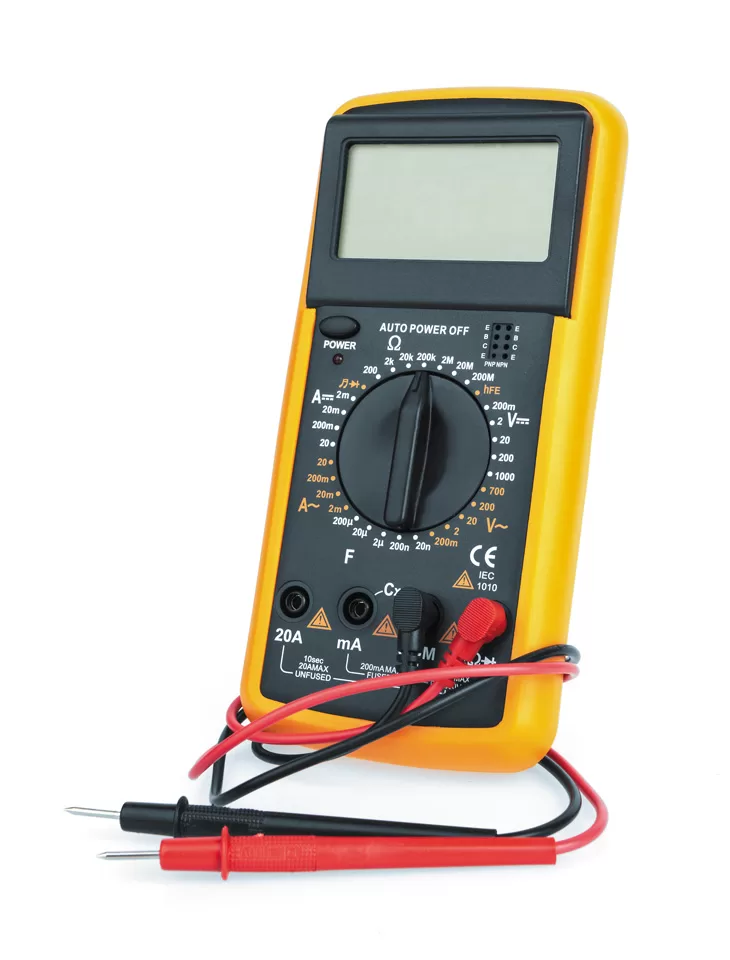
Digital multimeters are handheld devices used to measure voltage, current, and resistance.
Measure the DC voltage across the battery bank. It is also possible the inverter is incorrectly wired to the battery bank. In the case of a 6-volt battery bank, ensure the inverter is wired across two 6-volt batteries in series or battery pairs in series/parallel; otherwise, you might be getting 6 volts or even zero volts. Measure the DC voltage across the same battery terminals the inverter is connected to and verify you have approximately 12 volts DC there. If it is less, the batteries are either low on charge or the inverter is not connected properly. Review the series, parallel, and series/parallel circuit wiring; diagrams can be easily found online.
Once you confirm a full 12-volt to 14-volt input to the inverter, the next step is to turn on the inverter and check for AC voltage at the output. Use caution when taking this measurement! If you can confirm the inverter is on, but you measure no AC voltage at the output (be sure to use the AC Volts setting on the multimeter), you should examine the inverter for circuit breakers. These may be tripped. Although the member suspects the inverter was upgraded, it is important to note that a 2,000-watt inverter upgrade option was available on this model, so it more than likely was a factory upgrade. If you measure approximately 115 volts AC at the inverter output, the problem lies downstream of the inverter.
I also would seek to understand whether the inverter/charger is working in reverse. In other words, are the batteries being charged from shore power? This is simply the inverter running backward. If the batteries are not charging in this manner, it is further evidence the inverter is not functioning or is incorrectly installed.
An inverter may be wired into the RV system in many ways, from powering the entire RV to feeding only select circuits. The member mentions in his email that the inverter is powering only the fridge and the television. This conceivably makes the problem easier to troubleshoot.
I was unable to find any Dolphin schematics online (National RV has been out of business for many years), but if you are able to confirm you have power coming out of the inverter (and the batteries are charging when you are plugged into shore power or running the generator), the issue is likely to involve a circuit breaker or GFCI receptacle.
In terms of getting power from the inverter to all the outlets in the motorhome, this generally would require a significant rewiring of the entire system. This may not be related to the issue you are having, although it would depend on whether the inverter is designed to supply power to the entire motorhome.
Unfortunately, I am unable to provide this member with more specific troubleshooting ideas, but it is hoped that being armed with these tips will help him to narrow down the issue. Don’t be afraid to seek professional assistance from your local RV service center. Even if you ultimately go that route, providing the tech with basic troubleshooting you have performed already may save you some labor cost.
While effective electrical troubleshooting does elude many — even many RV technicians have difficulty with electrical diagnoses — it is largely a matter of logical thinking. Understanding how the current flows throughout the system is key to understanding both the AC and DC wiring circuits. Arming yourself with this knowledge makes electrical troubleshooting much easier.
Send your troubleshooting questions to Steve Froese at techtalk@fmca.com. The volume of correspondence may preclude personal replies. Not all responses will apply in every instance. Some situations may require a visual inspection and hands-on testing. If you choose to follow any procedures outlined in this column, first satisfy yourself that neither personal nor product safety will be jeopardized. If you feel uncomfortable about a procedure, stop and make an appointment with an RV service facility.
You may also want to consult the FMCA Forums (https://community.fmca.com) to see whether your question has already been addressed or, if not, to post it.