
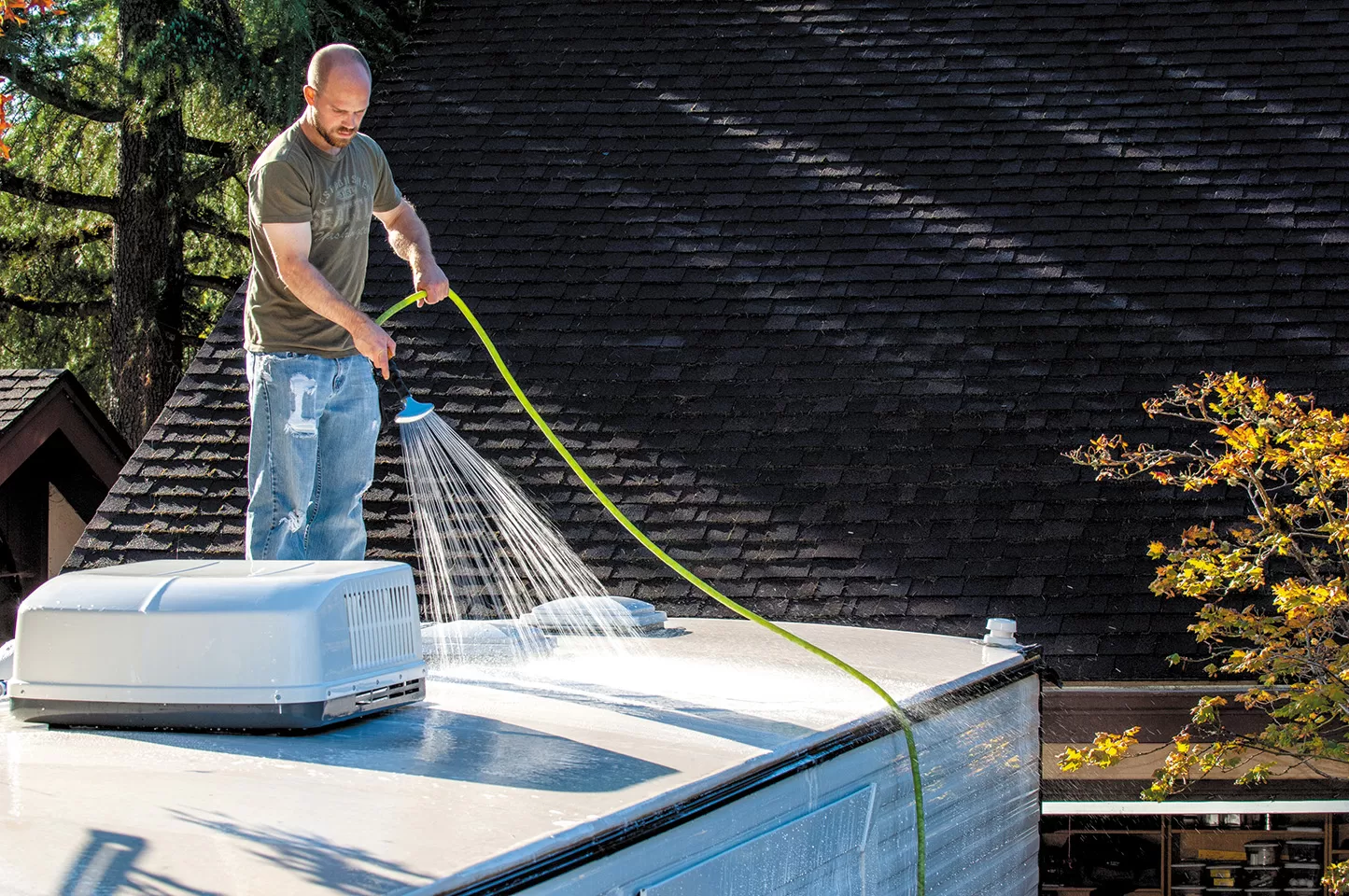
A couple of hours a year cleaning and maintaining the roof of your RV can save you thousands of dollars in repair costs down the road and ensure that the limited roof warranty remains in effect.
By Bruce W. Smith
April 2023
RV owners are typically very conscientious when it comes to maintaining their motorhomes and tow vehicles. They make sure engine oil and filters are changed on a regular basis, tires and air pressures are checked before heading out, lights are tested, and the windshield is clean. These things are done in order to limit problems from arising during a trip because something wasn’t maintained properly or was overlooked.
Being vigilant about maintenance is just part of the RV experience; it’s your home on wheels, and all homes require a regular bit of TLC. But RV owners also need to remember to look up. RVs that have rubber or membrane-covered roofs require regular maintenance to retain both the roof’s warranty and its integrity.
First, A Safety Note
Exercise extreme caution if you venture onto your RV roof, especially if it is wet or you have balance issues. If you are not comfortable performing any cleaning or inspection procedures, have the work done at an RV service center.
RV Roofs Require Regular Care
The manufacturers of RV membrane roofing materials, as well as the RV manufacturers themselves, make it very clear in their brochures, specification sheets, and owners manuals that regular washing and inspection of the roof is mandatory in order to comply with roof-related warranties.
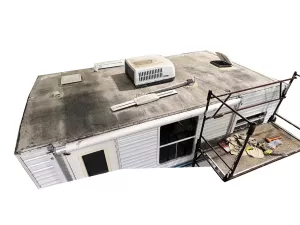
Neglected RV roofs with EPDM membrane turn black and lose their water-repelling/sun-reflecting properties, requiring replacement.
A perfect example is what Thor Motor Coach’s literature notes regarding motorhome rooftop maintenance. The 2022 Thor Type A and C owners manual states to clean the roof every three months per the Maintenance Schedule and to inspect and reseal roof and component attachments, vents, antennas, ladders, HVAC, etc. The company’s Type B owners manual makes a similar statement.
Alpha Systems, which provides roof membrane materials for many RV manufacturers, RV repair centers, and consumers, clearly states in the “Care & Maintenance” section of its website that “Periodic cleaning (three to four times per year) is the primary maintenance required” for their products. The company also recommends periodic inspection of the roof during cleaning to check the membrane for signs of damage.
LaSalle Bristol and Dicor Products follow a similar cleaning regimen and make it clear that limited warranties for RV roofs are contingent on a minimum semiannual roof cleaning and inspection.
The bottom line is that failure to properly maintain (clean and inspect) your RV’s roof could result in loss of warranty coverage.
Beware Harsh Elements
The integrity and life expectancy of these different RV roofing mate-rials can be adversely affected not only by the ravages of weather and flying debris but also by bird droppings, plants, animals, algae, fungi, lichens, cyanobacteria, mold, and mildew that often take up residence on RV roofs — especially those that sit idle for months at a time.
Another reason to give your RV roof a washing several times a year is because a clean, white roof reflects sunlight and keeps the unit cooler during the hot summer months. The cleaner the roof, the less you run the air conditioning, and the lower the cooling costs.
Washing An RV Roof Helps To Spot Damage
In addition to keeping the roofing membrane clean, semiannual or more frequent roof cleaning and inspections help you spot tears or punctures in the membrane. You might also find cracked or deteriorating caulking around the lap edges, fixtures, vents, or any other accessory on the roof.
The smallest puncture or tear of the roofing material, or deterioration of caulking around fixtures and accessories, will result in water intrusion. Water that gets under the roof membrane is one of the greatest fears of many RV owners; moisture quickly leads to rot, mold, and a litany of other serious problems that could cost thousands of dollars to repair.
RV Roof Care Begins With The Cleaner
Routine maintenance of an RV’s roof membrane will help ensure decades of trouble-free performance. It be-gins with using the proper cleaner. Use a nonabrasive household cleaner such as Dawn or Ajax dish soap.
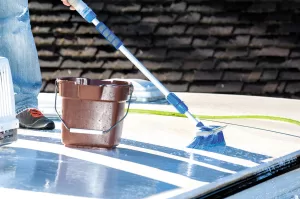
Liquid dish soap and a soft-bristle brush usually are all that’s needed to clean an RV roof.
LaSalle Bristol recommends using cleaners such as Fantastik, Soft Scrub, Windex, Simple Green, Tilex, and Murphy’s Oil Soap to properly wash their XTRM Ply roofing material, while avoiding any cleaner that contains solvents. Dicor cautions against using any cleaners that contain acetone or citrus-based cleaners, but recommends using Dicor’s RP-RC-160C or RPRC320S Rubber Roof Cleaner for biannual roof cleaning.
It’s important to check your RV’s owners manual and roof warranty before cleaning. Alpha Systems makes this note in their RV roof care and maintenance instructions: “Care should be exercised when working on top of your unit! The roof may become slippery when wet. Do not use acetone, or any other products containing petroleum distillates, on the Alpha Systems roof membrane. Use of these products will damage the membrane.” Alpha instructions also state that only the company’s sealants should be used with its roofing material.
Be Gentle When Cleaning Your RV Roof
The membrane-type roof coverings are designed to keep water out. But these thin rubber, plastic, or PVC materials are subject to tears and punctures. So, it’s important to be gentle when washing the roof.
Don’t get overzealous when washing your RV’s roof. Always use a soft-bristle brush just as you would for cleaning the sidewalls of the trailer, motorhome, or tow vehicle. Special RV wash brushes with telescoping pole handles can be found at RV centers, Home Depot, Lowe’s, Walmart, and online. A good wash brush should be in every RV’s “accessory” compartment, just like a garden hose, plastic bucket, wheel chocks, and jack pads.
If the roof has bird droppings, tree sap, or other tough-to-remove crud on it, use Tilex, Murphy’s Oil Soap, or Windex on the location and a medium-bristle brush to gently remove the offending spot(s).
UV Protection Treatment For RV Roofs
When the RV roof washing part is done, take the time to thoroughly rinse the roof and sidewalls with clean water in order to remove any soap residue and prevent streaking down the sidewalls.
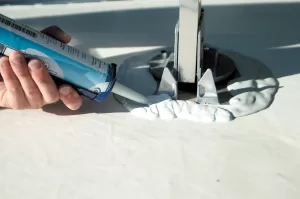
Inspect lap seals, vents, skylights, etc. Reseal areas with cracked, missing, or compromised caulking.
EPDM (ethylene propylene diene monomer) rubber roofing materials and some TPO (thermoplastic polyolefin) roofing membranes usually require the application of a special after-wash treatment to maximize UV protection. Available products include Camco Pro-Tec Rubber Roof Protectant and Dicor Roof-Gard RV UV Protectant. PVC RV roof membranes don’t require any UV treatment. These UV protectants are usually applied after the roof is dry and protect the membrane from degradation caused by harmful rays.
Some EPDM RV roof cleaners contain UV protectant as part of the cleaning solution, which simplifies the process. One such product is Thetford Premium RV Rubber Roof Cleaner & Conditioner, which is available at a wide variety of retail outlets and online.
Again, read the information about your RV’s roofing material, or stop in at an RV dealer to get an expert opinion on proper maintenance steps after washing.
RV Roof Maintenance Pays Dividends
Spending an hour cleaning and inspecting your RV’s roof at least twice a year may save you thousands of dollars down the road in unexpected repair costs related to roof integrity issues.
A regular RV roof cleaning and inspection can also pay dividends when you sell or trade in your motorhome or travel trailer. When an RV salesperson, or a potential buyer, climbs up to the roof and sees what good shape it’s in and how well all the sealants and lap seams have been taken care of, it adds value to the sale.
Savvy RV buyers do not take poor roof maintenance lightly. Seeing an RV roof with dark areas and streaks down the sidewalls, or sealant cracks around vent pipes, skylights, A/C units, and other roof-mounted accessories, is a sure sign water intrusion problems are present or forthcoming.
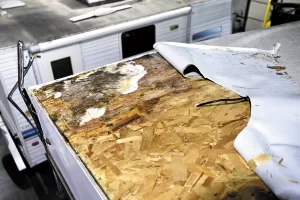
Water intrusion can result in rot, mold, or other serious problems.
Water intrusion leads to wet insulation, separation of wall laminates, wood rot and mold issues, and other major repairs that can easily exceed thousands of dollars if the RV roof membrane needs to be replaced.
Take RV roof cleaning seriously. It’s not that physically taxing. But, again, if walking on your RV roof makes you uncomfortable, do not try it. Find a nearby RV service company or individual to do the job for you.
How To Protect Your RV Roof During Storage
Parking your RV for the season? The best way to store an RV when it’s not being used is to park it indoors or, at the very least, under the cover of a roof. This protection helps limit the adverse effects that sun, rain, hail, snow, ice, sand, dirt, and wind-blown debris have on the roof membrane and the sealant around the roof fixtures.
If it is being left out in the open, the best thing to do is to use a protective RV cover. “But never go the blue-tarp route,” warns Lance Rinker, director of purchasing and marketing at Northwood Manufacturing and Outdoors RV. “Blue tarps are inexpensive, but they don’t breathe and will just add to potential roof and moisture intrusion problems.
“We tell our customers to only use covers that are made with a breathable fabric,” said Rinker, an avid RVer himself. “I’ve been RVing for decades, and the best covers for towable RVs I’ve found are the Olefin HD versions made by ADCO. They are made with a tough, breathable material that provides excellent protection for all climates and are custom-fitted, so they fit nicely going over roof-mounted accessories such as air conditioning units, vents, and skylights.”
Other companies also sell four- or five-ply covers. Look for one that has good reviews.