
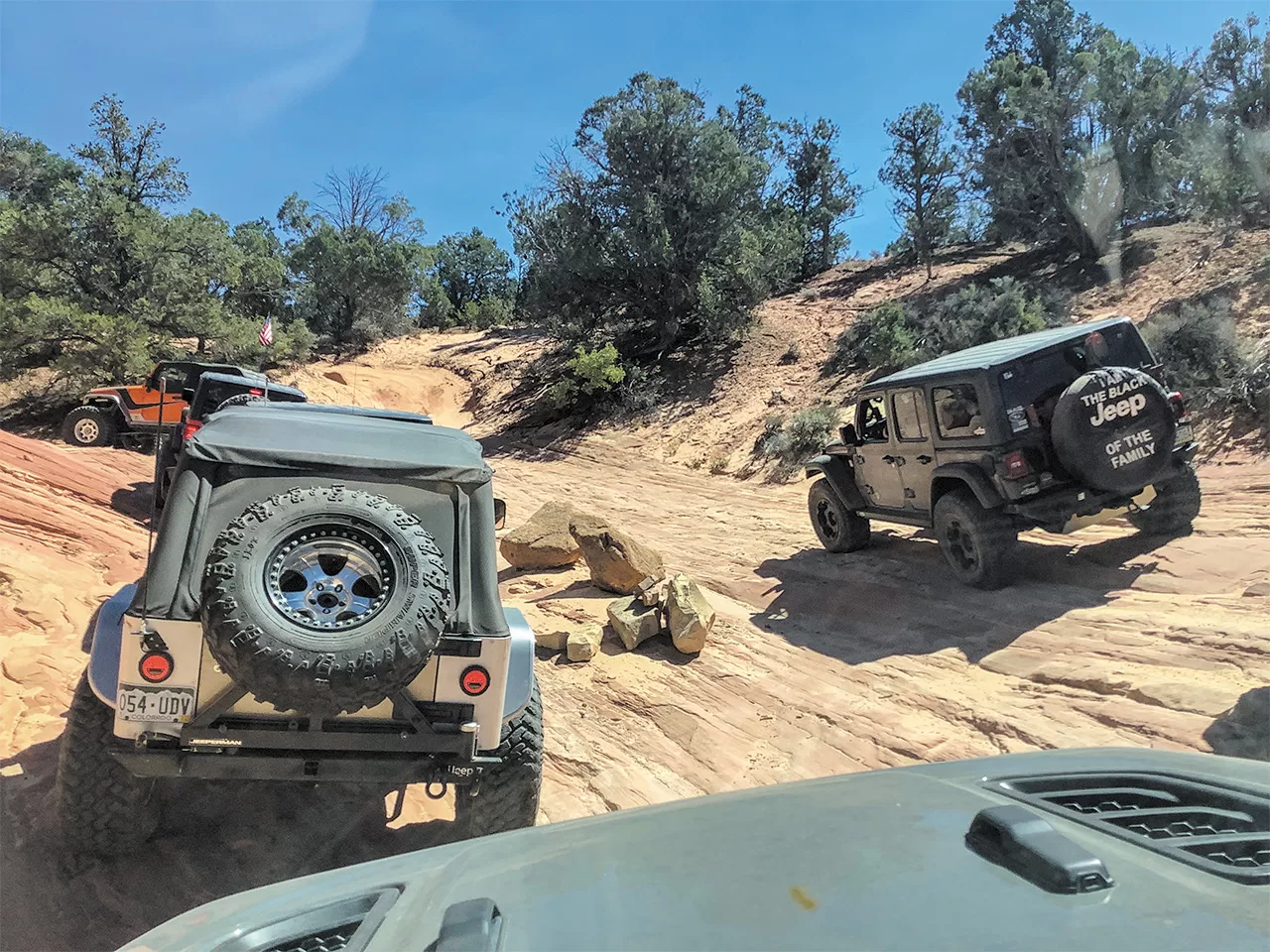
By going off-roading, you can explore backcountry byways and experience anything from exhilarating rides to peaceful sightseeing.
By George Moore, F460576
October 2023
As I’ve encountered motorhomes towing a vehicle, I’ve noticed that four-wheel-drive automobiles are very popular for this purpose. Of these 4x4s, Jeeps seem to be the most common. This sparked my curiosity about the popularity of four-wheel-drive vehicles.
One reason I was seeing so many 4x4s became clear when I reviewed Family RVing’s annual guide to towable vehicles. As the variety of flat-towable two-wheel-drive vehicles seems to be decreasing, motorhome owners appear to be shifting to flat-towable four-wheel-drive vehicles. These 4x4s range in size from the two-door Jeep Wrangler to midsize pickups such as the Ford Ranger and all the way to full-size pickups and SUVs.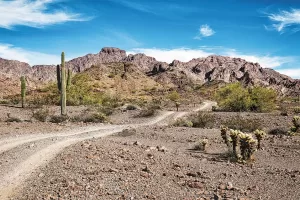
In the interest of full transparency, my current towed vehicle is a four-wheel-drive Ford Ranger FX4. My primary reason for purchasing this vehicle was — no surprise — its ease of flat towing. A strong second reason is the off-road package, which allows me to get into the backcountry to pursue my nature-photography hobby.
I started asking questions of folks I saw towing four-wheel-drive vehicles. Many of the Jeep Wrangler owners I spoke with said they chose this model because it was simple to flat tow, relatively small, and easy to maneuver in congested parking lots. Some owners also said they like its higher ground clearance, which allows them to safely drive on unimproved roads.
That last point caught my attention. I remembered seeing many Jeeps and 4×4 vehicles when traveling in Colorado, Utah, and Arizona. Some were being driven as part of a group or club. As I talked with more 4×4 owners, I realized backcountry driving is a popular hobby or pastime, and four-wheel-drive clubs are common. My curiosity grew some more.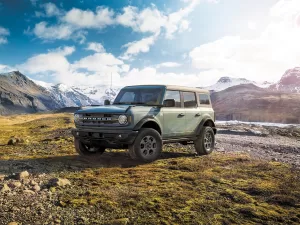
With a quick Google search, I soon learned there are hundreds of 4×4 clubs throughout the United States. Some are brand-specific, others are geographic in scope, and some focus on challenging drives. I also learned that 4x4s of all types are continuing to grow in popularity. A study by JATO Dynamics found that through April 2020, 50.8 percent of new 2020 vehicles sold in the U.S. were equipped with four-wheel drive. Other studies predicted continued growth in the popularity of four-wheel-drive vehicles.
Many, if not most, of the more serious Jeep, Bronco, and other 4×4 vehicle owners I spoke with had an adventurous spirit. They told me how they like to travel into the remote wilderness and enjoy the unspoiled beauty. The thrill of seeing wildlife, the beauty of wildflower meadows, and the vastness of desert or mountain areas is a reward of owning a four-wheel-drive vehicle.
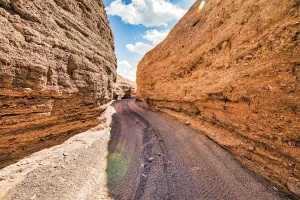
Exploring slot canyons, as in California’s Picacho State Recreation Area, is part of off-roading fun.
I also met several brave and hardy 4×4 owners. These are the men and women seeking the toughest challenges and most demanding trails. They look for the off-road trail equivalent of a black-diamond or double-black-diamond ski run. They always travel in a group, carry appropriate safety and first-aid equipment, and drive vehicles modified for the challenge.
Finding 4×4 trails (from mild to wild) is fairly easy, especially in the western and southwestern states. According to AllTrails.com, there are thousands of 4×4 trails in the U.S. and hundreds of 4×4 trail guidebooks. OnXmaps.com lists over 1,500 trails in Colorado, Utah, and Arizona combined.
Charles A. Wells and Matt Peterson coauthored a series of easy-to-read guidebooks titled Guide to [State or Region] Backroads and 4-Wheel-Drive Trails. In addition to these commercial resources, state and federal park departments and the U.S. Bureau of Land Management often provide backcountry road and trail information. Searching information and guides like these makes it fairly easy for a novice such as me to find less challenging and safe back roads to explore.
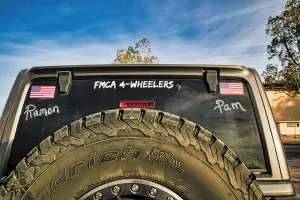
The FMCA 4-Wheelers chapter is one example of an off-road enthusiasts group, holding multiple get-togethers in the western and southwestern U.S.
During the winter of 2022 in Yuma, Arizona, I had the opportunity to meet and visit with the president of the FMCA 4-Wheelers Chapter. This chapter (www.fmca4wheelers.com) is made up of and dedicated to four-wheel-drive enthusiasts. The chapter has a membership of 416 family units throughout the United States and Canada. Member vehicles are limited to street-legal and passenger-style 4×4 vehicles.
The FMCA 4-Wheelers chapter is a large and active group. They sponsor about 12 weeklong events each year in the western and southwestern U.S. The Yuma event in January 2023 attracted 71 vehicles. As is typical with the chapter’s events, the vehicles were divided into groups of 10, and each group was assigned to a different trail every day. Members could join the group that satisfied their desire for length of drive, terrain, difficulty, or another objective. Nights focused on social events or seminars on safety, training, equipment, or other topics. Joining a group like FMCA 4-Wheelers is a good way to learn how to safely drive on off-roading trails and to enjoy the fellowship of other four-wheel-drive enthusiasts.
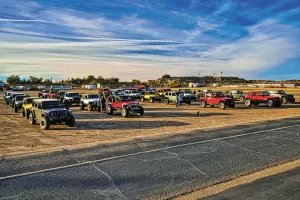
The FMCA 4-Wheelers event in Yuma, Arizona, in January 2023 attracted the owners of 71 vehicles.
If you are considering a new vehicle to tow, expand your horizon and research the variety of flat-towable four-wheel-drive vehicles. If you currently tow a 4×4 vehicle but don’t leave paved roads, consider heading into the wild and beautiful backcountry that is part of our nation. Plenty of unintimidating, easy-to-drive roads and trails await those of us who just want to enjoy the peace and beauty of the great outdoors, or even to view wildlife and scenery you can’t see and appreciate from a highway. While exploring off the beaten path, if you happen to see a little old bald guy with a camera, stop and say hello.
Rally participants must have street-legal, passenger-style four-wheel-drive vehicles, such as Jeep Wranglers or Ford Broncos. Leaving the pavement enables them to enjoy scenery they wouldn’t be able to see otherwise. The chapter divides rally participants into groups so that they can choose the level of difficulty and the time required for certain trails. When they aren’t out riding the trails, they enjoy social activities.