
Known as the sunniest place on Earth, this southwestern town has something for everybody.
By George Moore, F460576
February 2024

Yuma blends contrasting lands.
Why Yuma? That was the question I asked my wife, Sherrian, every time she suggested going to Yuma for our winter trip. “Yuma is just a small city in the middle of a barren desert,” I said, protesting. Knowing it is a popular snowbird destination that attracts over 71,000 winter residents, according to a 2019 Arizona State University study, I finally did a little research on Yuma and gave in to my wife’s suggestion. But I still had to be convinced Yuma was a good choice for our winter break. Like they say in Missouri, “Show me.”

The Quartermaster Depot operated as a frontier outpost from 1865 to 1883.
After spending six weeks at a Yuma RV resort, I must admit, I was “shown.” I was very pleasantly surprised by the climate (the sunniest place on Earth, according to the World Meteorological Organization) and the surrounding area. I would like to share some of what I enjoyed about this far southwest corner of Arizona.
Yuma has an interesting history as a frontier outpost in the 1800s. The first place we visited was the old Quartermaster Depot, which was operational from 1865 to 1883. Supplies were transported to the depot by boats going upriver from ports on the Gulf of California. These goods were then shipped upriver from Yuma by boat or overland in wagons pulled by mule teams to inland outposts as far east as southwest Texas. Some of the original buildings, wagons, and equipment still exist at the depot. There is also a museum display that shows the history of water projects, dams, and irrigation along the lower Colorado River. I encourage visitors to take the guided tour to learn more of the history of the depot, the lower Colorado River, and the area.

Cell blocks at Yuma Territorial Prison.
Another very interesting historical site is the Yuma Territorial Prison. Opened in 1876, it was the first territorial prison in Arizona, surrounded by the Colorado and Gila rivers and the unforgiving desert. The prison museum provides a living history of the Old West. Visitors should take the guided tour to discover the trickery by Yuma politicians to locate the prison in Yuma; find out why the Yuma high school students are called “criminals”; and learn about prison life in the 1800s and some of the inmates.
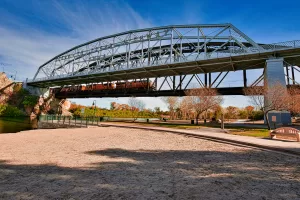
The Ocean-to-Ocean bridge spans the Colorado River.
Crossing the Colorado River next to the prison is the first highway bridge (built in 1915) to connect an ocean-to-ocean highway system, along with the first railway bridge (built in 1924) across the lower Colorado River. Both bridges are still in use.
The Sanguinetti House Museum and Gardens is another of Yuma’s historical buildings. Built in the 19th century, this was the home of Yuma’s pioneer merchant E.F. Sanguinetti. The home is now an Arizona Historical Society museum.
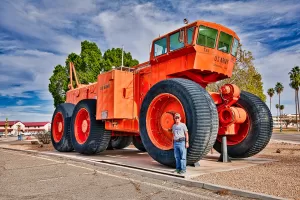
The U.S. Army Proving Ground’s experimental vehicles display includes an overland train.
An often-overlooked historical site is the U.S. Army Yuma Proving Ground (YPG). Located just north of Yuma on U.S. Highway 95, the proving ground traces its roots to a World War II desert training center established by General George Patton. The remoteness and harsh desert climate made this an ideal location for desert training and the testing of vehicles, artillery, armored vehicles, weapons, and tactics. The proving ground is currently used by all branches

An M247 Sergeant York self-propelled anti-aircraft gun at the U.S. Army Proving Ground.
of the military as a testing site for all types of equipment and weapons systems. YPG also has areas for air dropping personnel and equipment and for drone operations. The Wahner Brooks Historical Exhibit, an outdoor display of armored vehicles and artillery dating from WWII to the present, is open to visitors without any special entrance procedures or vetting. The Heritage Center, which traces the history of YPG, is currently closed while it undergoes a transformation.
Native American history is an important part of Arizona history. The Cocopah Museum and Cultural Center in nearby Somerton is a good place to explore and learn about Cocopah history, life, and customs. Museum director Joe Rodriquez is friendly, knowledgeable, and enjoys answering visitors’ questions.

Yuma is known for its agritourism.
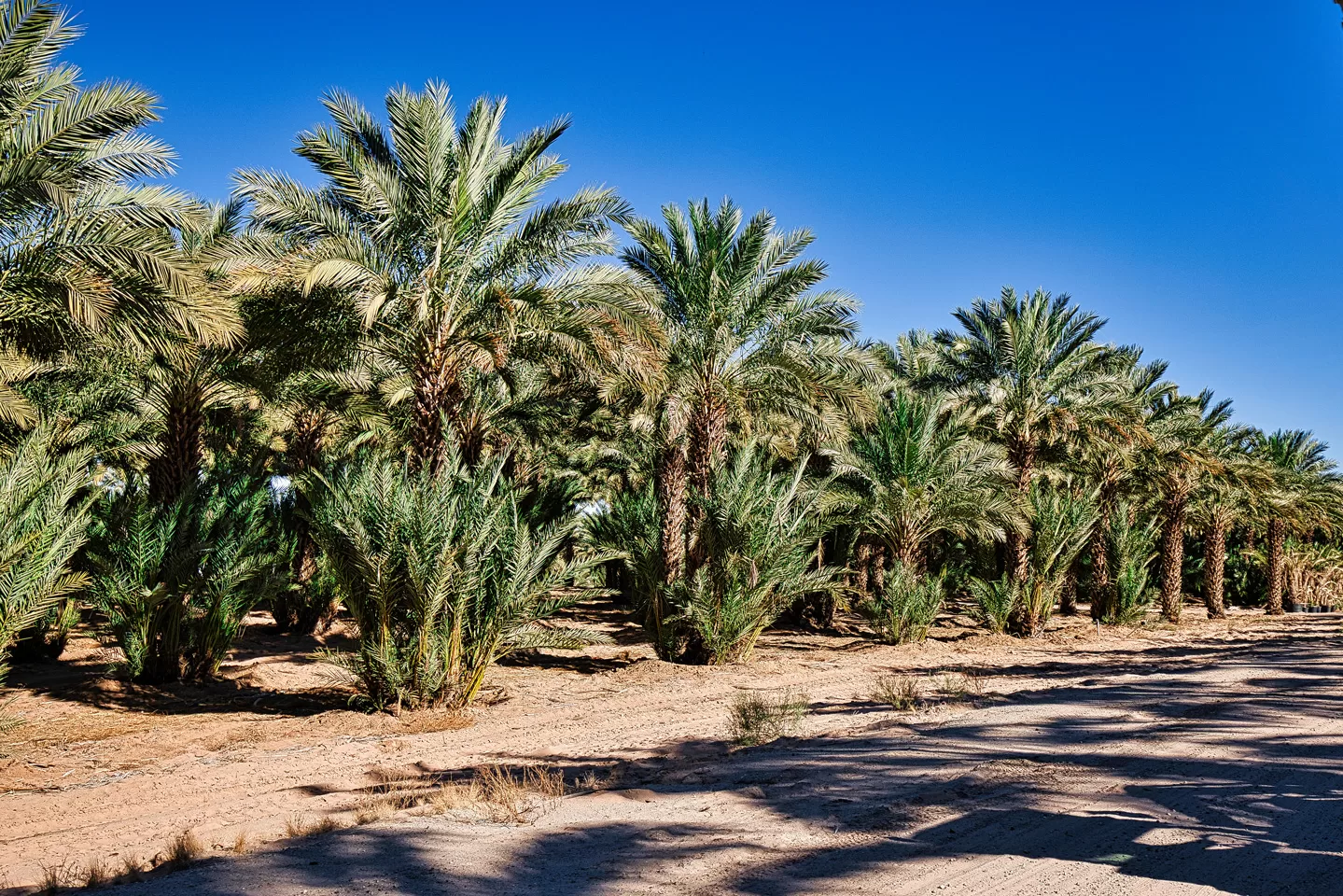
The importance of agriculture is something else visitors often overlook. There are approximately 230,000 acres of farmland in Yuma County. About 90 percent of leafy vegetables in the U.S. are produced in and around Yuma, along with several other crops, among them cotton, citrus fruit, grains, and dates. Seventy-one percent of the Yuma County wheat crop is exported to Italy for use in premium pastas. Thanks to the climate and irrigation provided by the Colorado River, some crops have multiple harvests throughout the year.
Probably the most interesting crop is the Medjool date. Because of its texture and sweet taste, the Medjool has been the preferred date by Middle Eastern and North African rulers and aristocrats for thousands of years. In the United States, the largest Medjool date-producing areas are Yuma County and the Coachella Valley in California. An interesting fact is that all the Medjool date palms in the world trace their ancestry to nine survivors of a date palm blight in North Africa that were brought to the U.S. in the 1920s. A visit to Yuma isn’t complete without a visit to and tour of Martha’s Gardens Date Farm.
The mild winter weather coupled with the almost doubling of Yuma’s population makes this the season for shows, exhibitions, and festivals. Sherrian and I took the opportunity to visit two of these events. The first was one of the premier quilt shows in the Southwest. I had never been to a quilt show and have no knowledge of quilting. Wow! I was amazed at the beauty and artistic talent displayed in the more than 250 quilts, wearables, purses, and the special Princess Diana exhibit. This annual event at the civic center is sponsored by the Desert Lily Quilters quilt club.
The other event we attended was the Annual Medjool Date Festival. This takes place on Yuma’s Main Street to celebrate the Medjool date. The fest features entertainment, food, dates, and a variety of other vendors.
In addition to all I have already discussed, Yuma is a good destination for outdoor activities such as hiking, birding, and 4×4 drives.

Sunset at Kofa National Wildlife Refuge.
Along the Colorado River, Yuma has created two nature areas, the East Wetlands and West Wetlands, restored to their original vegetation. Here, one can take leisurely hikes on well-maintained trails; enjoy the river and woodlands; and look for wildlife and birds, including raptors, woodpeckers, songbirds, and — in the East Wetlands — the beautiful Gambel’s quail.
More adventurous hikers and 4×4 enthusiasts can venture into the Kofa National Wildlife Refuge and the Imperial National Wildlife Refuge in Arizona and the Picacho State Recreation Area in California. These refuges offer well-maintained dirt roads, miles of 4×4 roads, and hiking trails of varying difficulty. They provide access to mountains, old mines, saguaro cacti, and the hard-to-spot desert bighorn sheep.
At over 660,000 acres, the Kofa National Wildlife Refuge is the largest. Here, you can visit Castle Dome City and Hull Mine Museum. The Castle Dome City was a boom town with about 3,000 residents during the Colorado River mining era. The remaining buildings and equipment have been converted into a museum.

A look into Palm Canyon.
The Palm Canyon Trail is probably the most popular trail in the refuge. Located at the west end of the Kofa Mountains, this 1.2-mile (out and back) trail leads through a narrow canyon cut into a volcanic-rock formation. During early-morning hikes, one might spot bighorn sheep. The trail leads to a view of what is believed to be the only native stand of California palms in Arizona. The palms are located in a steep and narrow crevice and receive only an hour or two of afternoon sunshine. The trail is well marked and has a couple of moderately steep sections. Because of the rocky terrain, good hiking shoes or boots are highly recommended.
The Imperial National Wildlife Refuge has wetlands and a lake that attract a variety of water birds and waders (bring binoculars, a spotting scope, and a telephoto lens), as well as woods that attract an assortment of birds. A variety of raptors may also be spotted there. The wetland overlooks also provide an excellent view of the Chocolate Mountains in California.
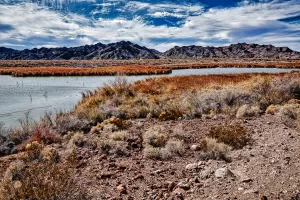
The Chocolate Mountains are visible from Imperial NWR.
The Painted Desert Trail, located in the Imperial National Wildlife Refuge, is possibly the most scenic and popular trail in the refuge. It is a 1.3-mile loop with trail markers that interpret the geologic and natural history of the area. The trail traverses a mesa and two washes and was named for the multicolored mounds of rock deposited by ancient volcanoes. The colors are determined by the different minerals in each mound. A variety of plants and occasionally animals may be viewed along the trail.
Visitors to Yuma should get off the main highways and venture onto the well-maintained two-wheel-drive dirt roads in these refuges. This is the best way to see and appreciate the beauty of the desert and rugged mountains in the Yuma area. Exploring the remote and rugged backcountry is popular with drivers of 4×4, Jeep, and off-highway vehicles. Some of the RV resorts have 4×4 clubs.

Shoppers have many fun opportunities in Yuma and the surrounding area.
The last thing I want to mention (at my wife’s insistence) is shopping. Los Algodones, Mexico, is just a short drive from Yuma and a popular snowbird shopping, medical, and pharmaceutical destination. From Yuma, take Interstate 8 about seven miles west to the Andrade exit. Go a few miles south and park on the U.S. side, or drive across the border. Most folks park on the American side.
The other major shopping destination is the Arizona Market Place. This large flea market features entertainment, food vendors, and over 150 merchandise vendors. The Arizona Market Place is located at 3351 S. Avenue 4 E in Yuma and is open Thursday through Sunday.
Our first visit to Yuma answered my question, “Why Yuma?” I now know — it’s the climate, history, and great outdoors. We have already made our reservation for next winter. With too many RV parks and resorts to count (plus boondocking in the desert), Yuma has something for everyone. See you in Yuma!|
MORE INFO
Visit Yuma
264 S. Main St.
Yuma, AZ 85364
visityuma.com
(928) 783-0071