
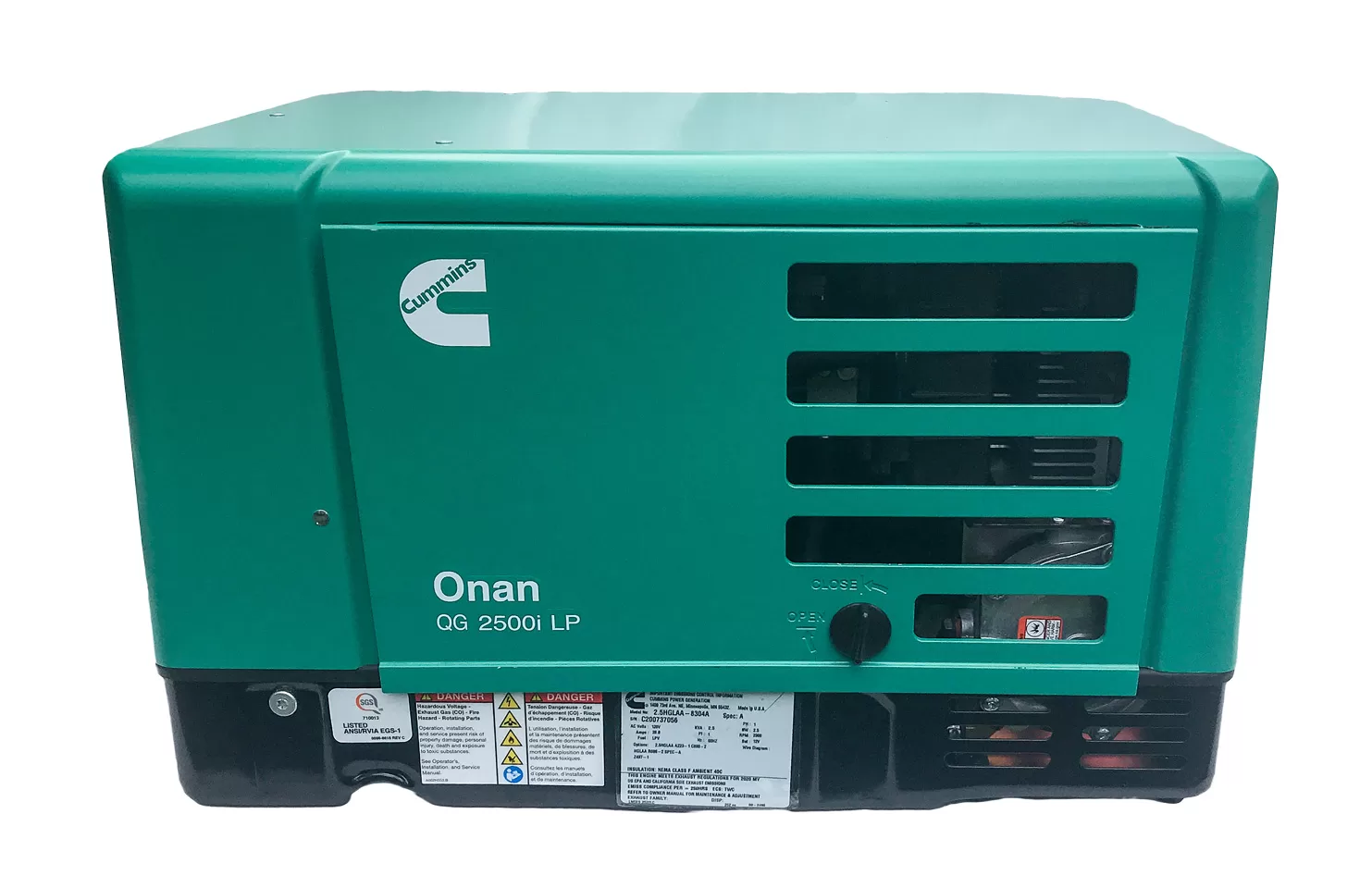
Maintenance and proper operation are essential to Cummins Onan RV generator reliability and longevity.
By Chris Dougherty, F263059
April 2024
Many motorhomes, travel trailers, and truck campers are equipped with an RV generator set (genset), and most have units built by Cummins. Cummins Onan generators are the pinnacle of quality and reliability in the RV industry, but only if used and maintained correctly. Like any machine, abuse, lack of maintenance, and poor storage practices can reduce a generator’s reliability and lifespan.
We’ll review some of the most common genset-related mistakes; how to identify the specific model of your Onan; how to find service parts and decide what oil to use; and where to find additional owner resources. Remember that maintenance on RV and other generators is based on the number of hours it runs, so an hour meter is required to keep track of that. In some RVs, a multiplexing system or an Onan Energy Command control panel monitors the hours.
MISTAKES
For many RVers, when it comes to the generator, if it’s out of sight, it’s out of mind. This is a big mistake for something as complex and expensive as a modern genset, and it can cost you a lot of money.
According to technicians at Cummins, regularly operating the generator is among the top considerations for unit longevity. RV gensets are installed in RVs and in RV-type commercial vehicles, like those used in mobile businesses, and the gensets generally run tens of thousands of hours without a hiccup. As long as the maintenance is performed, they’ll power on.
On the other hand, some RV owners experience issues all the time. Why is this? The following factors may be coming into play:
1)
Not consistently running the generator. An RV genset sits under the RV and is open to the ground. The unit gets its combustion and cooling air from underneath and also ejects hot air from the engine and generator underneath. Exercising a generator removes moisture and lubes the engine, replaces stale fuel in the lines and fuel filter, and helps to maintain slip rings and connections in the generator.
In addition, gasoline gensets will have problems if the gas is allowed to deteriorate in the system. The varnish can cause fuel system corrosion, gumming, and buildup of other deposits, leading to poor or no engine operation. Cummins recommends running the genset for at least two hours each month if it’s used infrequently. A single two-hour period is better than multiple shorter periods, and the genset should be run under a load at no less than half the rated power.
Cummins provides detailed procedures in the owners manual to prepare the unit for storage if this exercise is not possible. This may include an oil change, a change of all filters, fresh fuel with a storage additive, a run period to send the treated fuel through the system, and draining the fuel bulb on gasoline models.
2)
Not performing proper maintenance. The owners manuals are crystal clear about all maintenance procedures for Cummins Onan gensets. In most cases, doing the maintenance requires an easy hour or two for any shade-tree mechanic.
3)
Failing to protect the unit from moisture and critters. As stated, the genset is open to the ground for cooling, which provides a means for critters to get inside and nest. This can result in severe damage to the generator, which may be unrepairable in some cases.
4)
Failing to check the generator before operation. An owner should do several things before running the genset, including checking the oil, visually inspecting the unit for damage or nesting, etc.
IDENTIFY YOUR CUMMINS ONAN GENERATOR
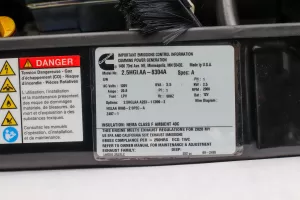
The ID sticker can be found on the outside-facing lower side on most Cummins Onan generators. The QD diesel model has a couple of them.
Knowing the details of your RV genset is essential when ordering parts and manuals or requesting service at a Cummins Coach Care center or an RV dealer.
Most RV gensets have a sticker below the door on the outer-facing side of the unit. The exception is the QD (Quiet Diesel) models, where the stickers are on top, on the bottom of one end, and on the side to accommodate varying installation configurations.
You will need the model number, specification, and serial number from this sticker. With this information, a service center can identify everything about your genset through Cummins QuickServe Online.
The model identification number is a code. The first number is the capacity in kilowatts; the subsequent letters are the model designation; the next number is the specification number; and the last letter is the specification letter. The spec number identifies any options and unique features built into the unit, and the spec letter indicates significant manufacturing changes.
Lastly, the serial number is also a code that shows the manufacturing date, the plant where the unit was built, and the unit’s active serial number.
LUBRICATION
Keeping your motor oil fresh is essential for the genset engine’s longevity. These engines run at high rpm for long periods of time, and proper lubrication makes all the difference. That said, Cummins includes a chart in each owners manual that outlines what type of oil to use based on the operating conditions and when to perform all maintenance to the genset.
The oil type or grade is vital for longevity. The reason Cummins includes this chart is so that lubricity is maximized in relation to the outside temperature. Most genset engines are splash engines; this means the engine’s moving parts dip into the oil reservoir instead of oil being pumped through passages in the block. Most small four-cycle engines work this way. The cold-started engine won’t be lubricated enough if the oil is too thick in cold temperatures. If the oil is too thin in hot weather, the engine won’t get the ideal level of lubrication.
Most of the gensets (again, except for the QD) have a short, screw-in oil cap/dipstick. The difference between “FULL” and “ADD” is a small amount of oil. If the oil is too low, most models will shut down and give a troubleshooting code on the switch. Overfill the oil and it can foam, which can confuse the oil fill sensor and also cause the genset to shut down. If you’re changing the oil altogether, note that the unit uses a precise amount, which is shown in the owners manual. If you’re adding oil, creep up on full. Add a little, check the oil (screw the cap/dipstick all the way in), and then add a little more. If you overfill, drain some from the bottom drain or drain plug. More frequent service intervals may be required when operating in high outside temperatures or dusty conditions. Dust drawn into the intake can mix with the oil and abrade the cylinders and other moving parts, leading to wear problems. Changing and filtering the oil helps with this.
DAILY CHECKS
Checking the generator before you operate it is essential. A chart in the owners manual for your model will guide you on what to check and when. Engine oil must be looked at daily or after every eight hours of operation; the same applies to the coolant level if you have a QD. Prior to running the genset, conduct a visual inspection to ensure that the air passages are clear, the exhaust is tight and extends at least one inch beyond the sidewall of the RV, and no fluids are leaking. Each season on startup, it’s good to check the battery connections for tightness, the fuel system, the exhaust and exhaust hangers, and the mechanical parts, as well as to clean the spark arrestor. Remember to check your fuel level! In the case of a motorhome, if your fuel is below ¼ tank, the genset won’t run.
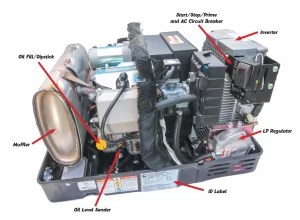
The new Cummins QG 2500i LP is an inverter generator, which makes it quieter and provides pure sine wave 120-volt-AC output.
ADDITIONAL RESOURCES
Cummins supports its gensets as well or better than anyone, in my experience, and everything you need as an owner can be found at cummins.com/generators/rv-generators. You can download the Cummins RV Generator Handbook on that website; it was recently rewritten and is a great introduction and guide to RV generator ownership. You likely spent $3,000 to $15,000 for your generator, so make sure you use and maintain it properly!