
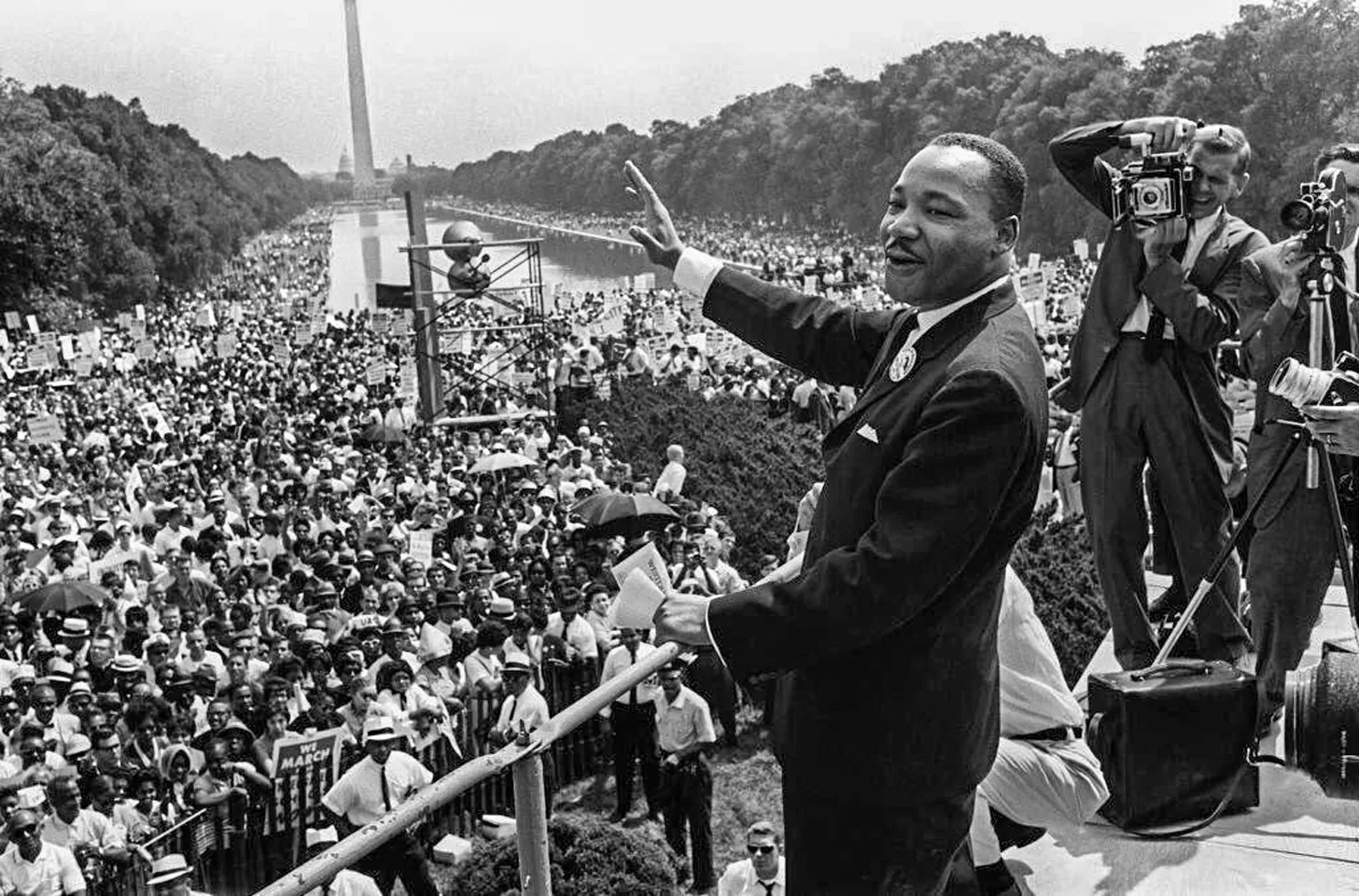
Black History Month is celebrated each February, but RVing families can explore the legacy of the Civil Rights Movement any time of the year.
By Jeff Crider
February 2024
Every U.S. president has designated February as Black History Month since 1976, when President Gerald Ford called upon Americans to “seize the opportunity to honor the too-often neglected accomplishments of Black Americans in every area of endeavor throughout our history.”
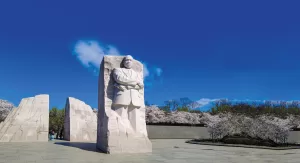
Dr. King is honored with this memorial in Washington, D.C.
The good news for RVing families, of course, is that many of the significant historical sites, museums, and other attractions across the country that provide insights into African American history have campgrounds nearby that can serve as base camps during visits to these important places any time of year.
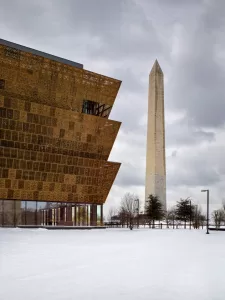
The National Museum of African American History and Culture
Cherry Hill Park in College Park, Maryland, for example, is just outside Washington, D.C., whose attractions include the National Museum of African American History and Culture. The 400,000-square-foot museum, which opened in 2016, is part of the Smithsonian Institution. According to its website, it is “the nation’s largest and most comprehensive cultural destination devoted exclusively to exploring, documenting and showcasing the African American story and the impact of African Americans on American and world history.”
Many historical sites and museums in Washington, D.C., and elsewhere document the enslavement of African Americans in the United States; the battle to end slavery; and key events in the Civil Rights Movement of the 1950s and ’60s, which helped to end segregation and many other discriminatory practices in this country.
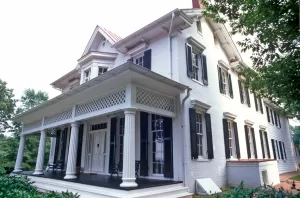
Cedar Hill, home of 19th-century abolitionist Frederick Douglass
Families who do a little planning can make arrangements through Recreation.gov to visit the historic Washington, D.C., home of Frederick Douglass, the prominent 19th-century abolitionist whose powerful speeches calling for an end to slavery were widely quoted in newspapers and helped set the stage for an end to legalized slavery in the U.S. Learn more about the Frederick Douglass National Historic Site at nps.gov/frdo.
Washington is also an excellent place to learn about President Abraham Lincoln’s efforts to end the practice of slavery. Known as “the Great Emancipator,” Lincoln issued his final Emancipation Proclamation on January 1, 1863, declaring “all persons held as slaves” to be free. But Lincoln’s efforts to end slavery and his plans to give former slaves the right to vote outraged John Wilkes Booth, a pro-slavery actor and Southern sympathizer who assassinated Lincoln on April 14, 1865, during a performance at Ford’s Theatre in Washington.
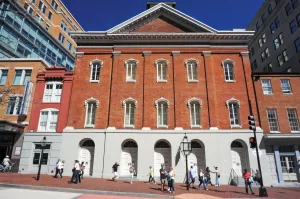
Ford’s Theatre, site of President Abraham Lincoln’s 1865 assassination
The U.S. capital’s monuments to Lincoln include the Lincoln Memorial, which has been the site of some of America’s most important political protests, including Dr. Martin Luther King Jr.’s “I Have a Dream” speech on August 28, 1963.
Of course, Washington is just one place to explore salient events in African American history.
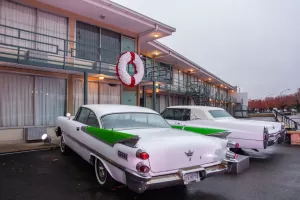
The National Civil Rights Museum and the Lorraine Motel, where Rev. King was assassinated in 1968.
Elsewhere in the country, families could easily use the Yogi Bear’s Jellystone Park Camp-Resort in Horn Lake, Mississippi, as a base camp to explore historical sites in nearby Memphis, Tennessee. Memphis attractions include the National Civil Rights Museum, which is located at the site of the former Lorraine Motel, where civil rights leader Dr. Martin Luther King Jr. was assassinated on April 4, 1968. The museum complements its interactive exhibits and historic collections with guest speakers and special events.
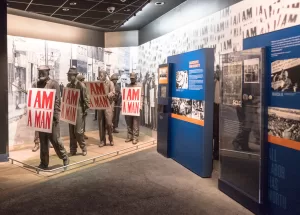
Inside the museum, an exhibit depicts striking sanitation workers.
Memphis is also the site of the Beale Street Historic District, which initially became a thriving area for Black commerce and culture around the time of the Civil War. By the late 1800s, local Black-owned businesses on Beale Street included Memphis Free Speech, an anti-segregationist newspaper run by Ida B. Wells-Barnett.It was housed inside the historic First Baptist Church, according to an account on CivilRightsTrail.com:
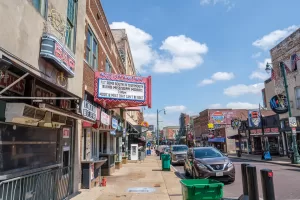
Beale Street Historic District in Memphis, Tennessee.
“In the first half of the 20th century, Beale Street served as the inspiration behind many blues hits and creative works by musicians such as W.C. Handy, who wrote ‘Beale Street Blues,’” the website notes. “From the 1920s to 1940s, artists such as Muddy Waters, Louis Armstrong, and B.B. King played on the street and subsequently developed the legendary Memphis blues sound.
“During the Civil Rights Movement, the area was also where African Americans came to entertain and be entertained, shop, strategize and protest. When city sanitation workers decided to strike in response to deplorable job conditions, they marched down Beale Street, and Dr. Martin Luther King Jr. came to Memphis in support. The demonstrations were a precursor to his assassination on April 4, 1968.”
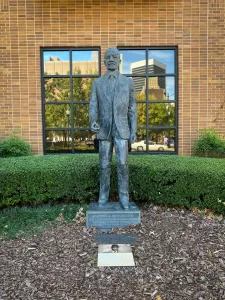
The Rev. Fred Shuttlesworth is memorialized at the Birmingham Civil Rights National Monument.
Another major place to explore key events in African American history is Alabama. There, the Rev. Fred L. Shuttlesworth and the Rev. Dr. Martin Luther King Jr. combined their efforts to protest segregation and discrimination in all its forms in American society in the 1950s and ’60s.
Families visiting Birmingham, Alabama, could use the Birmingham South RV Park in Pelham and Time Away RV Resort in Lincoln as base camps for trips into the city. Among the attractions are guided history excursions offered by Red Clay Tours, whose experts can help explain the significance of events that took place in Birmingham and other Alabama cities and how they shaped the Civil Rights Movement.
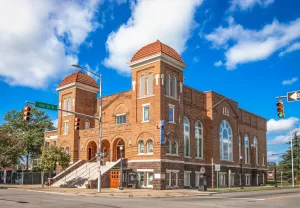
The 16th Street Baptist Church, site of a fatal bombing in 1963
Birmingham’s attractions include the 16th Street Baptist Church, which became a focal point of the Civil Rights Movement after affiliates of the Ku Klux Klan bombed the church during a Sunday service, killing four Black girls in September 1963.
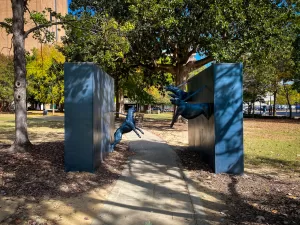
Police dog statues in Kelly Ingram Park recall law enforcement response to nonviolent protestors.
Another important site is Kelly Ingram Park, where news crews captured footage of Birmingham’s white police officers using dogs to attack nonviolent Black protestors who challenged the city’s segregation laws during a series of demonstrations in 1963. Sculptures throughout the park show how police assaulted demonstrators with police dogs and fire hoses.
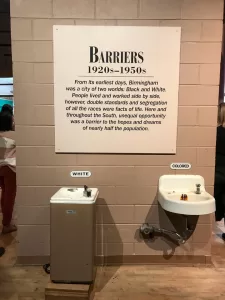
An exhibit at the Birmingham Civil Rights Institute recalls a real-life example of segregation.
Birmingham Civil Rights Institute, for its part, provides visitors an opportunity to view a short documentary film before they examine the museum’s powerful exhibits, which document the many ways in which segregation was practiced in the South. The museum includes a replica of a Freedom Riders bus as well as the actual jail cell door behind which Dr. Martin Luther King Jr. penned his famous “Letter From Birmingham Jail.”
Moving farther south, families could use The Backyard RV Resort, Montgomery KOA Journey, and Montgomery South RV Park in Hope Hull as potential base camps for trips into Montgomery, Alabama, which was home to Rosa Parks, Martin Luther King Jr., and other icons of the Civil Rights Movement.
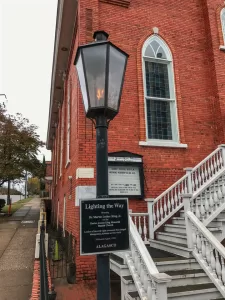
Dexter Avenue King Memorial Baptist Church in Montgomery, Alabama
Historical attractions in Montgomery include:
Dexter Avenue King Memorial Baptist Church: Attractions at this National Historic Landmark at 454 Dexter Ave. include the modest pulpit where the Rev. King first preached his message of hope and brotherhood. This church was also a focal point of the Montgomery Bus Boycott. A large mural in the church depicts King’s civil rights crusade from Montgomery to Memphis, where he was assassinated.
Dexter Parsonage Museum: This is the restored former home of the Rev. Dr. Martin Luther King Jr.
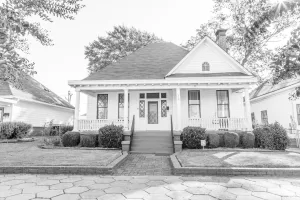
Rev. King and his family resided in what today is the Dexter Parsonage Museum.
Freedom Rides Museum: Restored to its 1961 appearance as a bus station, this museum traces the history of the “Freedom Riders,” the Black and white civil rights activists who rode together in “Freedom Rides” in 1961 to protest segregated bus terminals and segregated travel across the South.
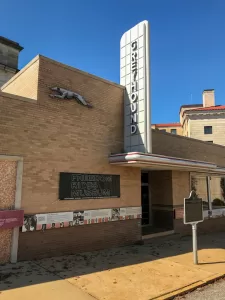
The Freedom Rides Museum remembers those who challenged segregated travel in 1961.
The Legacy Museum and the National Memorial for Peace and Justice: This museum provides a comprehensive history of the United States with a focus on the legacy of slavery. Visitors view a short documentary before entering the museum, whose powerful exhibits chronicle everything from the transatlantic slave trade and its impact on the North and coastal communities across America through the domestic slave trade and Reconstruction. The museum uses detailed, first-person narratives, films, images, and scholarly documentation to describe the practices of lynching, codified racial segregation, and the emergence of mass incarceration in the 20th century. A shuttle takes visitors to the National Memorial for Peace and Justice, a short distance away from the museum. Set on a six-acre site, the memorial is a structure with over 800 hanging steel blocks, one for each county in the United States where a racial terror lynching took place. The names of the lynching victims are engraved on each of the columns.
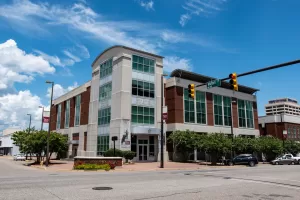
The Rosa Parks Library and Museum
Rosa Parks Library and Museum: Located on the campus of Troy University, the museum chronicles Rosa Parks’ life, including the Montgomery Bus Boycott, which started with Parks’ refusal to give up her seat for a white passenger on December 1, 1955. The boycott lasted more than a year and helpedto increase the prominence of many figures in the Civil Rights Movement, including the Rev. Dr. Martin Luther King Jr. The boycott ended after the Supreme Court ruled that segregation on public buses was unconstitutional.
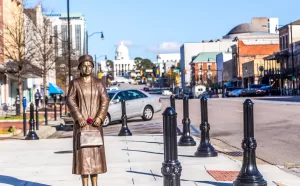
Rosa Parks’ statue stands on the site in Montgomery where she was arrested when refusing to give up her bus seat.
Rosa Parks Statue: A statue of Rosa Parks has been erected on the site where she was arrested for refusing to give up her bus seat to a white passenger. The statue is located at Montgomery Plaza at the Court Street Fountain, 30 feet from the spot where Parks is believed to have boarded the segregated bus. (Another statue honors Parks in the United States Capitol in Washington.)
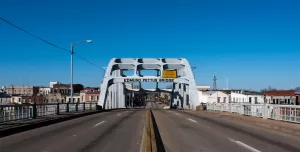
The Edmund Pettus Bridge in Selma was the site of Bloody Sunday violence in 1965.
Visitors to Montgomery could also make an easy day trip to Selma, the tiny Alabama town that is best known for the 1960s Selma Voting Rights Movement and the Selma to Montgomery march. Key attractions in Selma include the Edmund Pettus Bridge, where voting rights marchers were violently confronted by law enforcement personnel on March 7, 1965. The day became known as Bloody Sunday. Since 1965, many marches have commemorated the events of that day. These marches were crucial to the eventual passage of the Voting Rights Act of 1965, signed into law by President Lyndon B. Johnson. The act prohibited racial discrimination in voting and helped to protect the right to vote for racial minorities in the U.S. and especially in the American South.
CivilRightsTrail.com provides details on these and many other historical sites — museums, courthouses, state buildings, libraries, churches, and more — which are designated as part of the United States Civil Rights Trail. The trail features more than 130 sites across 15 states and the District of Columbia, enabling RVing families to immerse themselves in African American history, the Civil Rights Movement, and the advancement of social justice.
To learn more about Black History Month, visit blackhistorymonth.gov.
AREA CAMPING
Alabama
Birmingham South RV Park
220 County Road 33
Pelham, AL 35124
birminghamrvpark.com/about
(205) 664-8832
Montgomery KOA Journey
11091 Atlanta Highway
Montgomery, AL 36117
koa.com/campgrounds/montgomery
(334) 593-6641
Montgomery South RV Park, C12423
(FMCA Commercial Member)
731 Venable Road
Hope Hull, AL 36043
montgomerysouthrvpark.com
(334) 284-7006
The Backyard RV Resort
4350 Sassafras Circle
Montgomery, AL 36105
zemanrv.com/resorts/the-backyard-rv-resort
(334) 356-1887
Time Away RV Resort
160 Summer Dale Lane
Lincoln, AL 35096
timeawayrvresort.com
(205) 855-3033
Mississippi
Yogi Bear’s Jellystone Park Camp-Resort
1400 Audubon Point Drive
Horn Lake, MS 38637
campjellystone.com/park/91-horn-lake-ms-memphis-area
(662) 280-8282
Washington, D.C.
Cherry Hill Park
9800 Cherry Hill Road
College Park, MD 20740
cherryhillpark.com
(301) 937-7116